Just when skeptics and observers alike thought the cryptocurrency landscape had settled into a predictable rhythm, a brand-new phenomenon has taken Crypto Twitter by storm: Fake World Assets, or FWAs.
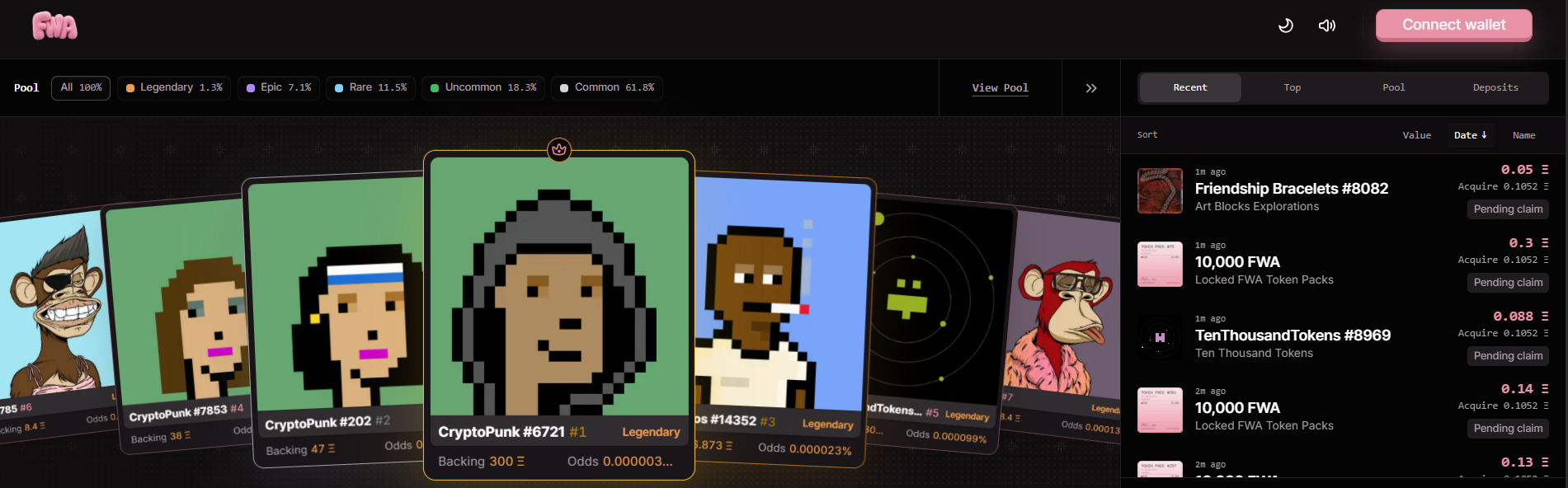
Representing the newest evolution of the rapidly expanding onchain "gacha" trend, the protocol allows users to purchase and spin virtual capsule machines containing a randomized selection of digital collectibles. While many of these random drops hold minimal monetary value, others carry significant worth, mimicking the high-stakes thrill of physical lottery tickets and collectible card booster packs adapted for the blockchain.
The emergence of FWAs has caught the broader decentralized finance ecosystem off guard due to the sheer velocity of its adoption. Within just four days of its public launch, the protocol consumed such a staggering volume of Ethereum gas that it briefly outpaced all other decentralized applications to become the network’s largest single gas consumer over a 24-hour period.
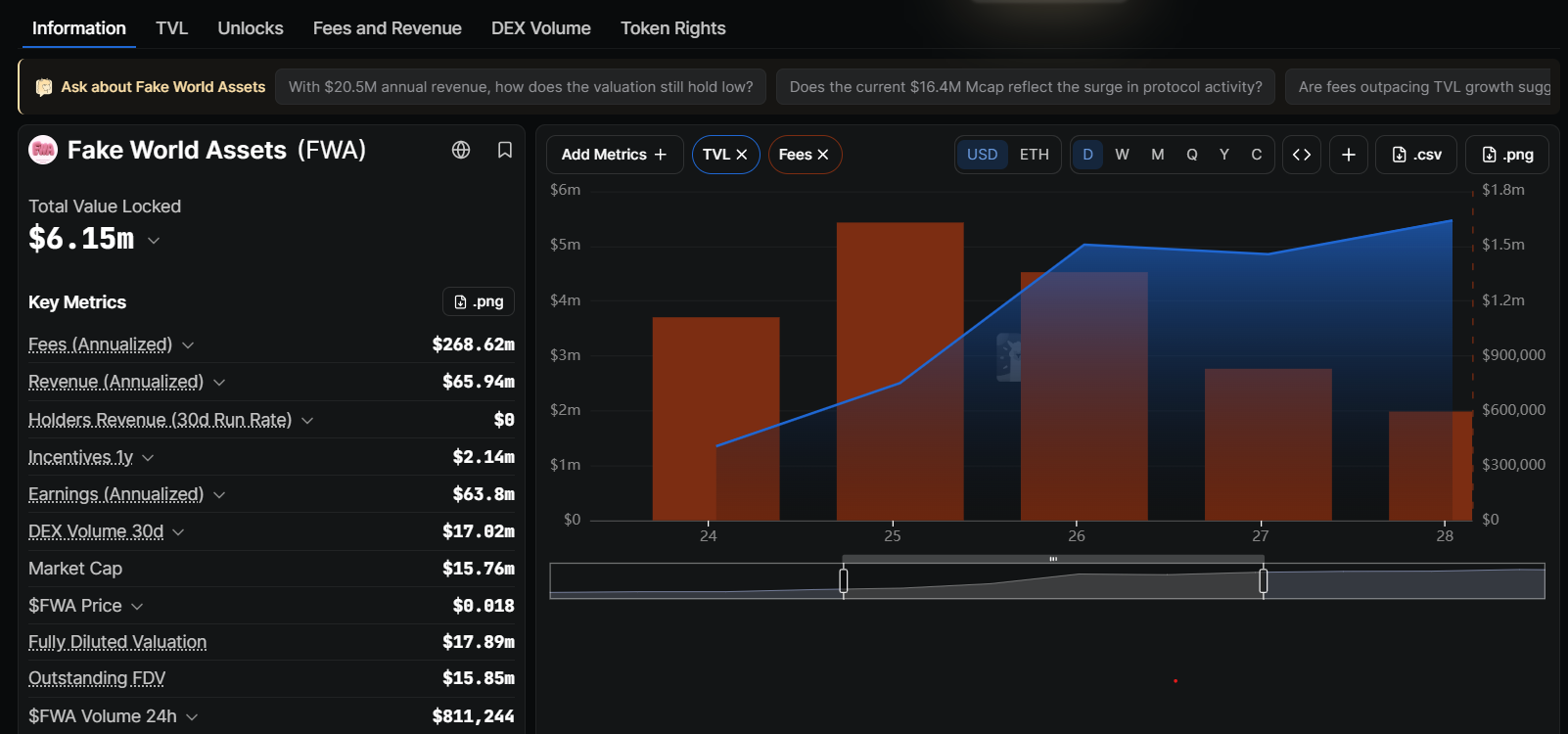
At the peak of the activity frenzy on July 25, FWAs generated approximately $1.53 million in daily transaction fees. During this surge, the protocol even leapfrogged established market heavyweights like Tether and Circle to rank among Ethereum’s most prominent consumers of blockspace. Creators TokenWorks celebrated the milestone on social media, proclaiming that four days post-launch, Fake World Assets were shaping up to be the next major trend in the digital asset sector.
While TokenWorks is naturally positioned as an interested party rather than an impartial observer, the protocol’s underlying metrics have continued to attract attention. Total Value Locked (TVL) climbed steadily, surpassing $6.15 million by July 31. Although daily fee revenue subsequently moderated to around $350,000 per day—still translating to an impressive annualized run rate of roughly $268 million—the transaction volume reached significant milestones. By August 1, FWA activity had surpassed 10,000 ETH in volume across approximately 100,000 individual purchases.
Industry analysts note that while a portion of this transactional momentum is undoubtedly fueled by users positioning themselves to qualify for early FWA token incentives, there also appears to be a genuine underlying appetite for the gamified mechanics driving the platform.
All Very Interesting, But What the Heck Are FWAs?
For years, the cryptocurrency sector has poured immense resources into trying to bridge the physical and digital worlds by bringing real-world assets onchain—ranging from tokenized stocks, bonds, and real estate to more eclectic items like agricultural credit tokens backed by Brazilian cattle.
TokenWorks decided to turn that well-worn paradigm completely on its head by introducing Fake World Assets, which function fundamentally as standard non-fungible tokens. Rather than navigating marketplaces to acquire a specific, high-ticket digital collectible like a Bored Ape Yacht Club token, users pay a set price to spin an onchain gacha machine. This grants them a randomly selected NFT backed directly by Ether.
The prizes featured within these randomized pools are drawn from dozens of established, well-known digital art and collectible communities, ranging from blue-chip collections like CryptoPunks and Azuki to popular projects such as Lil Pudgys and Art Blocks.
The term "gacha" itself traces its origins to "gachapon" or "gashapon," the iconic vending machines invented in Japan during the 1960s that dispense random capsule toys. Over the decades, this psychology migrated seamlessly into mobile and browser-based gaming, with loot boxes popularized by titles like Dragon Collection in 2010 widely recognized as a foundational milestone for the digital gacha economy. A parallel psychological loop has long existed in the physical world via Pokémon trading card booster packs, which offer collectors a randomized assortment of cards featuring varying degrees of rarity and market value.
As the tokenization of physical collectibles gained momentum, projects such as Collector Crypt, Beezie, and Courtyard successfully brought graded Pokémon cards and other physical memorabilia onto the blockchain. Previous industry reporting highlighted that onchain gacha mechanisms achieved a record-breaking $324 million in trading volume in June alone, with hundreds of those tokenized cards subsequently wrapped and integrated directly into the FWA ecosystem.
The scope of experimentation continues to expand on a weekly basis. Innovative developers are actively testing randomized token packs containing various ERC-20 tokens, while applications like StockRip on the Robinhood chain demonstrate how tokenized traditional equities can be successfully packaged into NFT-based gacha structures. As AzFlin, the founder of DAO launchpad daos.world and a former Uniswap engineer, observed, just when observers assume every conceivable financial primitive has been invented in crypto, a novel variation emerges.
What Is the Appeal of Onchain Gacha?
The enduring allure of the gacha format lies in its potent intersection of crypto infrastructure, digital collectibles, and speculative gambling. As pseudonymous crypto commentator 2Lambroz succinctly framed the dynamic from a participant’s perspective, users are effectively purchasing a lottery ticket tied to a shared pool of assets.
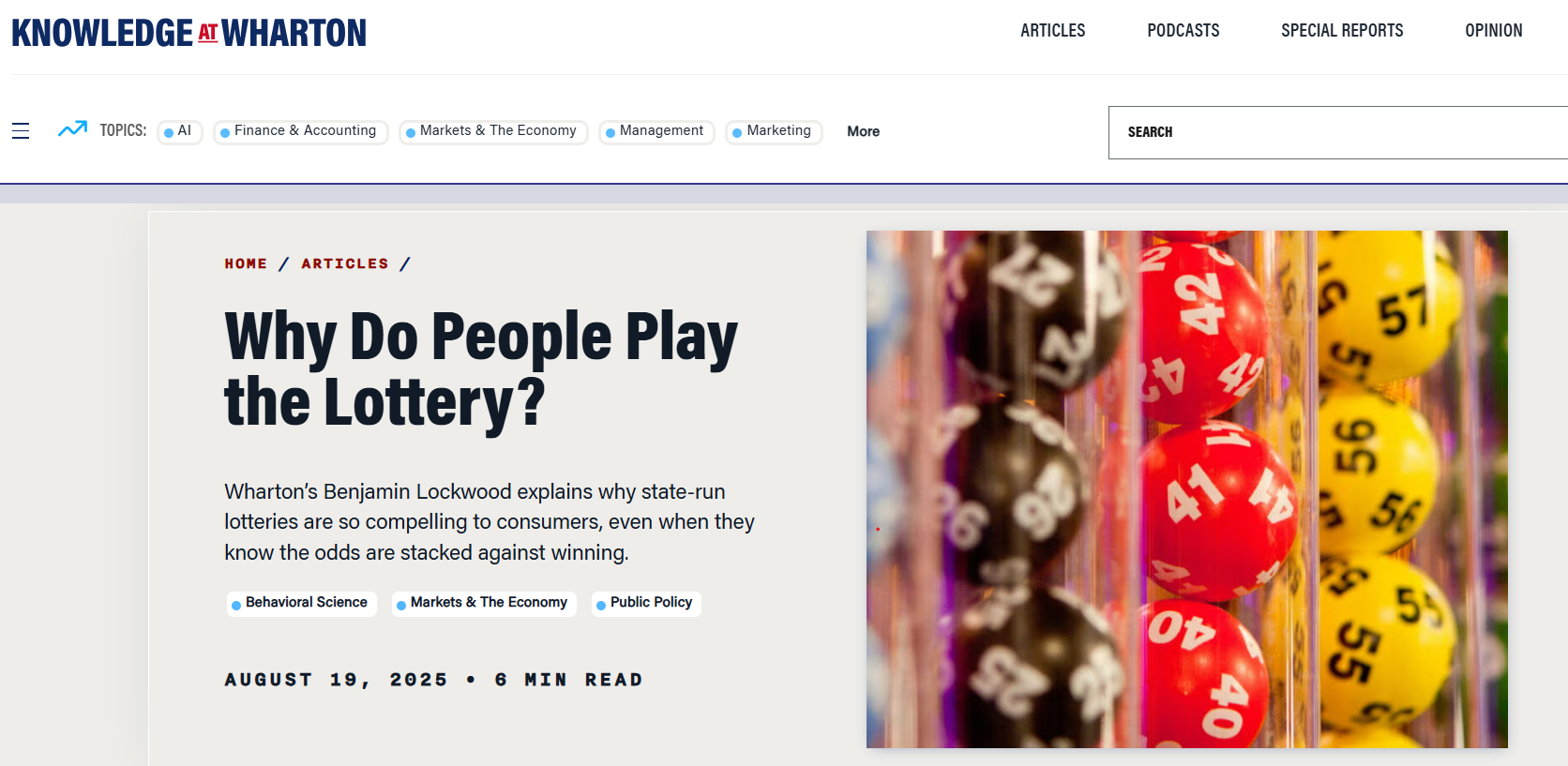
This engagement relies heavily on established behavioral patterns. Benjamin Lockwood, an economist at the Wharton School whose academic research into state-run lotteries explored the psychology of participants, noted that consumers consistently attribute significant value to the entertainment experience of the gamble itself, rather than viewing it purely through the cold mathematical lens of expected monetary return.
Meir Statman, a behavioral finance pioneer, professor at Santa Clara University, and author of A Wealth of Well-Being, offered a compelling real-world parallel to the mechanics of onchain gacha. Statman compared the phenomenon to individuals bidding on the contents of abandoned storage units at public auctions. Most participants ultimately uncover items destined for the trash, but occasional discoveries yield valuable collectibles resalable on secondary markets, with rare finds occasionally valued in the hundreds of thousands of dollars. According to Statman, these activities succeed by artfully combining a playful sense of hope for sudden financial enrichment with interactive entertainment—the exact value proposition long delivered by traditional lotteries.
Two Sides to Every Story
The architecture of the FWA protocol introduces a dynamic dual-sided marketplace that redefines how users interact with liquidity pools and digital assets.
On one side of the equation, NFT holders operate as liquidity providers, or LPs. These participants deposit their digital collectibles alongside pools of Ether, earning a continuous proportional share of platform fees for as long as their specific assets remain inside the pool.
On the other side, players pay a fee for the opportunity to draw a randomly selected NFT from the pool. Once a draw is completed, the participant decides whether to retain the digital collectible or redeem the majority of its attached ETH value directly. Data compiled by Blockworks Research indicates that roughly 70% of successful purchasers currently elect to convert their winnings back into FWA tokens.
As 2Lambroz explained, liquidity providers essentially gamble that their deposited NFTs will remain untouched long enough to accumulate substantial fee revenue before being selected by a player. Meanwhile, players chase the asymmetric upside of landing a prize worth significantly more than the initial cost of the spin.
Materkel, a prominent pseudonymous Ethereum advocate, praised the structural design of the protocol, describing it as one of the most engaging entertainment and casino-style primitives seen in the cryptocurrency sector in over a decade. The architecture allows participants to step into the dual roles of both players and the house simultaneously, signaling a return of complex, interoperable financial components to the Ethereum ecosystem.
Can the Hype Last?
Despite the initial wave of enthusiasm, market participants remain divided over whether the excitement surrounding Fake World Assets can withstand the test of time.
Simon Dedic, founder of venture capital firm Moonrock Capital and an early supporter of onchain collectible platforms, acknowledged that while he remains deeply skeptical of FWAs specifically—arguing that much of the current volume is artificially stimulated by token incentives rather than organic demand aimed squarely at crypto degens looking to speculate—he maintains a broad optimism for the underlying trend.
Dedic stated that he is remarkably bullish on gamified commerce driven by generational shifts. As Generation Z continues to expand its aggregate buying power across global markets, shopping experiences are increasingly expected to incorporate gamified elements and immediate dopamine feedback loops.
Rather than relying on speculative momentum generated by random digital assets inherited from previous market cycles, Dedic believes the underlying mechanism is far better suited for commercial applications involving tangible assets that consumers already actively desire, such as physical trading cards, luxury timepieces, and high-end spirits. He noted immense potential in commercializing high-demand items through gamified distribution models, contrasted with deep skepticism toward constructs designed primarily to manufacture artificial demand for unwanted tokens.
Ultimately, the definitive test for onchain gacha will arrive when the initial wave of novelty subsides and token incentives begin to taper off. If participants continue to spin the virtual wheels regardless of promotional rewards, the sector may have successfully unlocked a sustainable retail use case that the blockchain industry has sought for years. If not, the phenomenon risks fading into the background alongside previous short-lived market obsessions.
 Non-Fungible Tokens (NFTs)
 Non-Fungible Tokens (NFTs)
 Non-Fungible Tokens (NFTs)