
It was supposed to be a standard day of deep-sea recreation off the historic coast of Gloucester, Massachusetts. On a Wednesday afternoon in October 2026, security technologist and author Bruce Schneier embarked on a small fishing boat to spend the day casting lines into the Atlantic waters. The outing yielded a diverse array of marine life, offering a snapshot of local fishing conditions and culminating in an unexpected personal culinary success that would later be shared with readers and spark a surprising macroeconomic discussion within the online community.
According to the account shared on his blog, the day’s expedition began with plenty of activity beneath the surface. The fishing party hauled in numerous cod. However, due to regional fishing regulations and catch limits currently in place, none of the cod could be kept and all had to be safely returned to the water. Fortunately, the trip was far from a total loss regarding edible yields. The anglers also successfully reeled in a substantial number of hake and mackerel, all of which met the criteria for retention and were safely stored for the trip back to shore.
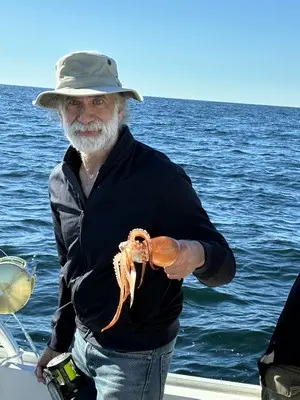
The highlight of the day, however, came from an entirely different kind of catch. Amid the hake and mackerel, Schneier hooked a squid. Upon closer inspection, he identified the creature as a longfin squid, scientifically known as Doryteuthis (Amerigo) pealeii, a species that is frequently referred to locally as the Boston squid. Longfin squid are a common sight in the coastal waters of the northwestern Atlantic, ranging from the Gulf of Maine down to the Gulf of Venezuela, and are well known to both commercial fisheries and recreational anglers in the Northeast.
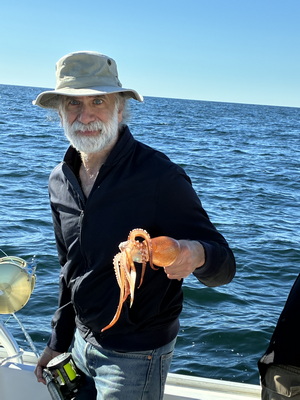
True to the spirit of fresh-caught seafood, the squid did not remain a mere curiosity for long. That very same evening, it was prepared in a straightforward, traditional manner: cooked over a hot barbecue grill, fast and high heat to ensure the delicate meat remained tender rather than rubbery. The culinary result, by all accounts, was a resounding success, described simply as delicious. A photograph documenting the fresh catch was subsequently published alongside the blog post, capturing the specimen before it made its way to the grill.
While the weekly tradition of Friday squid blogging is a lighthearted fixture for readers of the technology and security blog, the comments section quickly evolved into a forum for broader economic analysis and discussions surrounding global financial markets. Among the early contributors to the discussion was regular commenter Clive Robinson, who pivoted the conversation from marine biology and recreational fishing to a major international financial headline that had broken just days prior.
The discussion turned toward Australia, where a massive initial public offering had recently collapsed under high-stakes circumstances. An Australian artificial intelligence startup known as Firmus Technologies had been preparing for what was projected to be one of the largest stock floats in the history of the Australian financial markets. The planned market capitalization for the Sydney-based AI startup was an astronomical $43.7 billion. Had the public offering proceeded as planned, it would have marked the second-largest IPO ever executed on the Australian Stock Exchange, trailing only the historic Telstra public listing that took place back in 1997.
Firmus Technologies, founded in 2019 by entrepreneurs Oliver Curtis, Tim Rosenfield, and Jonathan Levee, had ambitious plans to raise approximately $7 billion by going public. The primary objective behind the substantial capital raise was to fund an extensive expansion strategy involving the construction of massive energy-intensive data centres across Australia, Singapore, Malaysia, and Indonesia. In an era defined by explosive corporate interest in generative artificial intelligence and the immense computational infrastructure required to support it, Firmus stood positioned as a major regional player backed by significant industry heavyweights.
However, the high-profile IPO ultimately fell through, failing to launch and sending ripples of uncertainty through the financial sector. The unexpected collapse of a transaction of this magnitude immediately prompted financial analysts, market observers, and technology commentators to question the underlying health of the broader technology sector. The sudden derailment of Firmus raised pressing questions about whether the setback was an isolated incident specific to Australian market conditions and the company’s particular financial structuring, or if it signaled the early stages of a much larger global trend.
Specifically, market watchers began debating whether the failed IPO represented the initial deflation of the ongoing artificial intelligence hype bubble, or potentially the beginning of a more dramatic market correction. Beyond sector-specific concerns, commentators also weighed the possibility that the event could be tied to broader macroeconomic indicators pointing toward a potential world economic recession, compounded by ongoing geopolitical anxieties and international tensions often referred to in financial commentary as World War III jitters.
Attention within the discussion quickly turned toward major global technology suppliers whose fortunes are closely intertwined with the rapid expansion of artificial intelligence infrastructure. Particular focus was directed toward Nvidia, a key backer of the attempted Firmus IPO and the dominant supplier of high-end graphical processing units and specialized chips upon which nearly all modern data centre plans and AI developments currently rely. Because massive amounts of real capital flow through Nvidia and its supply chain partners, the semiconductor giant is frequently viewed by market observers as a reliable barometer for the true health and sustainability of the artificial intelligence market.
As the discussion illustrated, the juxtaposition between a simple afternoon of recreational fishing in Massachusetts and the turbulent fluctuations of global financial markets highlights the diverse range of topics that can converge within an active online community. While the longfin squid caught off the coast of Gloucester provided a brief and successful culinary diversion, the underlying currents of the global economy—marked by massive technology valuations, infrastructure ambitions, and shifting market sentiment—continue to command the close attention of technologists and analysts alike.
 Cyber Security & Cryptography
 Cyber Security & Cryptography
 Cyber Security & Cryptography







