Brazil’s B3 stock exchange recently made global headlines when its tokenized cows went viral. A forward-thinking farmer in southern Brazil successfully leveraged 10 dairy cows as collateral for a 100,000 Brazilian real, equivalent to roughly $19,600, loan by virtually herding the livestock into a blockchain-based holding pen. This creative financial maneuver demonstrated vividly how modern agricultural producers can literally milk their physical assets to gain frictionless access to vital credit.
The successful transaction naturally raises a broader, more provocative question across financial and technological markets: If live cows can be successfully tokenized, what on Earth cannot?
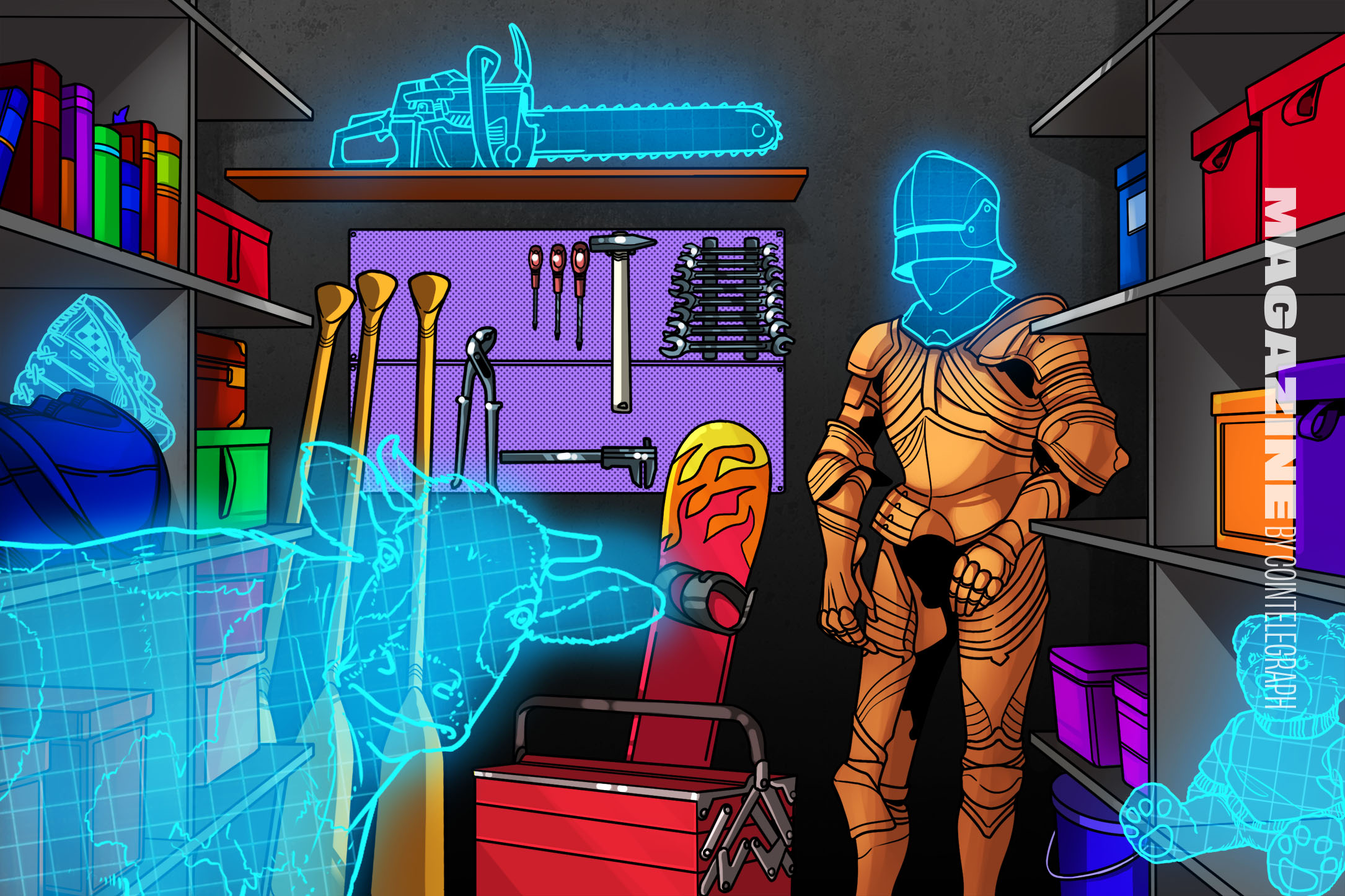
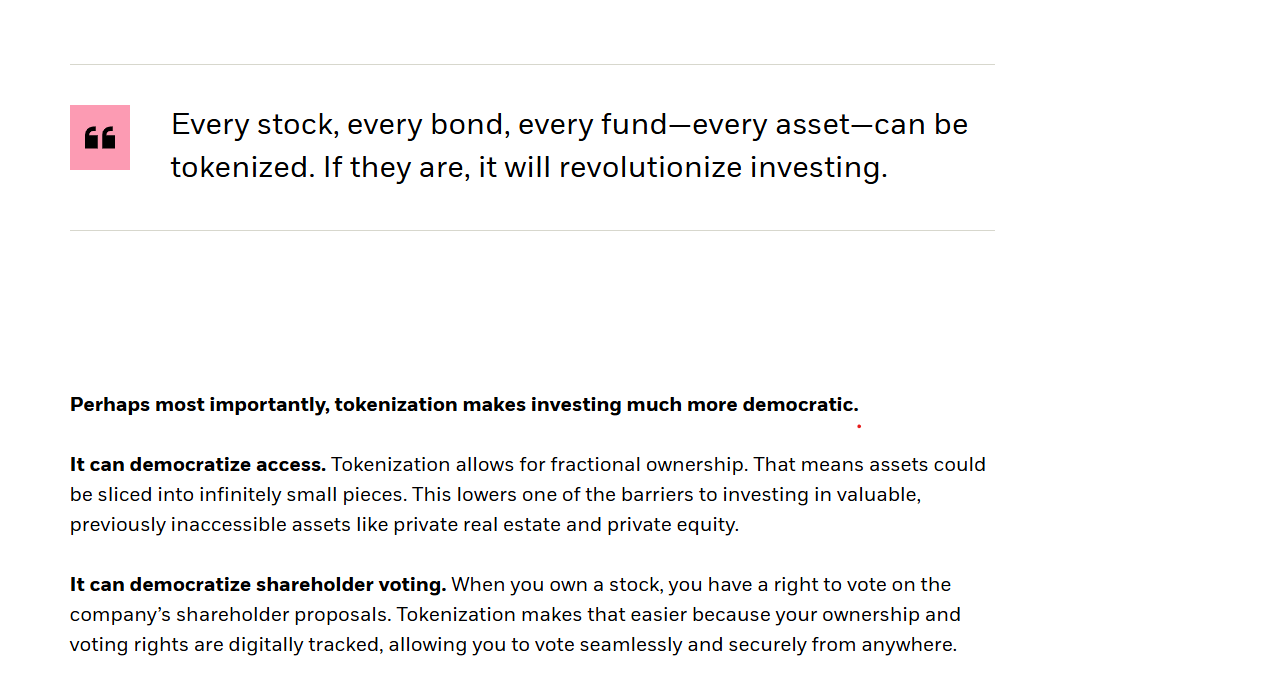
As major institutional players lean into the tokenization of real-world assets—often referred to in the industry as RWAs—the spectrum of items brought onchain has expanded dramatically. BlackRock Chief Executive Larry Fink famously predicted that every asset class will eventually be tokenized. While Fink likely envisioned institutional bonds, equities, and real estate, the crypto community has taken his thesis and pushed the boundaries of imagination to the absolute extreme.
From premium agricultural livestock and industrial commodities to truly eccentric novelty items, the history of blockchain experimentation reveals a fascinating ledger of unconventional tokenized assets.
1. A Year’s Worth of Flatulence
When Larry Fink made his sweeping pronouncement about the future of tokenization, he almost certainly wasn’t thinking about human flatulence. Yet, during the height of the global COVID-19 pandemic—a period when millions of people turned to baking artisanal bread or leveling up foreign language skills on Duolingo—filmmaker Alex Ramírez-Mallis decided to take a markedly different path.
Ramírez-Mallis meticulously recorded his own farts over a sustained period and minted each sonic event as an individual nonfungible token, or NFT. While the asset class is typically reserved for fine art or digital collectibles, the sheer novelty factor of the endeavor allowed the filmmaker to sell his digital gas for 0.05 Ether per token, translating to about $85 at the time. It remains a bizarre milestone in crypto history, proving that in the speculative markets of the digital age, virtually every conceivable asset has its price.
2. Live Cattle and Agricultural Collateral
Moving from novelty flatulence back to tangible agricultural wealth, the tokenization of 10 Brazilian cows represents a much more practical use case for blockchain technology. Structured by the Brazilian investment fund Target FIDC, the innovative transaction assigned each cow a unique digital token linked directly to an encrypted digital identity.
While the inaugural loan was valued at a modest $19,600, the operation served as a robust proof of concept. The underlying architecture holds the potential to eventually support approximately $80 million in livestock-backed financing across agricultural holdings. Although it sounds unconventional at first glance, the global agriculture industry generated an estimated $4 trillion in gross value added in 2023. Given that massive economic footprint, market observers should not be surprised to see tokenized sheep, goats, and chickens serving as digital collateral in the near future.
3. Maturing Whiskey Barrels
When financial markets discuss sharing a glass of whiskey, they usually mean the liquid gold variety. However, whiskey barrels represent a remarkably natural candidate for tokenization.
Much like high-end art, fine wine, and luxury collectibles, premium Scotch whisky typically appreciates in value as it matures in the cask. Several blockchain projects have experimented with placing whiskey casks directly onchain, enabling investors to purchase whole units or fractional ownership of liquid assets safely stored in bonded warehouses. It is a seamless way to lift one’s financial spirits, though investors must bear in mind a practical limitation: if the broader market experiences a severe crash, a digital JPEG of a whiskey barrel cannot actually be poured into a glass.
4. Thoroughbred Racehorses
For generations, racehorse ownership has remained the exclusive domain of the ultra-wealthy—those with deep enough financial reserves to comfortably cover hundreds of thousands of dollars in breeding, training, and upkeep costs, not to mention a specialized wardrobe for the racetrack.
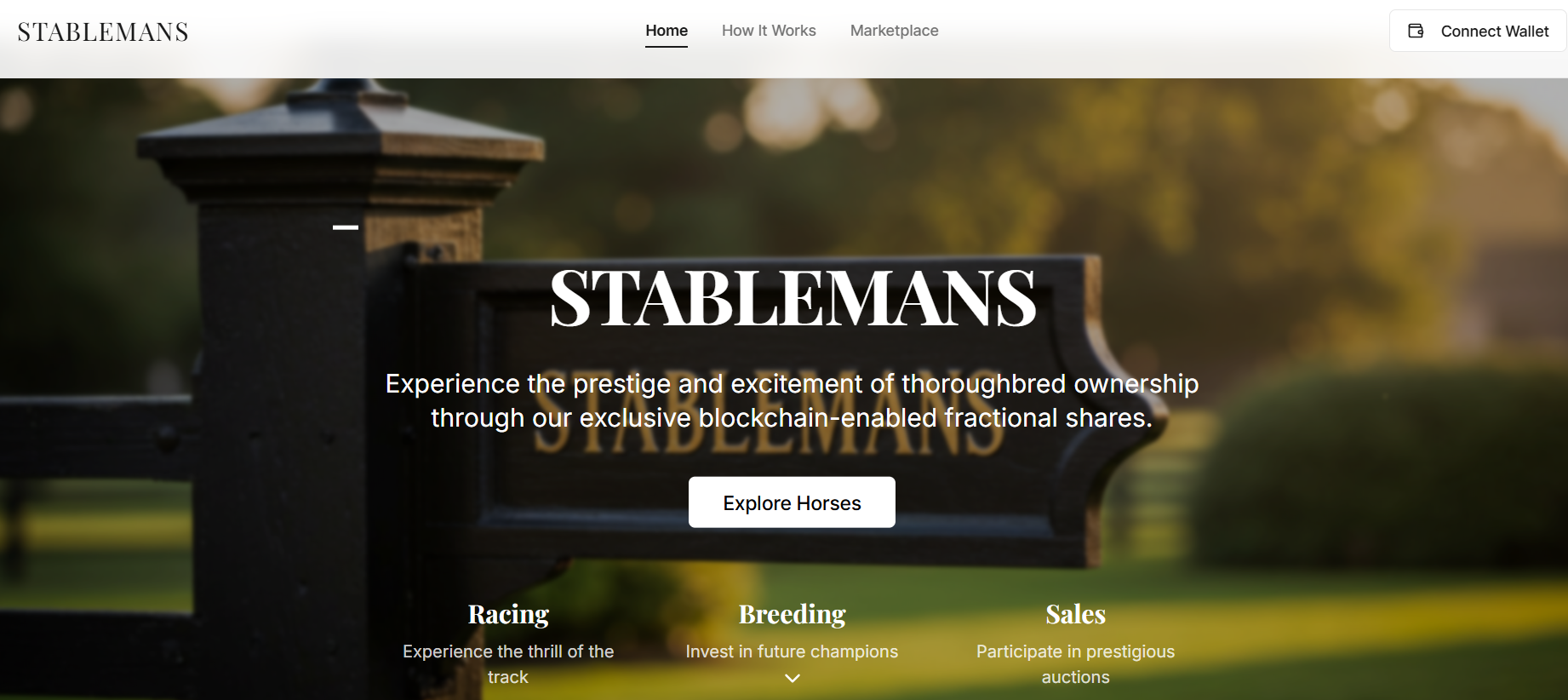
However, tokenization is slowly chipping away at these elitist barriers by dividing the ownership of real thoroughbred racehorses into fractional digital shares. Projects like Stablemans have launched tokenized thoroughbred ownership models on networks like Cardano, Solana, Base, Polygon, and Arbitrum. Investors can now purchase a modest stake in a living animal and share proportionally in any prize money, breeding income, or future sale proceeds without needing to buy an entire horse outright.
Despite the democratization of access, industry veterans urge caution. Chris Turner, co-founder of the impact investment firm KULA, offers a sobering reminder regarding luxury assets: "Putting a collectible or luxury item on a blockchain doesn’t automatically make it more liquid or valuable if the legal rights, transfer process, and market structure remain unchanged."
5. Industrial Uranium
While many mainstream finance participants immediately think of government treasuries and private credit when considering tokenized real-world assets, the market has also begun embracing heavier industrial commodities. Consider uranium, the radioactive metal globally renowned for its critical role in nuclear power generation.
Platforms like metals.io, backed by the Tezos ecosystem, have stepped into this space. Tezos co-founder Arthur Breitman has noted that blockchain technology excels at establishing reliable, auditable, and cost-efficient financial rails for any asset, but is particularly well-suited for technology-flavored commodities like uranium. Between November 2024 and July 2026, trading volume for tokenized uranium reached $21.5 million across approximately 18,200 trades and roughly 7,400 unique wallets. While institutional adoption remains modest—with major players still displaying hesitation regarding tokenized rails—the foundation is actively being laid.
6. Fishy Revenue Streams
One of the most unusual proposals ever received by the tokenization platform Brickken came from a Chilean fish-processing company. The firm wanted to issue tokenized debt with financial returns directly tied to the commercial value of the fish it sold to market.
Edwin Mata, chief executive of Brickken, explains that the digital token represented the lender’s contractual claim, while the payable interest adjusted dynamically in accordance with the company’s verified sales performance. In effect, it operated as a tokenized, revenue-linked debt instrument. Mata argues that the proposal highlights an important underlying principle of the industry: almost any operational cash flow can support a tokenized financial instrument, provided the underlying legal rights and performance data can be independently verified.
Ultimately, the fish never actually made it onchain. The underlying fish sales still relied heavily on traditional audits, commercial reporting, and legal agreements that could not yet be fully automated. The failed endeavor demonstrated that the biggest obstacle to tokenization is often not the limitations of the blockchain itself, but the complex friction of the physical world.
7. Music Streaming Royalties
Music royalties have also carved out a persistent niche onchain. One of the earliest high-profile examples occurred in 2021, when prominent DJ and producer 3LAU offered fans 50% of the streaming rights to his single "Worst Case" via his blockchain-backed platform, Royal. The following year, legendary rapper Nas utilized the same platform to sell streaming royalty rights to two of his tracks, "Ultra Black" and "Rare."
While the concept of onchain music royalties gained considerable momentum during the broader NFT boom, tokenized music rights have yet to evolve into a dominant mainstream asset class. Industry critics occasionally jest that this sluggish adoption stems from the notoriously meager payouts distributed by modern streaming platforms. After all, owning a minuscule fraction of a track requires millions of streams just to generate enough revenue to purchase a cup of coffee.
8. Human Skin Sponsoring
If tokenizing agricultural livestock and household flatulence was not unusual enough, some individuals have experimented with tokenizing parts of their own physical bodies. In 2021, Croatian professional tennis player Oleksandra Oliynykova auctioned the advertising rights to a 15-by-18-centimeter patch of skin on her right arm as an NFT.
The winning bidder paid 3 Ether—worth approximately $5,400 at the time—for the exclusive right to choose which tattoo the athlete would wear during professional tournaments for an entire year. While professional athletes have long sold sponsorship space on traditional textiles like shirts, shorts, and caps, Oliynykova’s experiment took the commercial concept a step further, giving a literal, biological meaning to having skin in the game.
9. A Burned Banksy Print
While conventional art collectors spend fortunes attempting to preserve physical masterpieces for posterity, certain segments of the crypto community have taken the opposite approach to make philosophical points about digital ownership. In 2021, an anonymous collective calling itself Burnt Banksy purchased a verified print by the elusive street artist titled Morons (White) for roughly $95,000. They proceeded to livestream the physical destruction of the artwork by fire, subsequently minting the event’s destruction as a digital token.
The rationale behind the theatrical stunt was that while the physical manifestation of the artwork no longer existed, its ownership and cultural footprint would live on perpetually through the immutable ledger of the blockchain. The resulting NFT ultimately sold for around $382,000, triggering fierce international debate over whether the group had wantonly destroyed a valuable cultural artifact or successfully transformed it into a new medium of expression. It stands as a unique historical instance of investors realizing a massive profit from a literal fire sale.
10. The First-Ever Tweet
During the explosive market activity of 2021, Twitter co-founder Jack Dorsey decided to tokenize his very first public post on the platform—the historic message reading "just setting up my twttr." He sold the digital certificate as an NFT to crypto entrepreneur Sina Estavi for a staggering $2.9 million, turning the transaction into a defining cultural symbol of the era’s speculative fervor.
However, the volatile nature of novelty assets was soon laid bare. Just one year later, Estavi attempted to flip the asset for a monumental $48 million, only to find virtually no demand. The highest reported bid during the attempted resale reached a meager $6,800.
While internet users can still visit X to read the original tweet for free, only a single individual holds the cryptographic certificate tied to its historical registry. Whether that distinction carries genuine economic value remains an open question for the markets. As Edwin Mata aptly summarizes regarding the broader wave of eccentric tokenization: "Tokenization can improve access, administration, settlement and transferability, but it cannot transform a poor investment into a good one."
 Non-Fungible Tokens (NFTs)
 Non-Fungible Tokens (NFTs)
 Non-Fungible Tokens (NFTs)