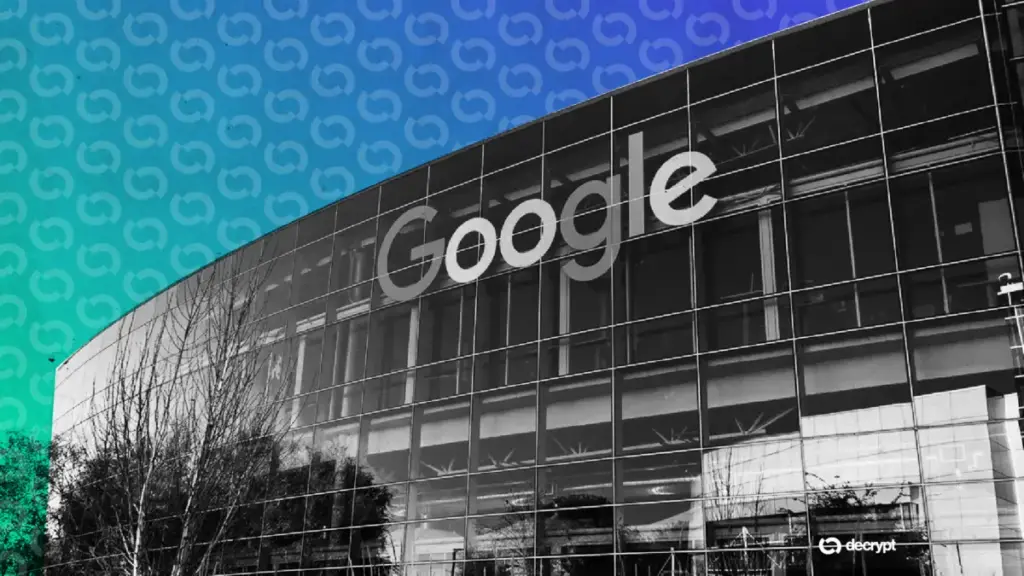
Google has officially released Nano Banana 2.1, marking the latest iteration of its flagship artificial intelligence model designed to convert natural language text prompts into detailed images, as well as execute precise photo editing tasks. The newly minted model, which expands upon Google’s rapidly evolving ecosystem of creative AI tools, is rolling out across a wide array of consumer-facing applications and developer environments.
According to Google, the updated model is immediately making its way into the Gemini app, Google Search’s dedicated AI Mode, Google Ads, and key developer ecosystems including Google AI Studio, Flow, and Stitch. The rollout comes as Google continues to aggressively integrate its most advanced multimedia generation capabilities into everyday search and enterprise workflows alike.
The original Nano Banana model famously propelled Gemini into mainstream cultural and technological prominence. In September 2025, a viral feature that allowed users to transform ordinary selfies into collectible-style figurines drove the Gemini application to the number one spot across both major mobile app stores, temporarily dethroning OpenAI’s ChatGPT after nearly three years of dominance. That massive wave of user adoption also coincided with a historic financial milestone for Google’s parent company, Alphabet, as its market valuation crossed the $3 trillion threshold during the same period.
Following that success, Google introduced Nano Banana 2 in February, which was built upon the Gemini 3.1 Flash Image architecture. The standout feature of that second-generation release was its ability to cross-reference queries with Google Search before rendering real-world objects, significantly improving the factual accuracy and contextual realism of generated scenes involving actual historical events, popular figures, or specific physical locations.
In an official announcement posted to social media on Tuesday, Google highlighted the sweeping enhancements packed into the new 2.1 release. The company stated that the upgraded version outperforms its predecessors across the board, noting significant leaps in overall visual design, mask-based editing precision, and subject consistency to help creators generate far more natural-looking and cohesive imagery.
To quantify these performance gains, Google pointed to ELO benchmark testing scores for text-to-image capabilities. In these subjective preference evaluations, Nano Banana 2.1 secured a score of 1,050 ELO points. This represents a noticeable step up from the previous generation Nano Banana 2, which scored 990 points, and the specialized Nano Banana Pro, which registered 935 points. Within the ELO scoring framework, higher numerical values indicate superior preference among evaluators, serving as a purely qualitative metric for model quality without a hard ceiling.
Under the hood, Nano Banana 2.1 boasts significantly expanded technical parameters. On paper, the model can process up to 14 reference images simultaneously in a single prompt context, tracking as many as four distinct characters and ten individual objects across the composition. When it comes to output, the model is capable of rendering resolutions up to 4K—approaching standard television-level sharpness—across varied aspect ratios, stretching as wide as an 8:1 panoramic format.
For developers and advanced users, the platform introduces customizable compute controls, allowing them to dictate how long the model "thinks" before rendering an image, scaling from minimal latency to high-depth reasoning. Furthermore, developers retain the ability to ground the model’s generations in both Google Search and Google Image Search, ensuring that the AI can fetch real-time visual and factual data before putting digital brush to canvas.
Alongside the performance and feature upgrades, Google has implemented a major structural price reduction for developers accessing the model via the Google developer API. Under the new pricing schedule, generating a standard 1K resolution image costs $0.0336, representing a precise 50 percent markdown compared to Nano Banana 2, which was priced at $0.067 per image.
Scaling up to higher resolutions, a 4K image now runs $0.0756 through the API, down from $0.151 in the previous generation. Additionally, Google is introducing a further 50 percent discount for batch processing jobs—situations where developers submit large volumes of images to be processed in bulk asynchronously rather than demanding instantaneous, real-time generation. At the standard 1K rate, developers can now process one thousand images for approximately $33.60, a steep drop from the previous $67 cost, positioning the new model as both a top-tier creative engine and a highly cost-efficient solution for large-scale enterprise deployment.
 Decentralized Applications (dApps)
 Decentralized Applications (dApps)
 Decentralized Applications (dApps)