
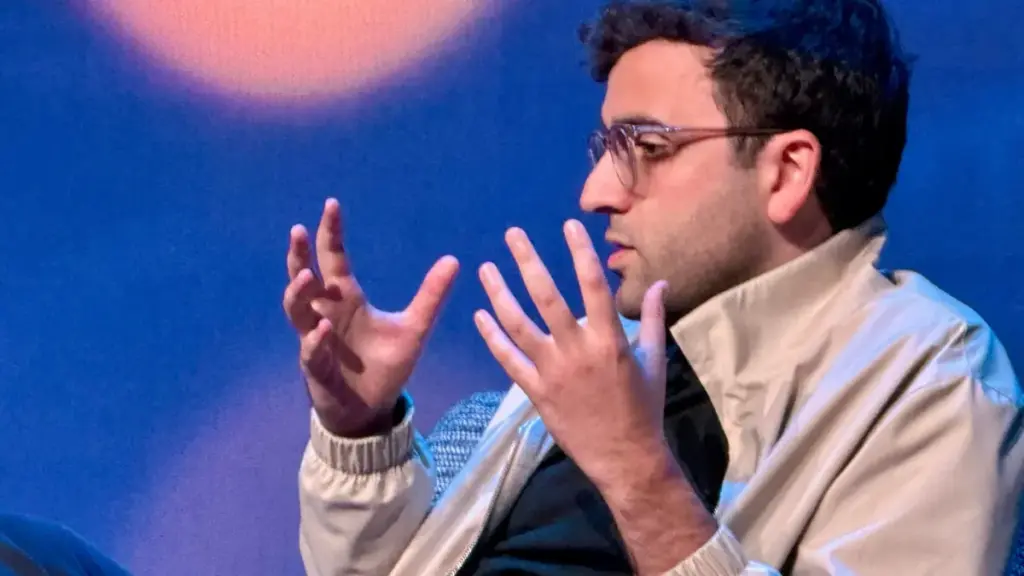
ARLINGTON, Va. — Tarek Mansour, the co-founder and chief executive officer of Kalshi, says he remains confident about the pending legal outcome regarding who holds the ultimate authority to regulate the booming prediction markets sector in the United States.
Speaking Wednesday at the annual DC Fintech Week event near Washington, Mansour addressed the high-stakes jurisdictional clash that has pitted federal regulators against state gaming authorities. The ongoing conflict, which centers on whether event contracts constitute financial products or state-regulated gambling, has evolved into a critical test for the future of financial innovation in the country.
"We feel pretty good about where we stand overall," Mansour told attendees, projecting steady optimism as the legal battle inches closer to a definitive resolution.
The legal controversy places Kalshi at the center of a national debate over the boundaries of financial regulation. A growing number of state authorities have challenged Kalshi and similar prediction market platforms in court, arguing that these firms are operating unauthorized sports wagering platforms that should rightfully fall under the jurisdiction of state-level gambling commissions.
Conversely, Kalshi and its primary federal regulator, the Commodity Futures Trading Commission (CFTC), have mounted a unified defense in the federal court system. They maintain that the CFTC serves as the appropriate and sole federal watchdog for prediction markets, viewing event contracts as legitimate financial derivatives rather than games of chance.
The dispute has already worked its way through several federal appellate courts, creating a fractured legal landscape. While one major appellate ruling has gone in favor of Kalshi’s regulatory framework, two separate rulings have backed the states’ perspective, asserting local oversight over sports-related event contracts.
The division among the circuits has raised the stakes considerably, prompting New Jersey to formally petition the U.S. Supreme Court to take up the case. The high court’s potential involvement has drawn intense interest from powerful outside entities, including the National Football League, which recently joined the pushback against prediction markets as the legal battle reaches the nation’s highest judicial body.
During his remarks, Mansour rejected the foundational premise pushed by critics and state regulators that sports-based event contracts lack significant economic utility or consequence, which has often been used to argue against their status as federally regulated financial instruments.
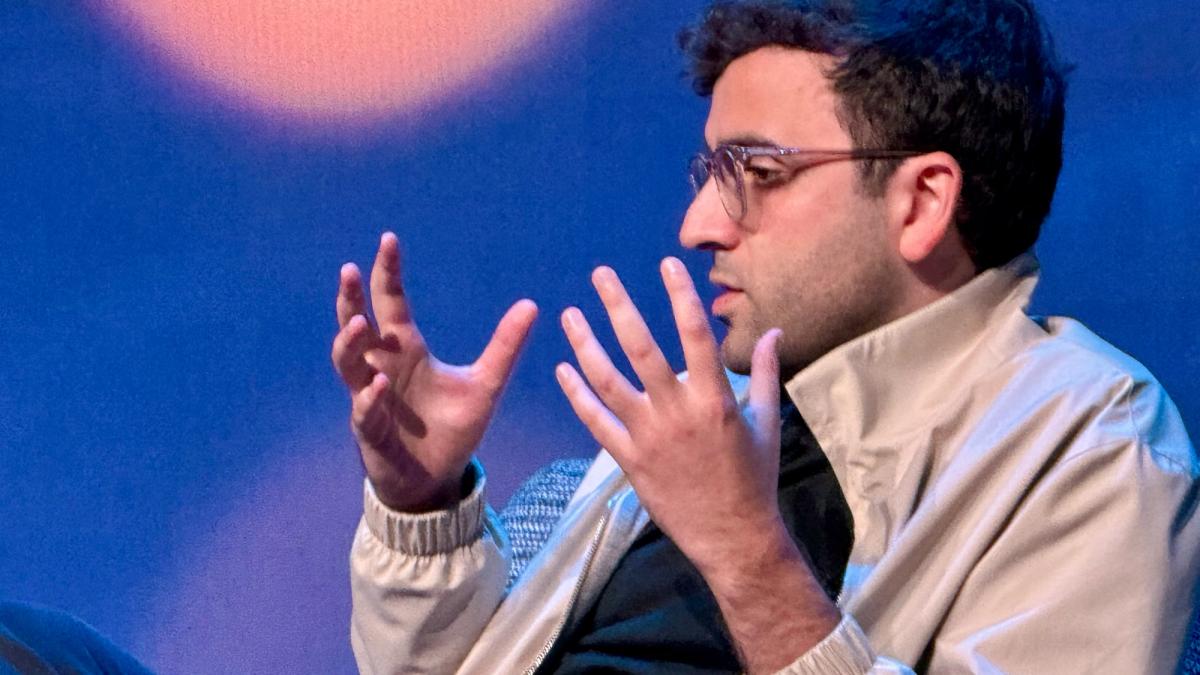
"The notion that sports does not have economic consequence is ludicrous," Mansour said, defending the market relevance and economic footprint of sports-linked prediction contracts.
Rather than framing the dispute as a simple turf war between state and federal regulators, Mansour warned that an unfavorable outcome would carry much broader consequences for the domestic financial technology ecosystem. He argued that the fundamental question is not whether state or federal authorities will oversee the market domestically, but whether prediction markets will be permitted to exist within the United States at all or be pushed entirely out of the country.
"It’s not a choice of state versus federal market. It’s a choice of whether prediction markets exist in the U.S. or whether they go offshore," Mansour emphasized.
Tracing the evolution of his platform, Mansour noted that he carefully evaluated Kalshi’s regulatory positioning from its inception. He maintained that the company’s business model fits neatly within longstanding federal statutory definitions of a commodity under United States law.
Mansour praised the foundational architecture of federal commodities law, describing the Commodity Exchange Act as a "truly beautiful statute" that historically accommodated a natural evolution from traditional agricultural futures to industrial commodities like oil and metals, and eventually to less tangible modern financial products, including swaps and event-based derivatives.
Beyond the ongoing courtroom battles, Mansour also used his appearance at DC Fintech Week to address recent public scrutiny regarding trading activity on his platform. He directly responded to questions surrounding inflated trading volumes in bitcoin and ether perpetual-futures markets on Kalshi, pushing back against criticisms circulating online.
"There’s a lot of crazy" on social media, Mansour said, addressing online discussions hosted on the platform X, formerly known as Twitter.
The public questions had focused on patterns of often-recurring trade sizes that data showed represented a substantial portion of Kalshi’s overall volume in crypto perpetual products. Re-affirming explanations he provided when the questions first arose, Mansour pointed back to structured, fixed-size orders executed by professional market makers as the structural reason behind the repetitive trade data observed on the platform.
 Global Crypto Markets
 Global Crypto Markets
 Global Crypto Markets







