
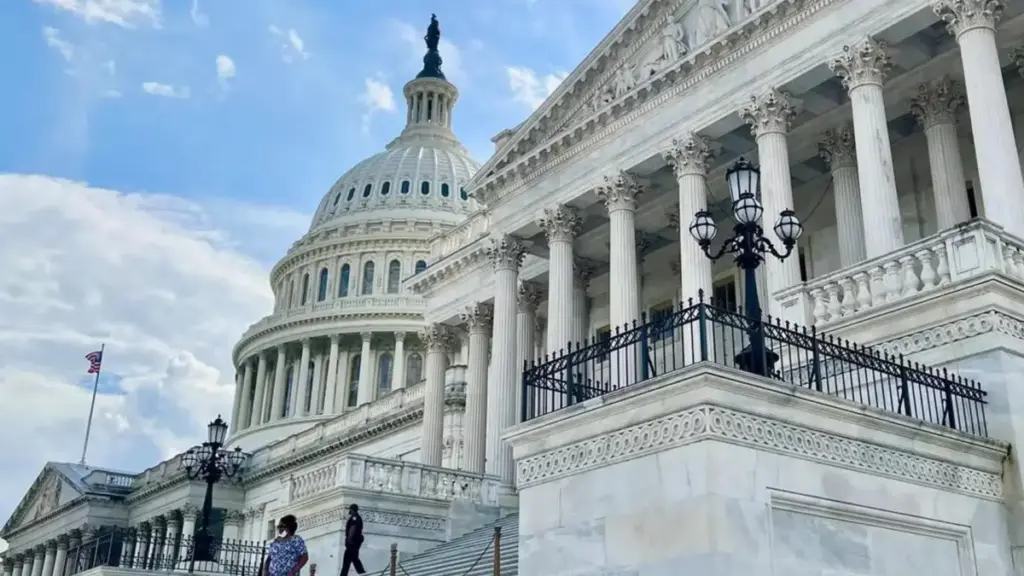
The U.S. Supreme Court has not yet indicated whether it will take up a high-stakes legal battle surrounding sports-based prediction markets, but the pressure on the nation’s highest judicial body is mounting rapidly. Over the past week, a broad coalition of political figures, regulatory architects, professional sports leagues, state governments, and tribal nations have flooded the Supreme Court with amicus briefs. At the center of the dispute is a fundamental question of federal oversight: whether prediction market contracts tied to sports outcomes legally qualify as financial "swaps" under federal law, or if they are simply gambling products subject to state-level regulation.
The unfolding judicial drama coincides with regulatory maneuvering by the Commodity Futures Trading Commission (CFTC). On Friday, the federal regulator issued two distinct proposals—including an interim final rule—that outline its official stance on how event contracts and prediction markets fit into the existing regulatory framework.
This legal and regulatory clash stems from a widening split among federal appellate courts. While some circuit courts have ruled that prediction markets touching sports are effectively gambling products governed by state laws, other judicial interpretations have left room for federal oversight under the Commodity Exchange Act (CEA). With the legal landscape deeply fractured, the Supreme Court is facing growing calls to step in and establish a definitive national standard.
Former Lawmakers and Regulators Push Back
Among the most notable filings submitted to the Supreme Court last week were amicus briefs from former U.S. Senator Chris Dodd and former Commodity Futures Trading Commission and Securities and Exchange Commission Chair Gary Gensler. Both figures played pivotal roles in shaping the landmark 2010 Dodd-Frank Wall Street Reform and Consumer Protection Act, which forms the legislative bedrock of the current legal argument.
In his brief, former Senator Dodd argued firmly that the Dodd-Frank Act was never intended by Congress to grant the CFTC the sweeping authority to override state governments and preempt their traditional powers to regulate gambling within their borders. The filing took direct issue with a recent ruling by a Third Circuit Court of Appeals panel, which voted 2-1 to uphold CFTC jurisdiction over sports-related swaps and prediction markets. Dodd’s brief emphasized that a sharp legal distinction exists between legitimate financial derivatives and traditional sports wagers.
The filing pointed out that modern sports-based prediction products—such as parlays chaining together multiple wagers across point spreads, player performances, different cities, and various sports leagues—fail to fulfill the economic purposes traditionally associated with derivatives. According to the brief, these products do not facilitate meaningful price discovery or commercial hedging, nor do they carry the type of potential financial, economic, or commercial consequences required to qualify as swaps under the CEA.
Furthermore, Dodd’s brief challenged the CFTC’s assertion that its statutory grant of "exclusive jurisdiction" serves as an express preemption provision immunizing every contract listed on a Designated Contract Market (DCM) from applicable state and tribal laws. Instead, the filing contended that the designation simply identifies the CFTC as the federal regulator for specific, covered financial instruments rather than a universal eraser of state gaming laws.
Gary Gensler echoed similar sentiments in his separate amicus filing. Drawing upon his extensive experience implementing the regulations derived from the Dodd-Frank legislation, Gensler argued that the statute did not bestow upon the CFTC the preemptive power to nullify state-level gambling restrictions. Gensler has previously raised analogous arguments in lower appellate court proceedings, underscoring the consistent view held by key architects of the 2010 financial reform law.
Broad Coalition of States, Tribes, and Sports Leagues Joins the Fray
The legal pushback extends well beyond former Washington lawmakers. A massive coalition consisting of 39 states alongside the District of Columbia has formally urged the Supreme Court to grant certiorari and rule that sports-related prediction markets are gambling products that must be regulated at the state level. They are joined by 145 tribal nations, as well as prominent industry groups including the American Gaming Association and the Casino Association of New Jersey.
The National Football League (NFL) also entered the fray, submitting an amicus brief outlining its profound vested interest in the outcome of the litigation. Given the profound economic and cultural impact of sports betting on professional athletics, the league expressed deep concern over what it characterized as the CFTC’s hands-off, laissez-faire regulatory approach. The NFL highlighted the growing friction between how individual states rigorously regulate traditional sports betting companies and how the CFTC oversees designated contract markets, the licensing category utilized by prediction market operators.
CFTC Moves to Codify Event Contract Rules
While the Supreme Court weighs whether to accept the petitions, the CFTC is pressing forward on the regulatory front. The agency’s dual actions released on Friday—an interim final rule and a complementary rule proposal—seek to solidify the regulator’s official interpretation of how event contracts intersect with the statutory definition of a swap.
Under the agency’s proposed framework, casino-style gambling is formally categorized as falling outside the federal definition of a swap. However, the CFTC maintains that broader event contracts remain firmly within its regulatory perimeter. The new regulatory text explicitly seeks to incorporate sports, politics, cultural phenomena, and weather-related events into the definition of event contracts that qualify as swaps under federal oversight.
This regulatory assertion directly conflicts with the arguments advanced by state attorneys general, tribal leaders, and sports leagues, who maintain that expanding federal definitions to encompass sports-based prediction markets infringes upon traditional state sovereignty over gambling activities.
Next Legal Steps
As the debate intensifies across both judicial and regulatory fronts, the timeline for the Supreme Court’s initial deliberations is drawing closer. Kalshi, one of the primary prediction market platforms at the center of the controversy, requested and was granted a formal extension to file its response brief before the Supreme Court. The platform’s response deadline is now set for November 9, 2026.
Until the Supreme Court announces whether it will grant review to resolve the deepening circuit split, the future regulatory jurisdiction over sports prediction markets remains suspended in a high-stakes state of uncertainty.
 Global Crypto Markets
 Global Crypto Markets
 Global Crypto Markets







