In a major development bridging traditional banking with distributed ledger technology, Ripple and The Bank of New York Mellon Corporation (BNY) have announced an expansion of their digital asset collaboration. Disclosed on October 27, the initiative aims to advance tokenized trade finance on the XRP Ledger (XRPL), starting with a targeted supply chain finance initiative designed to broaden investor access to approved business invoices. Beyond trade finance, the partnership adds institutional custody support for XRP and Ripple USD (RLUSD), while laying the groundwork for direct stablecoin issuance and redemption services through the bank.
The expanded collaboration marks another significant step in the convergence of institutional finance and blockchain infrastructure. By leveraging the XRP Ledger, the two financial entities intend to streamline the management, distribution, and financing of real-world financial claims. Implementation of these innovative financial products will remain subject to standard institutional customer requirements and rigorous compliance frameworks.
Monica Long, President of Ripple, underscored the strategic importance of the collaboration in connecting digital assets with traditional capital markets and institutional financial activity. She noted that working alongside BNY allows them to connect the necessary components of financial infrastructure on the XRP Ledger, enabling institutions to transition seamlessly from merely holding digital assets to actively utilizing them within capital markets and trade finance.
BNY Collaboration Targets Institutional Trade Finance
At the heart of the initial phase of this expanded partnership is an exploration of supply chain finance in collaboration with C2FO, a prominent global working capital platform. Through this initiative, investors could soon gain broader access to financing approved business invoices, creating new liquidity pathways and optimizing working capital efficiency for global enterprises.
Tokenized trade finance offers the potential to significantly broaden investor participation by fractionalizing and simplifying the management and distribution of tokenized financial claims. Rather than remaining locked within traditional, siloed banking channels, trade finance assets can potentially be represented digitally on a high-throughput blockchain, enhancing transparency and reducing settlement friction.
This initiative builds upon Ripple’s broader engagement in the trade finance sector. Notably, Ripple’s related work includes a Singapore-based initiative announced in March with Unloq, a supply chain finance technology provider. That pilot program successfully combined traditional financing workflows with conditional RLUSD payments, demonstrating the practical utility of stablecoins and distributed ledgers in streamlining international commerce.
BNY Extends Custody to XRP and RLUSD
As part of the broadened scope of their relationship, eligible institutional clients can now safeguard, hold, and transfer XRP and RLUSD directly through BNY’s Digital Asset Custody platform. BNY operates this specialized service within the strict governance, controls, and operational safeguards of its broader asset servicing business, ensuring that institutional participants benefit from the same high standards of security they expect from traditional financial assets.
This custody expansion naturally follows BNY’s landmark appointment as the primary custodian of RLUSD reserves in July 2025, alongside dedicated transaction banking services supporting the stablecoin. Ripple USD, Ripple’s United States dollar-backed stablecoin, has experienced substantial growth, reaching a market capitalization of $2.58 billion. The underlying reserve custody arrangement specifically concerns the fiat and cash-equivalent assets backing RLUSD, whereas the newly expanded digital asset service safeguards the actual tokens held by institutional market participants.
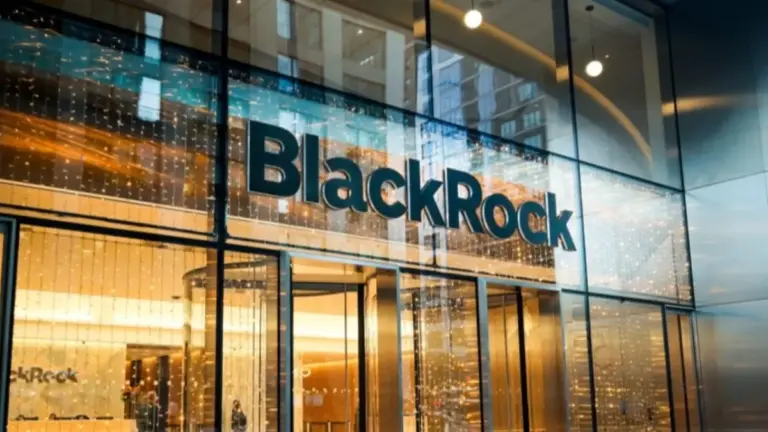
The institutional relationship also encompasses Ripple Prime, Ripple’s comprehensive institutional prime brokerage arm that provides advanced trading, financing, and clearing services. Ripple Prime previously established itself as an early adopter of BNY’s tokenized deposit capabilities back in January, signaling a growing comfort with on-chain cash movements among large-scale market intermediaries. BNY remains a towering financial institution, reporting an immense $63.4 trillion in assets under custody and/or administration as of September 30, alongside an additional $2.2 trillion under management.
Direct RLUSD Services and Tokenized Products Are Planned
Looking ahead, BNY intends to support an even wider array of tokenized assets and investment products issued natively on the XRP Ledger. Furthermore, the bank plans to enable direct RLUSD minting and redemption capabilities through its institutional infrastructure. These proposed services are specifically targeted at enhancing global payments, accelerating settlement times, and optimizing collateral workflows for institutional clients.
These developments align closely with Ripple’s broader institutional XRP Ledger development programs, which are strategically focused on building out robust credit infrastructure and regulatory-compliant financial applications. By embedding compliance and security directly into the protocol level, Ripple aims to make the XRPL an attractive environment for tier-one financial institutions seeking to modernize their technological stack.
Carolyn Weinberg, BNY’s chief innovation and market transformation officer, articulated the overarching vision driving the bank’s digital asset strategy. She noted that in collaboration with Ripple, the institution is actively working to shape a more continuous, efficient, and resilient financial system, ultimately paving the way for broader, sustainable institutional adoption of distributed ledger technology across global markets.
 Bitcoin & Major Altcoins
 Bitcoin & Major Altcoins
 Bitcoin & Major Altcoins