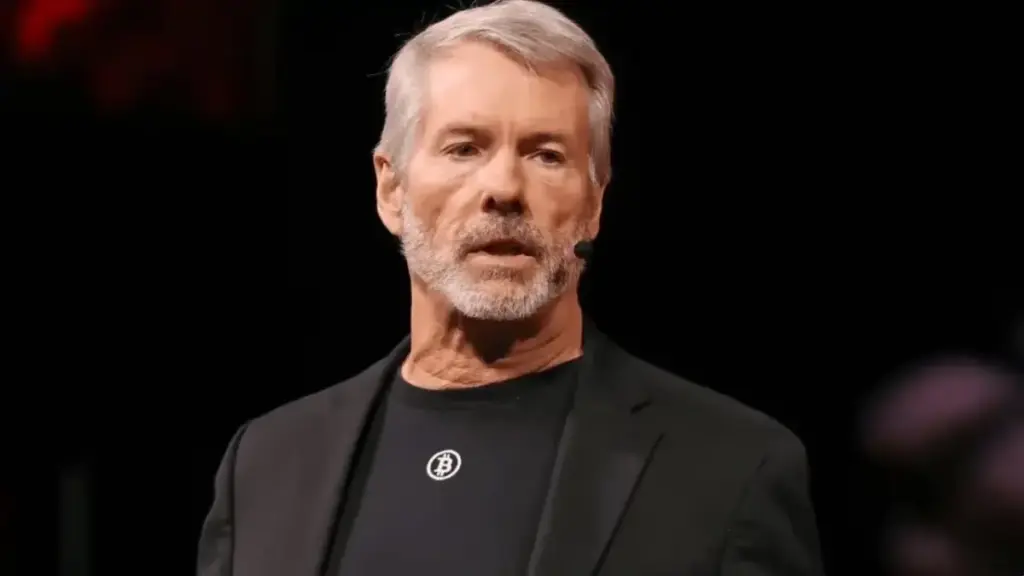
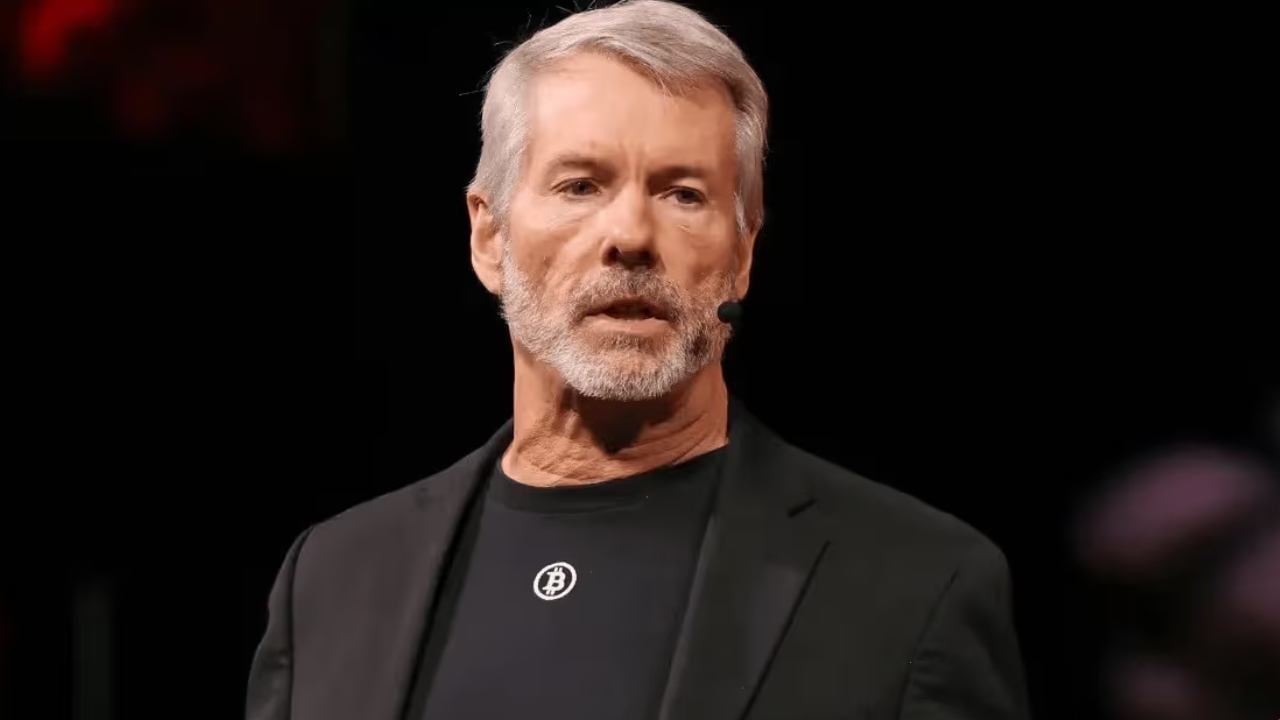
Strategy founder Michael Saylor has outlined an ambitious and expansive vision for the future of digital assets, arguing that bank lending, tokenized securities, and bitcoin-backed credit could eventually support an astonishing $100 trillion financial system. Speaking alongside ParaFi Capital partner Jeff Park during a keynote appearance at ParaFi Investor Day, Saylor detailed the mechanics of Strategy’s multibillion-dollar bitcoin treasury, its 12% preferred stock, and the broader financial framework he believes will transform bitcoin from simple digital capital into the foundational bedrock of an entirely new global credit economy.
The high-profile presentation was quickly followed by customary social media signaling from the executive. On Sunday, shortly after sharing footage of his ParaFi Investor Day appearance, Saylor returned to X with a familiar cryptic message hinting that his company may be preparing yet another expansion of its already massive bitcoin treasury. "We found room for more orange," Saylor wrote, accompanying the post with an updated chart tracking Strategy’s historic bitcoin accumulation strategy.
The post closely mirrors his usual Sunday ritual of teasing potential corporate acquisitions ahead of formal Monday announcements, though no new purchase has been officially confirmed at the time of publication. Strategy currently holds a staggering 848,250 bitcoin, acquired at an average price of $75,444 per coin, with its total holdings valued at approximately $69.45 billion. If historical patterns offer any indication, another multi-million or multi-billion-dollar bitcoin acquisition announcement may well be waiting in the wings for market participants on Monday morning.
However, Saylor’s ambitions extend far beyond merely betting on higher spot prices for bitcoin. His core thesis centers on constructing a massive financial architecture worth as much as $100 trillion, anchored by an asset that computers cannot manufacture and that corporations are racing to accumulate. At the ParaFi event, the Strategy founder delivered a sweeping presentation on digital capital, credit expansion, and equity structures before sitting down with Jeff Park, who also serves as a Bitwise adviser, for a wide-ranging fireside chat. His central argument underscored that bitcoin’s greatest financial metamorphosis may have barely begun, even after seventeen years of market existence.
Saylor Sees Bitcoin Becoming the Foundation of Global Credit
During his address, Saylor emphasized the unique properties of the cryptocurrency that make it an ideal base layer for future financial systems. "Bitcoin is a scarce desirable piece of property in cyberspace," Saylor told attendees. "So the robots can’t make more bitcoin." He argued that the rapid proliferation of artificial intelligence would render conventional, legacy businesses increasingly vulnerable while simultaneously strengthening the long-term investment case for fundamentally scarce, immutable assets.
"If you’re an investor, you want to buy something a robot can’t make," he stressed. Furthermore, Saylor identified institutional bank adoption as a major catalyst for the coming years, particularly as traditional financial institutions begin extending credit against verified bitcoin holdings.
Detailing the mathematical mechanics behind this emerging credit market, Saylor noted the direct relationship between new lending capacity and asset supply absorption. "Every $10 billion of credit is one year’s supply," he explained. "So you create a hundred billion of credit on a trillion-dollar asset class, it’s enormously bullish." He expects rapidly expanding institutional custody services to help establish and scale these vital lending networks over the next 12 to 24 months.
Strategy’s Bitcoin Machine Takes Aim at a Much Bigger Prize
Expanding on the operational mechanics of his own firm, Saylor described Strategy’s financial structure as a self-reinforcing mechanism that continuously raises capital, purchases bitcoin, and leverages appreciating reserves to support subsequent rounds of financing. "We sell the credit, we buy the bitcoin, we drive up the price of the bitcoin, we drive up the premium in the common stock," he explained to the audience. He noted that Strategy currently controls approximately 4% of bitcoin’s eventual circulating supply and has successfully raised $21 billion over the course of the year.
Pointing to the core economic reality of the asset, Saylor reiterated the fundamental constraint governing the ecosystem. "Because bitcoin is a commodity. And because it’s capped at 21 million," he said, laying out the foundation of his bullish long-term outlook. He then delivered his most striking prediction of the day: "You can scale this up to be a 10 trillion, 20 trillion, 50 trillion, hundred trillion dollar system. And when it gets going, it gets going very fast."
Bitcoin-Backed Credit Targets Daily Income
Moving beyond base-layer accumulation, the Strategy executive also shed light on his growing ambitions for STRC, the company’s bitcoin-backed preferred stock, which he noted currently yields a 12% return. "We have about 48 years’ worth of dividends in our capital structure," Saylor said, highlighting the deep financial backing supporting the security. Looking ahead, his next primary objective is the implementation of daily dividend distributions, a feature specifically designed to accommodate modern tokenized financial markets that operate continuously around the clock.
"If we could pay hourly, we’d pay hourly," he joked, emphasizing the speed and flexibility demanded by contemporary investors. Saylor also outlined his conceptual vision for a bitcoin-backed dollar instrument capable of offering attractive, sustainable income streams to holders. "That’s the mythical bitcoin backed stablecoin that pays you 8%," he noted. While such a product remains an aspirational goal rather than an established commercial financial instrument, its proposed yields would naturally depend on the underlying risk architecture and structural design.
Bitcoin’s 17-Year Journey Offers a Lesson for Wall Street
During the fireside chat, Park pressed Saylor on the realities of institutional adoption and the distinct hurdles facing a relatively young credit category. Saylor readily acknowledged that traditional institutional investors require substantial, long-term empirical evidence proving these innovative instruments can successfully weather severe macroeconomic bear markets. "We have to prove we can manage through bear markets," he conceded.
Offering a grounded historical comparison, Saylor reflected on how far the broader cryptocurrency ecosystem has come over the past two decades. "Bitcoin’s 17 years old and people are just now not laughing at it and saying, ‘Okay, I guess it’s a legitimate something,’" he observed. For Saylor, the emerging sector of digital credit is traveling down a remarkably similar developmental path, with years of ongoing investor education still required ahead. Yet, even amidst his grand macroeconomic enthusiasm, the market’s ultimate long-term acceptance may ultimately hinge less on spectacular forecasts of a $100 trillion system and far more on something decidedly old-fashioned: the consistent, uninterrupted delivery of dividend payments.
 Bitcoin & Major Altcoins
 Bitcoin & Major Altcoins
 Bitcoin & Major Altcoins