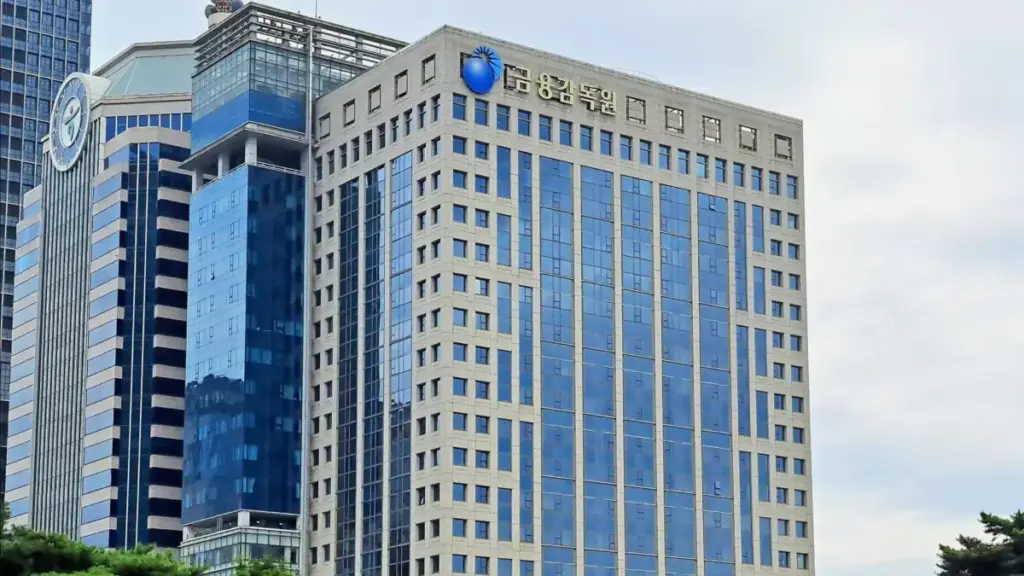
The country’s financial regulators are aggressively expanding their earlier mobile application restrictions to encompass official websites, proactively targeting unauthorized foreign trading platforms before local retail investors report financial losses.
South Korea is intensifying its sweeping crackdown on the digital asset sector by blocking access to 27 unregistered foreign cryptocurrency exchanges, including prominent global platforms such as KuCoin, BitMart, and MEXC. This decisive regulatory action marks a significant escalation from previous measures, effectively extending restrictions beyond mobile applications to cover official web portals and domain addresses.
The country’s Financial Intelligence Unit (FIU) announced the enforcement action following comprehensive reviews conducted on October 6 and 7. The sweeping measures were formally approved by the Korea Communications Standards Commission. According to regulatory statements, websites operated from overseas jurisdictions will be systematically blocked at the network level, while any unauthorized platforms attempting to operate domestically will face immediate service termination.
This aggressive policy move effectively closes another major loophole that allowed South Korean retail and institutional investors to bypass domestic controls and access unregistered offshore exchanges. Last year, local authorities successfully restricted access to the mobile applications of these exact platforms on major app stores run by Google and Apple. Empowered by updated enforcement protocols, South Korean regulators can now seek website blocks the moment they detect unregistered activity, operating with enhanced agility and removing the previous requirement to wait for formal court rulings or concrete evidence that local customers have suffered actual financial damages.
While the FIU did not specify a definitive timeline for how long these network restrictions will remain in place, nor did they set an explicit deadline for the targeted exchanges to come into compliance, the legal pathway for operation remains clear. Any cryptocurrency exchange that wishes to legally serve South Korean customers must formally register with the FIU and fully comply with the nation’s stringent security frameworks and anti-money laundering (AML) regulations.
Global exchanges are already adjusting to the mounting regulatory pressure. Representatives from major platforms have begun responding to the latest developments. A spokesperson for KuCoin emphasized the exchange’s commitment to compliance, stating that the company respects applicable laws and regulations across all jurisdictions in which it operates. The spokesperson added that KuCoin continuously strengthens its internal compliance frameworks to respond effectively to evolving global and local regulatory requirements, while reassuring users that their assets remain completely safe and secure, with future updates to be communicated through official channels. Meanwhile, other targeted platforms, including BitMart, Phemex, and MEXC, did not immediately respond to media requests for comment regarding the blocking of their web domains.

This enforcement action sits within a broader, highly active regulatory landscape in South Korea. The country’s proposed Digital Asset Basic Law, which is still working its way toward formal implementation, is designed to establish a comprehensive legal foundation for the entire digital asset ecosystem. Once enacted, the legislation will govern cryptocurrency issuance, trading practices, custody solutions, and market supervision, bringing the sector closer to traditional financial market standards.
Earlier in the year, financial authorities took further steps to safeguard market integrity. In April, the Financial Services Commission and the Financial Supervisory Service introduced a mandate enforcing unified cryptocurrency withdrawal delays across the board. This regulatory intervention effectively stripped domestic exchanges of their previous discretion to allow users to bypass established holding periods, a move specifically engineered to curb fraud and complicate illicit fund movements.
The FIU revealed that it has already referred 44 unregistered operators to law enforcement investigators for further scrutiny. The regulator has also committed to pursuing subsequent blocks against any websites that attempt to evade the current restrictions by reopening under alternative domain addresses or web aliases. Currently, only 28 virtual asset service providers maintain proper registration status with the South Korean financial watchdog.
Alongside the technical blocks, the financial watchdog issued stark warnings regarding the considerable risks associated with utilizing unauthorized platforms. Officials highlighted that traders who continue to use unregistered exchanges will likely face severe difficulties recovering their funds if the platforms experience operational distress, insolvency, or regulatory shutdown. To mitigate potential harm, the FIU announced it will collaborate closely with the Digital Asset eXchange Alliance (DAXA), a prominent industry association, to assist affected customers in safely withdrawing their funds in cases where access restrictions create insurmountable hurdles. Furthermore, the regulator strongly urged domestic investors to verify whether their chosen exchanges are officially registered and to proactively withdraw any remaining assets from unauthorized operators.
The urgency behind these regulatory measures is underscored by shifting capital patterns within the nation’s digital economy. South Korean investors have been gradually moving substantial amounts of cryptocurrency overseas over the past several months, driven largely by increasingly strict domestic trading rules and compliance mandates. Industry data indicates that an estimated $110 billion in digital assets flowed out of domestic exchanges in 2025 alone, as traders sought alternative liquidity pools and platforms operating beyond the immediate reach of Seoul’s stringent financial oversight.
 Global Crypto Markets
 Global Crypto Markets
 Global Crypto Markets