Three of Southeast Asia’s most influential central banks are joining forces to develop unified approaches for moving regulated stablecoins and tokenized commercial bank deposits across international borders. The collaborative effort, known as the BLOOM initiative, is designed to significantly reduce the operational costs and technical complexities associated with connecting financial institutions across different regulatory markets.
The initiative marks a major step forward in the modernization of regional and global payment architectures, bringing together policymakers, traditional financial giants, and digital asset infrastructure providers to establish common regulatory and technical baselines.
Central Banks Seek Common Ground for Digital Money
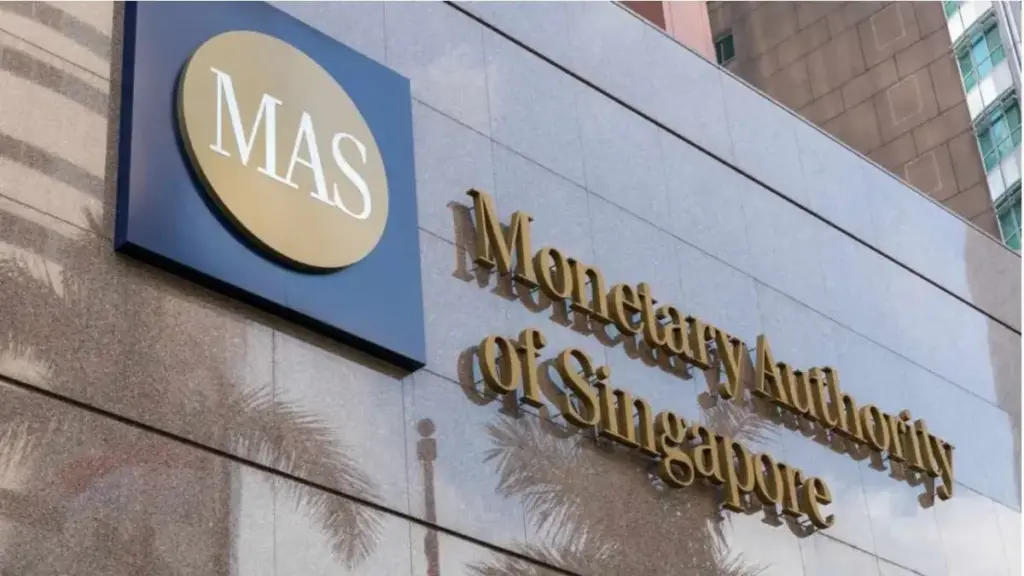
Cross-border digital money settlement has taken center stage as the monetary authorities of Singapore, Malaysia, and Thailand expand their regional cooperation. The Monetary Authority of Singapore (MAS) announced the expansion of the BLOOM framework, formally welcoming Bank Negara Malaysia and the Bank of Thailand as core policymaker members to steer the multi-jurisdictional project.
The acronym BLOOM stands for Borderless, Liquid, Open, Online, and Multi-currency. Operating as a comprehensive public-private partnership, the initiative unites central bank regulators, commercial banks, major payment networks, and cutting-edge technology providers. Its primary operational scope encompasses two distinct forms of digital money: regulated stablecoins, which are digital tokens designed to maintain a stable value by tracking a reference asset such as a national fiat currency, and tokenized deposits, which represent conventional commercial bank deposits recorded on distributed ledgers or digital platforms.
The roster of participants reflects the convergence of traditional finance and the digital asset economy. Alongside the founding central banks, the initiative includes global payments heavyweights Mastercard and Visa; Nium, a specialized cross-border payments infrastructure provider; blockchain firms Ripple and Circle; cryptocurrency exchange Coinbase; and Airwallex, an international financial platform tailored for businesses. Regional banking and digital service providers are also heavily represented, featuring Maybank, Sea’s digital financial services arm Monee, and digital wallet service Shopeepay. Crucially, the World Bank Group is participating to provide developmental perspectives.
The practical applications currently being advanced through the BLOOM framework span a broad spectrum of financial activities, including retail and wholesale payments, corporate treasury operations, and the complex mechanics of international trade finance.
Articulating the vision behind the collaborative effort, Leong Sing Chiong, MAS deputy managing director for markets and development, emphasized the multi-faceted nature of the future financial landscape. He noted that the future of finance will inevitably involve multiple forms of digital money operating seamlessly across different institutions and markets, necessitating proactive regulatory and technical harmonization.
Shared Frameworks Target Costs and Transaction Safeguards
For financial institutions operating across multiple jurisdictions, navigating a fragmented regulatory and technical landscape has long been a costly and time-consuming endeavor. Establishing common frameworks under the BLOOM initiative aims to alleviate this burden by reducing the necessity for institutions to negotiate separate bilateral agreements with every counterparty or foreign market. By standardizing these interactions, the initiative seeks to lower overall implementation costs and shorten time-to-market for innovative cross-border payment products.
The work streams within BLOOM focus heavily on acceptance and interoperability. Participating entities are examining the fundamental mechanics of how financial institutions accept different forms of digital money, contract with one another, complete final settlement, and physically connect their disparate systems. Furthermore, the initiative is addressing programmable controls—rules embedded directly into digital transactions to automate compliance processes such as identity verification, anti-money laundering checks, sanctions screening, and other essential risk safeguards.
Simultaneously, national regulators are adapting their domestic rules to accommodate these cross-border frameworks. Singapore has advanced regulatory proposals addressing how digital tokens issued across foreign jurisdictions could qualify for official recognition under its domestic stablecoin framework. These legislative changes outline clear pathways for jointly issued tokens as well as a limited number of foreign-issued stablecoins that adhere to comparable regulatory standards. Proposed safeguards for stablecoin issuers under these rules include rigorous stress testing, comprehensive recovery planning, and orderly wind-down requirements in the event of failure.
Private sector participants are concurrently developing complementary technological solutions to bolster security. Mastercard introduced its Stablecoin Security system for payment screening, a separate initiative designed to enhance transaction safeguards by combining payment intelligence with advanced blockchain analytics. The system evaluates fraud and sanctions risks in real-time, backed by initial partners such as Borderless.xyz, which connects financial institutions to licensed stablecoin providers, and Keyrails, which supports high-value cross-border trade payments. The rollout for this security infrastructure begins in North America, with worldwide commercial availability targeted for 2027.
Visa Pilot Explores Seven-Day Stablecoin Settlement
Among the practical use cases actively being tested within the BLOOM ecosystem, Visa and Nium are leading a pilot project exploring round-the-clock settlement capabilities. The initiative investigates the feasibility of settling transactions seven days a week, effectively eliminating the traditional settlement delays introduced by weekends and public holidays. The project’s architecture supports regulated digital tokens denominated in major fiat currencies, including U.S. dollars and euros, while leveraging Visa’s established payment network and robust compliance capabilities.
Settlement financing represents another vital digital money application being refined by participants in the ecosystem. In a separate partnership aimed at addressing liquidity constraints, Ripple and Arf are integrating Ripple’s dollar-pegged stablecoin, RLUSD, to provide short-term working capital to licensed payment companies while their cross-border transfers are undergoing final settlement. This arrangement supplies liquidity directly on the XRP Ledger, helping payment service providers manage cash flow gaps during multi-day transfer cycles.
The inclusion of the World Bank Group brings an invaluable development-oriented perspective to the BLOOM initiative. MAS has highlighted the World Bank’s extensive global experience in modernizing national payment systems, optimizing cross-border payment corridors, and championing financial inclusion by expanding secure and affordable access to financial services for developing economies.
 Bitcoin & Major Altcoins
 Bitcoin & Major Altcoins
 Bitcoin & Major Altcoins