
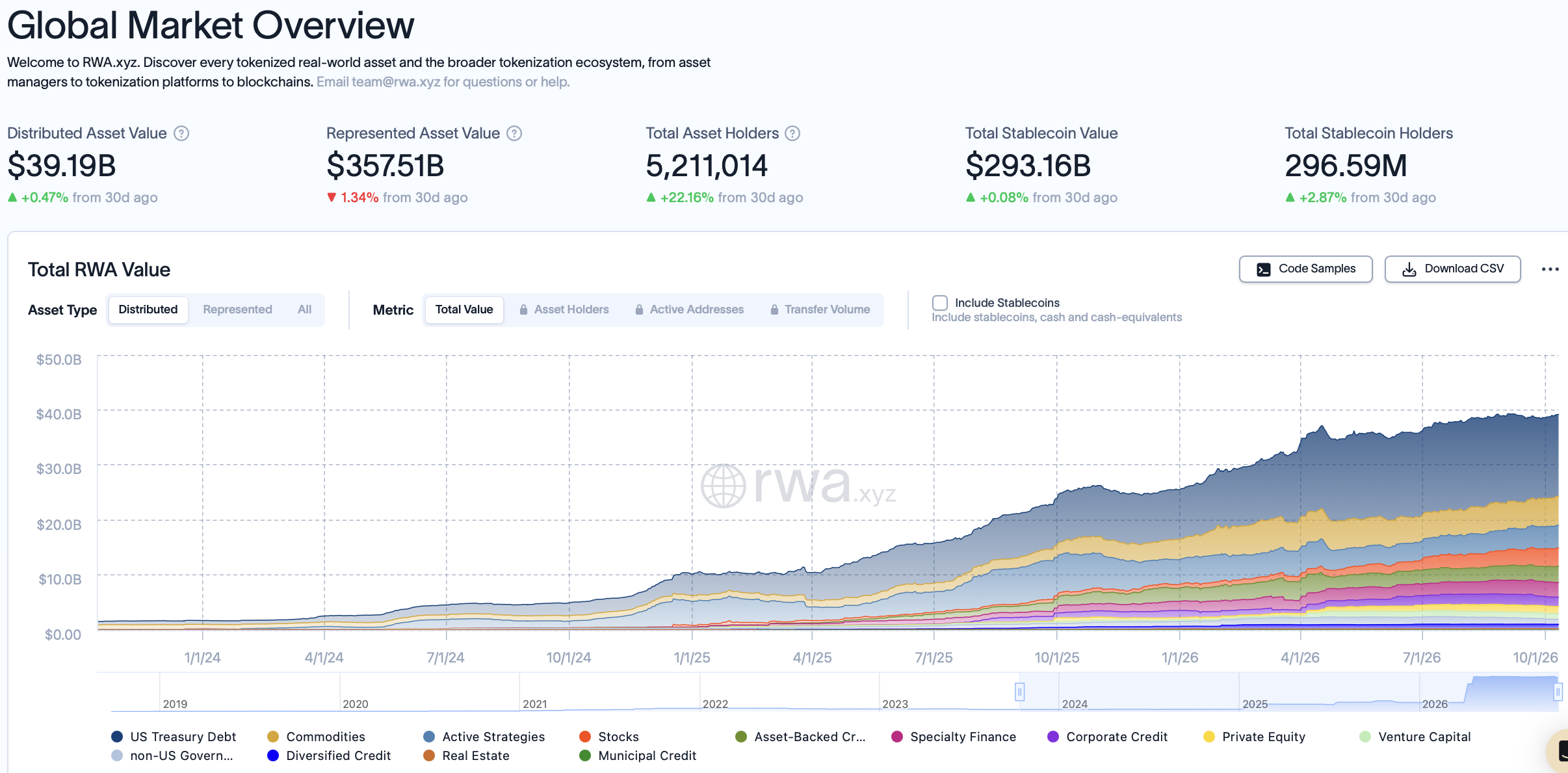
Tokenized assets are rapidly opening up fresh trading opportunities across global financial markets, but the burgeoning supply of real-world assets (RWAs) being brought onchain has yet to be matched by commensurate investor demand. This structural imbalance is currently shaping the landscape of digital finance, according to insights shared by senior industry figures at a prominent gathering of Web3 and traditional finance leaders.
Speaking during a panel dedicated to liquidity and market fragmentation at CONNECT by Cointelegraph: Singapore Edition on Oct. 9, Alex Taaffe, chief revenue officer at prominent crypto trading firm GSR, detailed the evolving dynamics of onchain finance. Taaffe noted that while liquidity is visibly improving in trading sectors for pre-IPO stocks, commodities, and global equities—asset classes that historically suffered from limited accessibility for everyday investors—the broader market for fully tokenized real-world assets tells a different story. Specifically, the pace of institutional and asset manager issuance has far outstripped the immediate appetite and capital deployment from investors.
The event itself served as a major convergence point for the digital asset ecosystem, bringing together Web3 founders, venture capitalists, and established industry executives. Attendees participated in four comprehensive panel discussions covering critical sector themes, including asset tokenization, stablecoin payments, the evolution of onchain trading infrastructure, and venture capital exit strategies. The conference also featured a high-profile startup pitch competition, highlighting the relentless innovation taking place within the digital asset space.
Elaborating on the current friction points in the sector, Taaffe pointed out that the mismatch is particularly acute when looking at fully tokenized assets. "Specifically on RWAs, and fully tokenized assets, there’s a supply and demand imbalance. There’s a ton of supply. Every asset manager issuer wants to do capital formation onchain," Taaffe told the audience.

Furthermore, Taaffe explained that the proliferation of numerous asset issuers alongside an expanding array of blockchains has compounded the issue. Instead of unifying global liquidity, this proliferation has further fragmented capital across disparate tokenized markets, making efficient price discovery and seamless trade execution more complex for market participants.
Lingling Jiang, a partner at DWF Labs, echoed these concerns during the discussions, agreeing that market fragmentation remains a persistent challenge for the industry. Jiang highlighted that the problem is particularly pronounced when different issuers choose to tokenize the exact same underlying asset, inadvertently creating isolated, separate liquidity pools rather than a single, deep market. Despite these structural hurdles, Jiang emphasized that overall cryptocurrency liquidity has improved significantly over recent years, even as the industry acknowledges that considerable work remains to be done to achieve true operational maturity.
The challenges of tokenization and market accessibility arrive as various segments of the onchain economy continue to achieve milestones. For instance, recent market data highlighted by industry observers pointed to a notable market reaction where Securitize stock jumped over 10% following the successful launch of tokenized United States equities on the Solana blockchain, underscoring the intermittent surges of strong investor interest in specific high-profile tokenization products.
Stablecoin Adoption Hinges on Everyday Payments
Moving from investment assets to transactional mediums, the dialogue at the conference shifted toward the practical utility of digital currencies. During the panel titled "Stablecoins at the Point of Sale: Cards, Wallets and the Race for Everyday Spend," industry executives dissected the barriers preventing digital currencies from achieving ubiquitous global adoption.

Mike Silagadze, founder and CEO of ether.fi, argued that while stablecoins have undeniably revolutionized the efficiency of moving money across international borders, their broader, mainstream adoption ultimately depends on a fundamental shift: whether everyday consumers can seamlessly use them for routine, daily expenses.
Silagadze drew attention to developed financial hubs like Singapore, where a technologically savvy consumer might readily hold digital dollars like USDC in a digital wallet, yet still find themselves reliant on traditional local fiat currency to pay routine utility bills or everyday expenses. This dichotomy vividly illustrates the lingering gap between advanced blockchain payment infrastructure and the practical realities of everyday consumer financial services.
Echoing this user-centric perspective, Yvonne Chia, head of communications at USDD, emphasized that issuers must view the ecosystem entirely from the perspective of the end user. "The most important thing for you is the user experience," Chia noted, outlining the strategic direction that major players are striving toward. "That’s the kind of direction that we want to move in, to make it as easy as possible for the user to have stablecoins, use stablecoins, to the point where it doesn’t cross their mind that they are using a stablecoin. It’s just a regular part of their lives."
Silagadze reinforced this sentiment, bluntly diagnosing the current friction in consumer adoption: "The reason no one uses stablecoins in many parts of the world is because it just doesn’t plug into your day-to-day life."
Beyond the hurdles of consumer habit and interface design, regulatory complexities continue to present significant operational challenges for payment providers. Ilya Podoynitsyn, co-founder and CEO of FinHarbor, explained that companies facilitating stablecoin transactions must constantly navigate a patchwork of regulatory frameworks that vary wildly across different global jurisdictions. This regulatory fragmentation forces payment infrastructure providers to continuously adapt their internal compliance systems and technical architecture to satisfy the unique requirements of individual markets.
Addressing the ultimate standard for user experience, Ashna Vaghela, chief customer officer at crypto payments provider Mercuryo, asserted that stablecoin payments must eventually become as frictionless and intuitive as using Apple Pay, allowing users to complete purchases effortlessly within existing application environments. "I think that’s the whole point, to be invisible," Vaghela remarked.
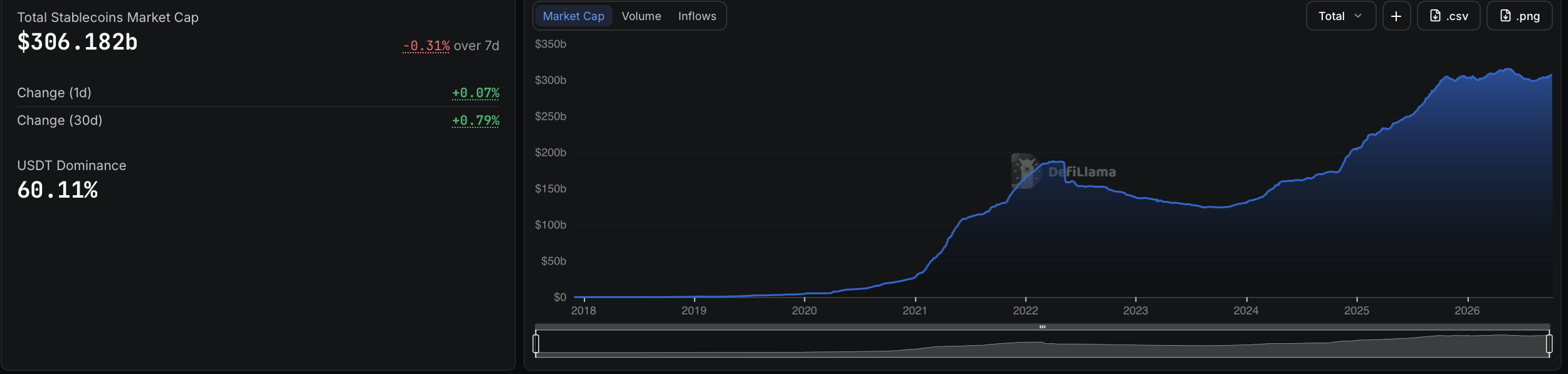
These strategic discussions unfolded against a backdrop of substantial macroeconomic scale for the sector. At the time of the conference, the global stablecoin market capitalization stood at approximately $306 billion, representing a modest increase of about 2% year over year following a explosive growth phase of roughly 74% during the preceding 12-month period.
Onchain Trading Faces Liquidity Fragmentation and Risk Management Challenges
As decentralized finance and onchain trading mechanisms continue to evolve, trading platforms increasingly encounter sophisticated hurdles regarding the identification of true liquidity across disparate blockchain networks and the effective mitigation of counterparty risk. These themes took center stage during the panel focused on "What’s Still Missing in the Onchain Trading Stack in 2026."

Austin Federa, co-founder of DoubleZero, pointed out that transferring liquidity fluidly between different blockchain networks remains significantly more challenging than moving capital within legacy traditional financial markets. Describing the core obstacle, Federa explained that "fragmentation is not just an execution problem, it’s like a data problem," adding that "it’s actually very hard to figure out how much liquidity truly exists onchain."
On the critical front of risk management, Miguel Morel, founder and CEO of blockchain analytics firm Arkham Intelligence, detailed how modern trading firms are leveraging advanced onchain data analysis to rigorously evaluate counterparty risks. This capability is especially vital within burgeoning sectors like prediction markets, where certain market participants may possess informational advantages over others.
"If you know who’s on the other side and you’re taking less risk, you can offer a tighter spread," Morel explained, noting that enhanced risk visibility ultimately translates to superior pricing and execution for everyday customers. Furthermore, Morel noted that the exact same transparent blockchain data can empower exchanges to evaluate incoming customer deposits more efficiently. By analyzing the provenance of funds, platforms can make informed compliance decisions swiftly.
"Without needing to ask for a passport, you can know where those deposits are coming in from," Morel stated, explaining that exchanges can harness this transactional history to determine whether to authorize trading activity immediately or route the deposits for further compliance review.
Crypto Investors Face Tougher Exits as Markets Mature
While trading infrastructure and payment rails adapt to growing pains, the broader maturation of the digital asset economy has directly impacted venture capital investors seeking returns. Panelists addressing "The Exit Problem: How Investors Get Their Money Back" discussed how shifting market conditions have complicated the process of realizing liquidity for early-stage backers.
Pulkit Gupta of Nomad Capital noted that liquidity conditions within the crypto markets had experienced a particularly constrained environment over the preceding three months, with the vast majority of available trading volume remaining tightly concentrated in the largest, most established cryptocurrencies.
"For me, on the altcoins, it has been really tough for us to get an exit," Gupta admitted, highlighting the reality faced by a firm that has backed numerous prominent crypto projects featuring publicly traded tokens, such as Movement, Solayer, and Berachain.
Reflecting a broader alignment toward realistic, long-term expectations rather than speculative excess, Sonia Shaw, CEO of OneAsset, emphasized that the digital asset market has matured to a point where startups must consistently demonstrate robust business fundamentals to sustain investor interest. Recalling an encounter with an investor who once anticipated a full exit within a mere six months, Shaw asserted, "I don’t think the market’s like that anymore," characterizing the gradual shift away from rapid, speculative exits as a healthy indication of a maturing financial ecosystem.

Aleksandr Nechaev, partner at Funders VC, underscored the unique operational challenges introduced by the relentless, high-speed evolution of both products and target markets in the crypto sphere. "The rapid pace of change makes founders’ expertise and ability central to investment decisions," Nechaev observed, a sentiment that resonated throughout the remainder of the event’s startup pitch competition, which was powered by Funders VC to spotlight founders navigating these exact industry uncertainties.
 Crypto Startups & Venture Capital
 Crypto Startups & Venture Capital
 Crypto Startups & Venture Capital