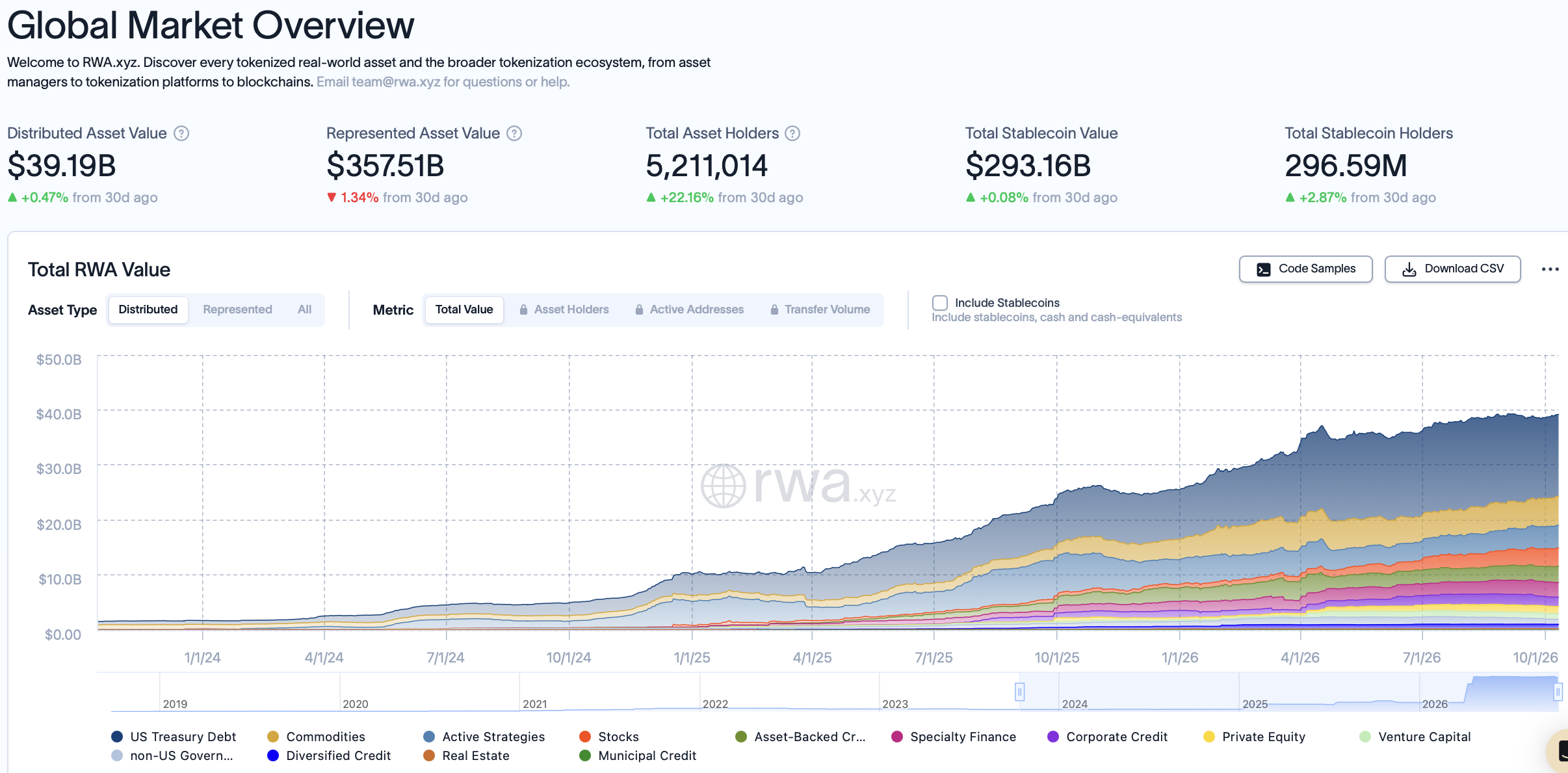
The rapid expansion of tokenized real-world assets (RWAs) is opening new trading frontiers across global financial markets, yet the accelerating supply of these onchain assets has yet to find a matching surge in investor demand, according to industry leaders.
Speaking at the CONNECT by Cointelegraph: Singapore Edition on Oct. 9, market executives highlighted the growing pains of a sector transitioning from traditional finance into decentralized infrastructure. During a panel discussion focused on liquidity and market fragmentation, Alex Taaffe, chief revenue officer at prominent crypto trading firm GSR, pointed out that while trading depth is noticeably improving across previously restricted asset classes—such as pre-IPO stocks, commodities, and global equities—the demand side of fully tokenized RWAs is lagging far behind issuance rates.
The conference, which brought together a diverse group of Web3 founders, institutional investors, and corporate executives, featured four core panel discussions addressing tokenization, stablecoin payments, onchain trading infrastructure, and venture capital exits, alongside an active startup pitch competition.
Addressing the state of the market, Taaffe emphasized that the primary friction point lies in an acute supply and demand imbalance. He noted that institutional asset managers and issuers are eager to utilize onchain rails for capital formation, generating an immense volume of supply. However, because this growing wave of asset issuers is deploying across a fragmented landscape of multiple blockchains, liquidity has become severely siloed.

Lingling Jiang, a partner at DWF Labs, echoed these concerns during the panel, agreeing that fragmentation continues to represent a major hurdle for the industry. Jiang noted that the problem is particularly pronounced when competing issuers tokenize the exact same underlying asset, inadvertently splitting potential liquidity into separate, isolated pools. Despite these structural challenges, Jiang acknowledged that overall cryptocurrency liquidity has expanded significantly over recent years, even as market participants recognize that substantial work remains to unify the ecosystem.
The discussion on tokenized asset performance comes against the backdrop of shifting market trends, such as recent momentum seen in tokenized United States equities launched on high-throughput networks like Solana, which have prompted positive market reactions and heightened interest among institutional participants.
Stablecoin Adoption Hinges on Everyday Payments
Moving beyond asset tokenization, the conference’s second major focus centered on the practicalities of mainstream adoption during a panel titled "Stablecoins at the Point of Sale: Cards, Wallets and the Race for Everyday Spend."
Mike Silagadze, the founder and CEO of ether.fi, argued that while stablecoins have undeniably revolutionized cross-border capital transfers, achieving widespread, long-term adoption relies entirely on whether everyday consumers can seamlessly use them for mundane, daily expenses.

Silagadze drew attention to developed financial hubs like Singapore, where tech-savvy consumers might hold digital dollars such as USDC but are still forced to rely on local fiat currency to handle basic utility bills and day-to-day purchases. This friction exposes a persistent chasm between sophisticated blockchain payment infrastructure and the realities of everyday consumer financial services.
Echoing this perspective, Yvonne Chia, head of communications at USDD, emphasized that placing the end user’s experience at the center of product design is paramount. Chia stated that the industry’s ultimate trajectory should be to make stablecoins so intuitive and frictionless that users do not even consciously realize they are utilizing blockchain rails—they should simply function as a standard, invisible component of daily life.
Silagadze reinforced this sentiment, noting that the reason stablecoins remain underutilized for local commerce in many regions is simply that they fail to plug into the rhythms of everyday routine.
In addition to user experience hurdles, regulatory complexities continue to slow commercial deployment. Ilya Podoynitsyn, co-founder and CEO of FinHarbor, pointed out that payment providers must constantly navigate a patchwork of conflicting regulatory frameworks across different jurisdictions. This requires companies to continuously adapt their backend infrastructure and compliance systems to satisfy localized legal requirements.
Ashna Vaghela, chief customer officer at crypto payments provider Mercuryo, added that the gold standard for stablecoin payments is to reach a level of convenience comparable to Apple Pay, enabling users to finalize transactions instantly within existing applications without forced interruptions. Vaghela reiterated that invisibility is the ultimate goal for consumer-facing crypto products.
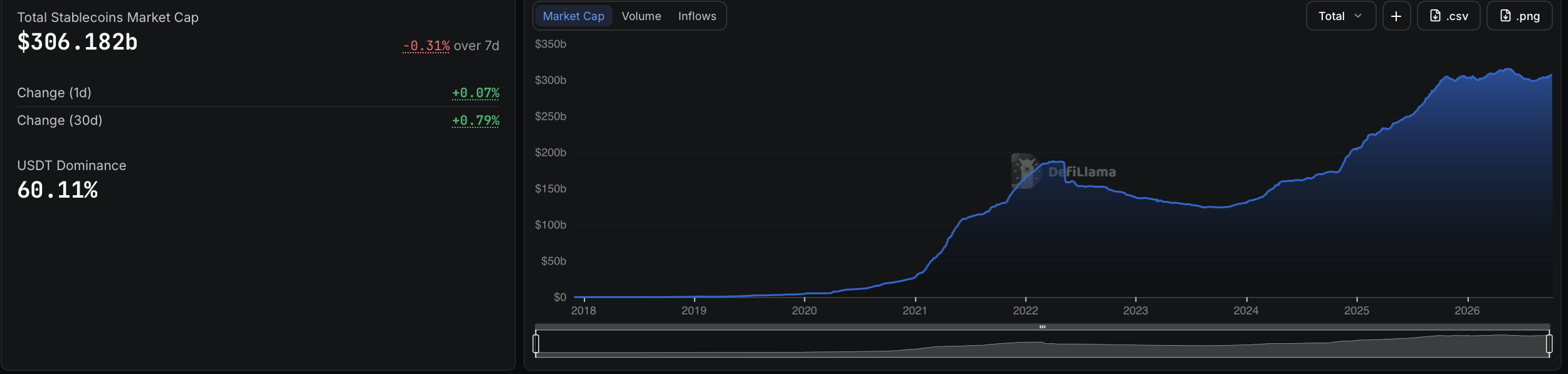
These discussions unfolded as the broader stablecoin market capitalization hovered around $306 billion, reflecting a modest year-over-year increase of roughly 2% following a dramatic 74% expansion during the preceding 12-month cycle.
Onchain Trading Faces Liquidity Fragmentation and Risk Management Challenges
As the infrastructure for decentralized finance matures, crypto trading venues continue to grapple with structural difficulties regarding how to identify available liquidity across disparate blockchain networks while effectively managing counterparty risk. These themes dominated a panel titled "What’s Still Missing in the Onchain Trading Stack in 2026."
Austin Federa, co-founder of DoubleZero, explained that moving liquidity fluidly across multiple blockchain architectures remains significantly more complex than in traditional, legacy financial markets. Describing the core obstacle, Federa noted that fragmentation is not merely an execution problem, but fundamentally a data problem, adding that determining the true aggregate amount of liquidity available onchain is remarkably difficult.

Turning to risk management, Miguel Morel, founder and CEO of blockchain analytics firm Arkham Intelligence, highlighted how trading firms can leverage transparent onchain data to evaluate counterparty risks more accurately. This advantage is particularly valuable within prediction markets and specialized trading environments, where certain market participants may hold informational advantages over others.
According to Morel, knowing precisely who is on the other side of a transaction allows market makers to take on less risk and subsequently offer tighter spreads, ultimately resulting in better execution prices for everyday customers. Furthermore, Morel explained that the same granular blockchain data can assist exchanges in evaluating incoming customer deposits, allowing compliance teams to trace the origin of funds without invasive procedures. He noted that platforms can determine the source of deposits without necessarily needing to request a physical passport, enabling them to make informed compliance decisions regarding whether to permit trading or flag accounts for further review.
Crypto Investors Face Tougher Exits as Markets Mature
While technological and infrastructural hurdles remain at the forefront of operational discussions, venture capital investors are confronting a parallel set of challenges regarding liquidity and market maturation. During a panel focused on "The Exit Problem: How Investors Get Their Money Back," industry participants discussed the shifting dynamics of capital return mechanisms.
Pulkit Gupta of Nomad Capital noted that liquidity conditions within broader crypto markets have tightened considerably over recent months, with trading volume heavily concentrated in the largest, most established digital assets. Gupta admitted that securing profitable exits for altcoin investments has proven exceptionally difficult in the current climate, despite Nomad Capital backing several prominent crypto projects with publicly traded tokens, including Movement, Solayer, and Berachain.
Reflecting on the broader maturation of the ecosystem, Sonia Shaw, CEO of OneAsset, suggested that the market has evolved past the era of easy speculative gains, now demanding that early-stage startups demonstrate robust and sustainable business fundamentals. Recalling an era when some investors naively expected rapid liquidity events within a matter of months, Shaw stated her belief that the market no longer operates under those unrealistic timelines, viewing the shift toward longer-term valuation horizons as a healthy sign of industrial maturity.
Aleksandr Nechaev, a partner at Funders VC, underscored the compounding challenges introduced by the relentless pace of product and market evolution. Nechaev remarked that the sheer velocity of change places a heavy emphasis on founders’ direct expertise and their strategic ability to navigate uncertainty when evaluating investment opportunities. The realities of market volatility and the resilience of founding teams remained central topics of discussion throughout the remainder of the event, culminating in the conference’s startup pitch competition.
 Crypto Startups & Venture Capital
 Crypto Startups & Venture Capital
 Crypto Startups & Venture Capital