Tokenized assets are rapidly opening new trading opportunities across traditional and digital financial markets, but the growing supply of real-world assets (RWAs) being brought onchain has yet to be matched by commensurate investor demand. This structural mismatch highlights the evolving complexities of the tokenization landscape, according to insights shared by industry leaders during a premier financial technology gathering.
Speaking during a panel discussion focused on liquidity and market fragmentation at the CONNECT by Cointelegraph: Singapore Edition event on Oct. 9, Alex Taaffe, chief revenue officer at prominent crypto trading firm GSR, detailed the current state of onchain capital formation. Taaffe noted that while liquidity is visibly improving in trading categories such as pre-IPO stocks, commodities, and global equities—asset classes that retail and institutional investors previously struggled to access easily—demand for fully tokenized real-world assets has not kept pace with the sheer volume of assets being issued by eager managers.
The Cointelegraph-hosted event brought together a wide array of Web3 founders, institutional investors, and senior industry executives. Over the course of the day, attendees participated in four high-level panel discussions covering critical sector developments, including tokenization mechanics, stablecoin payment systems, evolving onchain trading infrastructure, and venture capital exit strategies. The conference also featured an active startup pitch competition designed to highlight emerging blockchain talent.
"Specifically on RWAs, and fully tokenized assets, there’s a supply and demand imbalance," Taaffe said during the liquidity panel. "There’s a ton of supply. Every asset manager issuer wants to do capital formation onchain."

Taaffe further explained that the proliferation of asset issuers alongside an expanding ecosystem of distinct blockchains has exacerbated the problem, further fragmenting liquidity across fragmented tokenized markets. This sentiment was echoed by Lingling Jiang, a partner at DWF Labs, who agreed that fragmentation remains a persistent operational challenge for the industry. Jiang pointed out that market friction is particularly acute when different issuers tokenize the exact same underlying asset, inadvertently creating isolated, non-communicating liquidity pools rather than a unified market. Despite these structural hurdles, Jiang noted that overall cryptocurrency liquidity has improved significantly over recent years, even as the industry acknowledges it still has substantial work to do to achieve seamless integration.
Stablecoin Adoption Hinges on Everyday Payments
The challenge of bridging the gap between innovative blockchain technology and everyday utility took center stage during the panel titled "Stablecoins at the Point of Sale: Cards, Wallets and the Race for Everyday Spend." Mike Silagadze, founder and CEO of ether.fi, argued that while stablecoins have undeniably revolutionized the speed and efficiency of moving money across international borders, widespread global adoption ultimately depends on whether ordinary consumers can effortlessly use them for routine, everyday expenses.
Drawing a practical comparison, Silagadze pointed to advanced financial hubs like Singapore, where a consumer might hold digital assets like USDC but still find themselves forced to rely on traditional local fiat currency to pay routine utility bills and daily living expenses. This dichotomy underscores the ongoing disconnect between sophisticated blockchain payment infrastructure and practical, everyday financial services.
Yvonne Chia, head of communications at USDD, emphasized that sustainable adoption requires stablecoin issuers to view the ecosystem entirely from the perspective of the end-user. According to Chia, prioritizing user experience is the guiding philosophy necessary to drive mass adoption.

"That’s the kind of direction that we want to move in, to make it as easy as possible for the user to have stablecoins, use stablecoins, to the point where it doesn’t cross their mind that they are using a stablecoin. It’s just a regular part of their lives," Chia said.
Silagadze reiterated this point, stating bluntly that the primary reason stablecoins remain largely unused for day-to-day purchases in many parts of the world is that the technology fails to plug seamlessly into a user’s normal daily routine.
Beyond practical usability at the checkout counter, significant regulatory hurdles continue to complicate deployment. Ilya Podoynitsyn, co-founder and CEO of FinHarbor, highlighted the complex regulatory maze providers must navigate. Because compliance rules differ widely across sovereign jurisdictions, financial infrastructure providers are forced to continuously adapt their internal systems and compliance frameworks to meet localized regulatory demands.
Ashna Vaghela, chief customer officer at digital asset payments provider Mercuryo, suggested that the gold standard for stablecoin payments is for them to become as straightforward and frictionless as traditional mobile solutions like Apple Pay, allowing users to complete commercial transactions smoothly without ever needing to leave an application interface. "I think that’s the whole point, to be invisible," Vaghela noted.
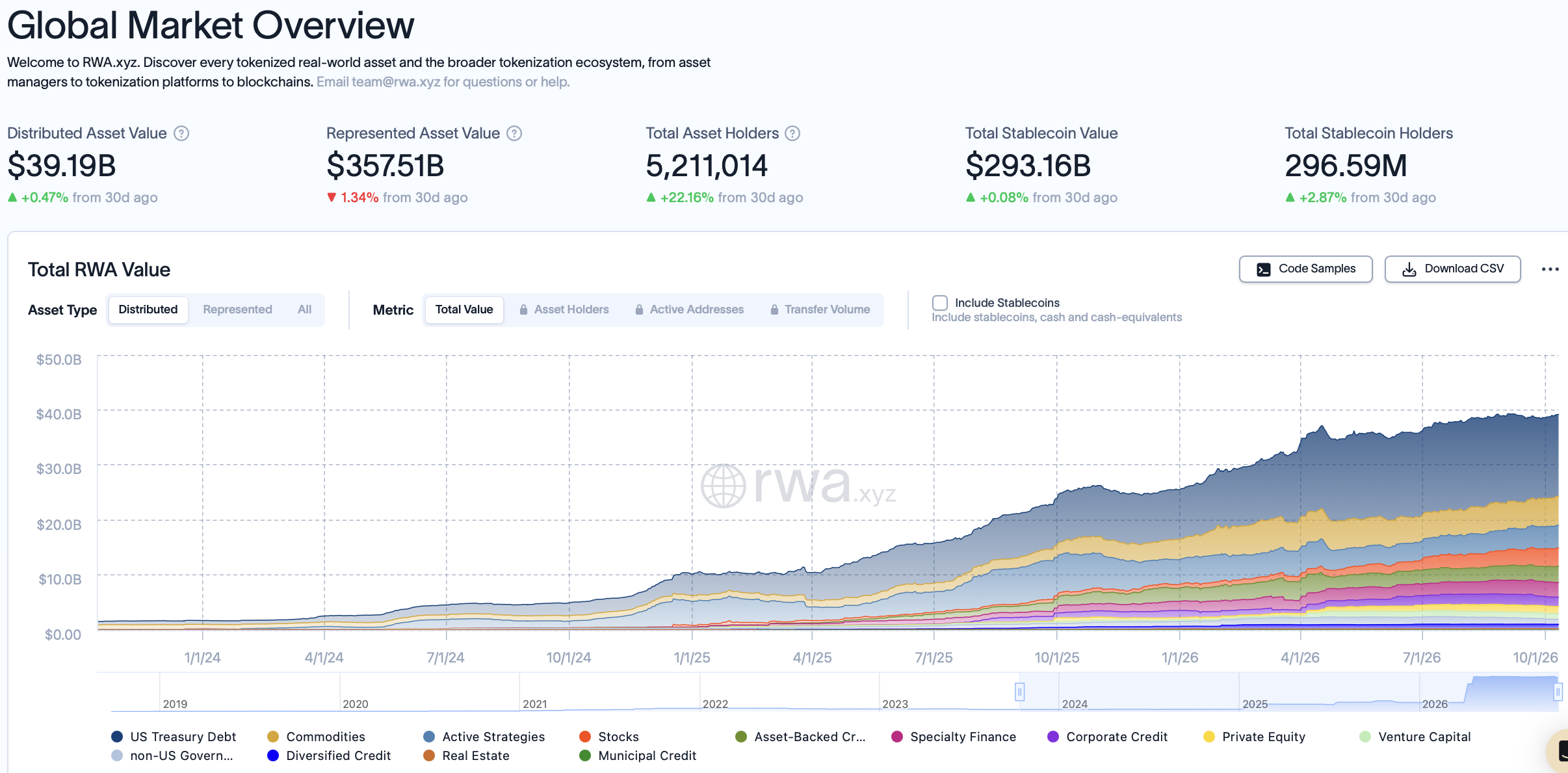
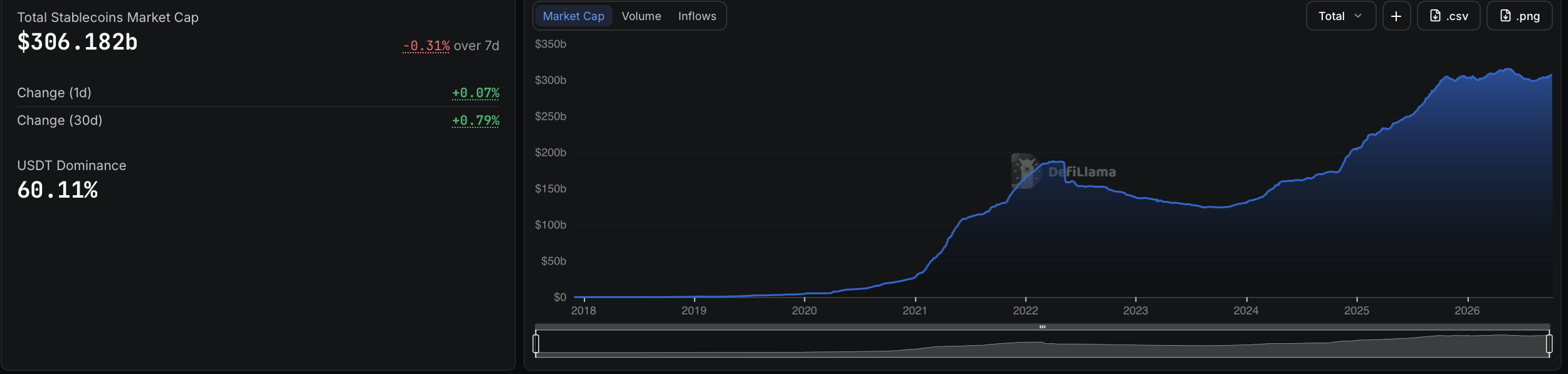
These discussions unfolded against a backdrop of massive macroeconomic scale for the sector, with the total stablecoin market capitalization standing at approximately $306 billion. This figure represents a modest 2% growth year over year, following a dramatic 74% expansion during the preceding 12-month period.
Onchain Trading Faces Liquidity Fragmentation and Risk Management Challenges
As digital asset markets mature, crypto trading platforms continue to grapple with fundamental difficulties in identifying available liquidity pools across disparate blockchain networks while effectively managing counterparty risk. These themes dominated the panel session titled "What’s Still Missing in the Onchain Trading Stack in 2026."
Austin Federa, co-founder of DoubleZero, explained that shifting liquidity fluidly between separate blockchain networks remains significantly more complex than moving capital within traditional financial market structures. Describing the root of the problem, Federa noted that fragmentation is not merely an execution hurdle, but fundamentally a data problem, adding that it is genuinely difficult for market participants to calculate how much liquidity truly exists onchain at any given moment.
On the front of risk management and compliance, Miguel Morel, founder and CEO of blockchain analytics firm Arkham Intelligence, pointed out that trading firms can leverage transparent onchain data to accurately assess counterparty exposure. This capability is especially critical in emerging sectors like prediction markets, where certain participants may possess asymmetric informational advantages over others.

"If you know who’s on the other side and you’re taking less risk, you can offer a tighter spread," Morel explained, noting that such transparency ultimately translates into better pricing for everyday consumers. Furthermore, Morel noted that this same immutable blockchain data can empower centralized and decentralized exchanges to evaluate customer deposits more efficiently, allowing platforms to trace the historical origin of funds and streamline internal compliance workflows.
"Without needing to ask for a passport, you can know where those deposits are coming in from," Morel said, adding that exchanges can utilize this intelligence to determine whether to permit immediate trading activity with deposited funds or route them for secondary compliance review.
Crypto Investors Face Tougher Exits as Markets Mature
Parallel to infrastructure and payment challenges, shifting market dynamics have complicated liquidity exits for early-stage crypto venture capital investors, according to speakers on the panel titled "The Exit Problem: How Investors Get Their Money Back."
Pulkit Gupta of Nomad Capital stated that liquidity conditions across crypto markets have been noticeably subdued, with the vast majority of trading activity remaining heavily concentrated within the largest, most established cryptocurrencies.
"For me, on the altcoins, it has been really tough for us to get an exit," Gupta said, noting the reality faced by his firm, which has previously backed several prominent crypto projects with publicly traded tokens, including Movement, Solayer, and Berachain.
Echoing the industry-wide evolution toward more disciplined, long-term operational expectations, Sonia Shaw, CEO of OneAsset, emphasized that the market has matured to a point where startups are expected to demonstrate robust, verifiable business fundamentals rather than relying solely on speculative hype. Reflecting on past expectations where investors routinely anticipated rapid liquidity events within a matter of months, Shaw remarked that the contemporary market environment operates under entirely different rules. She characterized this departure from rapid, speculative exits as a welcome and positive sign of fundamental market maturity.
Rounding out the discussion, Aleksandr Nechaev, partner at Funders VC, drew attention to the inherent operational challenges presented by the relentless pace of technological and market change. He emphasized that this rapid evolution places a heavy premium on the expertise and adaptability of founding teams, making their personal resilience a central pillar in modern investment decision-making. These themes regarding founder adaptability and uncertainty navigation naturally carried forward into the remainder of the event’s programming, including the conference’s startup pitch competition.
 Crypto Startups & Venture Capital
 Crypto Startups & Venture Capital
 Crypto Startups & Venture Capital