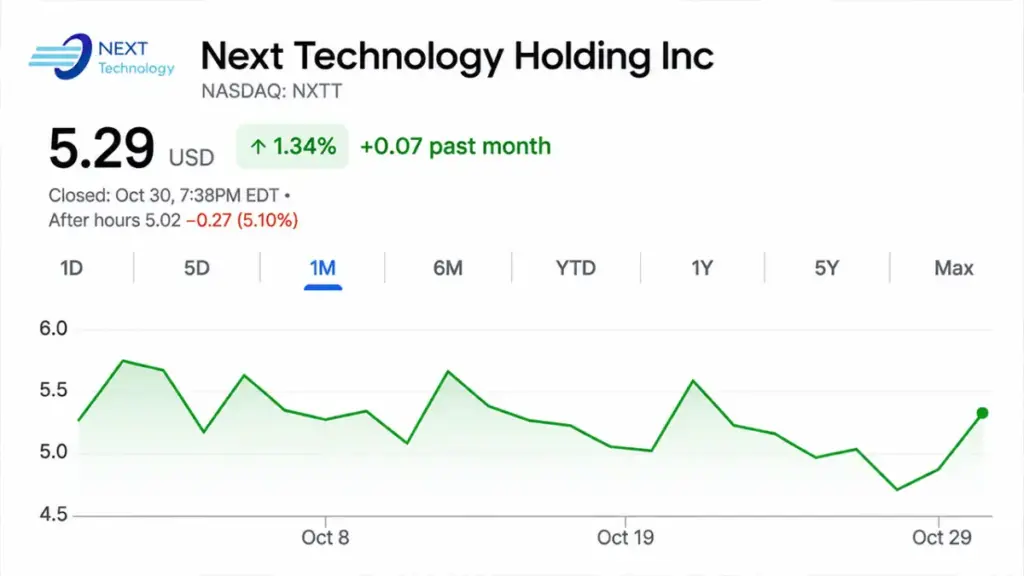
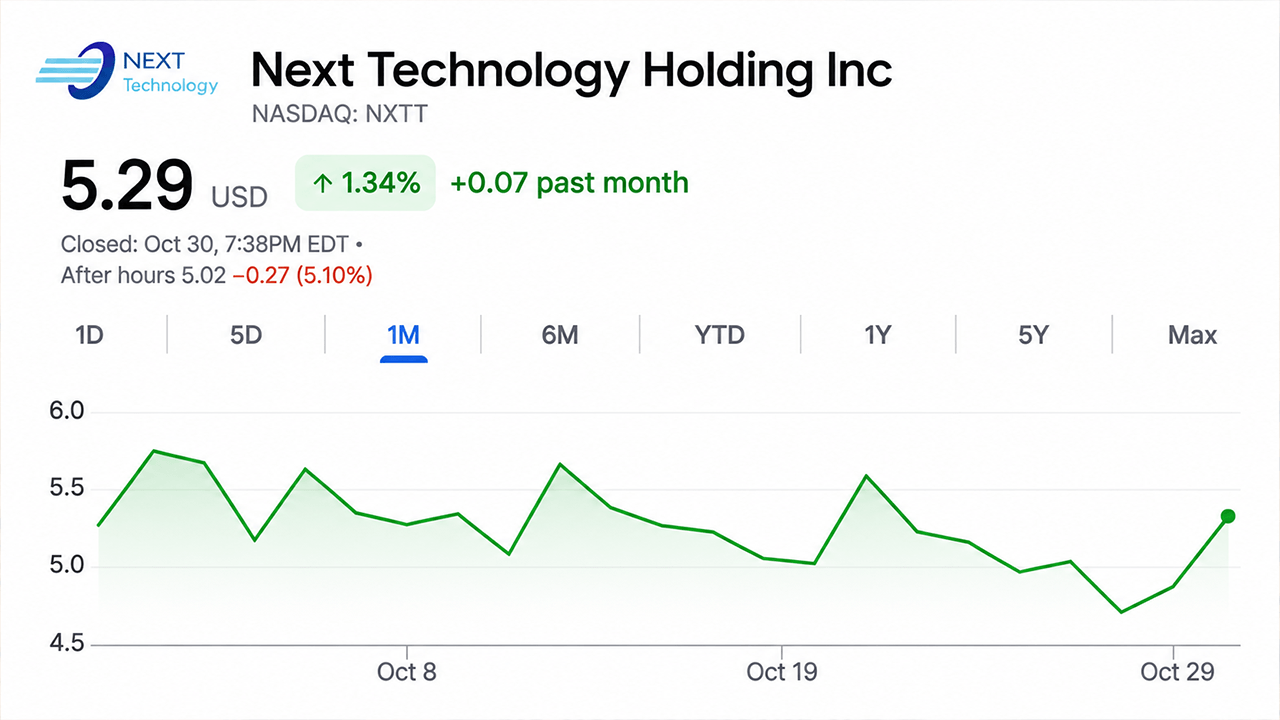
In a development that highlights the fragile intersection of corporate balance sheets and digital asset security, Next Technology Holding Inc. has authorized its leadership team to explore the sale or pledging of its substantial bitcoin reserves. The company, which operates as an AI-powered software developer and digital asset manager, currently ranks as the 18th-largest publicly traded corporate holder of bitcoin globally.
According to an official corporate announcement made on October 30, 2026, the board of directors unanimously approved resolutions empowering executives to divest or encumber its treasury of approximately 5,833 BTC. While the move does not mandate an immediate liquidation of the entire digital fortune, it marks a pivotal shift in how corporate treasuries view the systemic risks associated with large-scale cryptocurrency holdings.
The decision by Next Technology Holding, traded on the Nasdaq under the ticker symbol NXTT, arrives directly on the heels of a major security incident reported by Binance. Although the company confirmed that none of its 5,833 bitcoin were held on the Binance platform, the high-profile breach served as a catalyst for a broader boardroom reassessment. For corporate giants holding digital assets on their balance sheets, vulnerabilities exposed anywhere within the global crypto exchange ecosystem can trigger widespread market apprehension, threatening overall liquidity and institutional confidence.
A Bitcoin Treasury Giant Rethinks Its Position
The newly granted authorization gives executive management considerable flexibility in managing the company’s digital assets. Rather than forcing a singular, massive market dump, the board’s approval allows for transactions to be executed in one or multiple tranches. Leadership may choose to sell bitcoin incrementally through public exchanges, negotiate private over-the-counter block trades, or utilize the digital assets as collateral to secure alternative financing.
The company’s CEO has been given full discretion over the timing, pricing, and exact volume of any transactions, though no completed sales or encumbrances were disclosed at the time of the announcement. This strategic flexibility allows Next Technology to respond dynamically to market conditions while retaining its holdings if circumstances dictate. Nevertheless, the mere authorization to divest represents a notable departure from the aggressive accumulation strategies favored by many corporate bitcoin holders in recent years.
By opting to evaluate both outright sales and debt financing backed by crypto collateral, Next Technology is attempting to balance the need for enhanced corporate liquidity with risk mitigation. Pledging bitcoin can provide necessary capital without triggering immediate taxable events or losing upside exposure to price appreciation, though it introduces distinct counterparty and financial risks. Conversely, outright sales would permanently eliminate the company’s direct exposure to the notoriously volatile cryptocurrency market.
Binance Incident Jolts Corporate Bitcoin Strategy
The timing of Next Technology’s announcement underscores the profound psychological and strategic impact that exchange-level security failures can exert on institutional investors. When major custodial platforms suffer breaches, the reverberations extend far beyond the immediate victims. Corporate treasuries that pride themselves on rigorous internal custody and robust security protocols are still forced to reckon with the systemic contagion risks inherent to the digital asset class.
The board’s deliberations specifically incorporated concerns over international hacking campaigns, persistent exchange vulnerabilities, and the evolving threat landscape of modern cyber warfare. For a publicly traded entity accountable to shareholders, maintaining a multi-million-dollar cryptocurrency treasury requires continuous risk evaluation. Security failures at external institutions serve as stark reminders that the broader infrastructure supporting digital assets remains a lucrative target for sophisticated malicious actors.
Furthermore, the decision reflects a growing consensus among corporate risk managers that holding large digital treasuries exposes firms to indirect market shocks. Even if a company’s private keys are secure and its custodial partners are uncompromised, a systemic crisis can instantly depress market liquidity, complicate auditing processes, and alter the regulatory scrutiny surrounding corporate crypto holdings.
AI Attacks and Quantum Computing Raise the Stakes
Beyond traditional exchange hacks, Next Technology’s leadership weighed emerging technological threats that could reshape the security paradigm for digital assets in the coming decades. Among the most pressing concerns discussed in corporate circles are the proliferation of artificial intelligence-driven cyberattacks and the long-term theoretical threat posed by quantum computing.
In recent years, the deployment of large language models and advanced automation tools has dramatically lowered the barrier for sophisticated social engineering attacks. Research highlighted by firms such as TRM Labs indicates a sharp multi-fold increase in the use of generative AI within cryptocurrency scams and fraud operations. Rather than attempting to break complex cryptographic algorithms directly, modern attackers increasingly focus on exploiting human elements, targeting corporate employees, compromising administrative devices, and manipulating internal operational controls.
At the same time, the horizon of technological risk includes quantum computing, a nascent field of research that has captured the attention of cryptographers and financial institutions alike. While current quantum computers lack the scale and error-correction capabilities required to break Bitcoin’s signature cryptography, ongoing academic research continues to examine how future, highly advanced quantum machines might theoretically derive private keys from publicly exposed addresses.
Although this risk remains largely prospective and has not resulted in an active compromise of the Bitcoin network, its inclusion in corporate boardroom discussions highlights a growing awareness of long-term existential challenges. For firms holding digital assets as multi-year treasury investments, the theoretical vulnerability of cryptographic standards adds an extra layer of complexity to risk management frameworks.
Selling Bitcoin or Borrowing Against It
As Next Technology Holding weighs its next steps, the company finds itself at a strategic crossroads shared by few other corporate entities of its scale. The board’s authorization provides a clear exit strategy or a mechanism for financial leverage, but management is under no immediate obligation to execute it. The resolutions simply establish the legal and administrative framework necessary to act swiftly should market conditions or security concerns deteriorate further.
The broader implications of Next Technology’s decision extend to the wider corporate bitcoin ecosystem. As companies navigate an environment marked by sophisticated AI-driven threats, exchange vulnerabilities, and looming quantum milestones, the question of how to sustainably manage digital treasuries becomes increasingly complex. Whether other publicly traded firms will follow Next Technology’s lead in reassessing their crypto exposure remains one of the most critical questions facing institutional digital asset adoption. For now, the company’s leadership maintains a watchful stance, holding the authorization to divest as a shield against an increasingly unpredictable technological landscape.
 Bitcoin & Major Altcoins
 Bitcoin & Major Altcoins
 Bitcoin & Major Altcoins