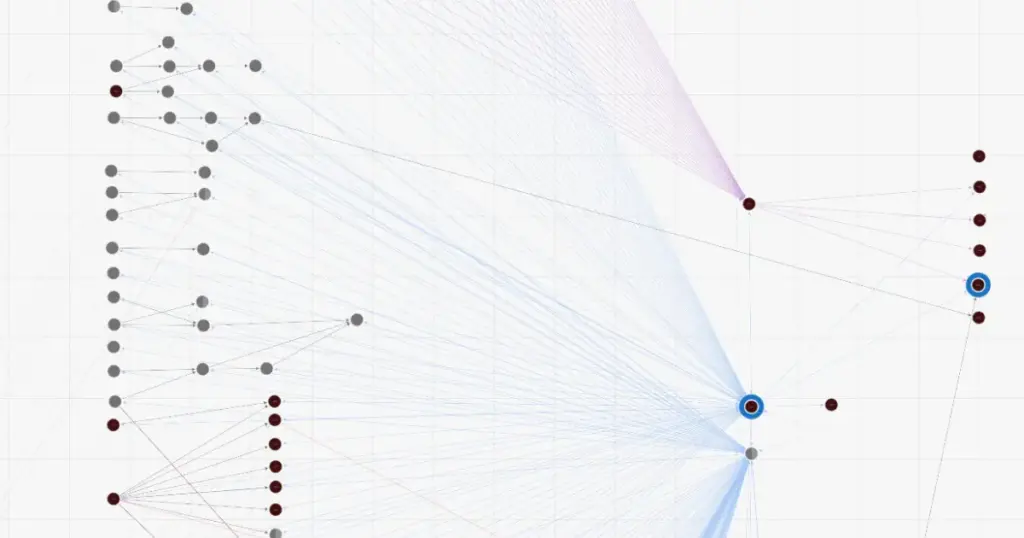
Chainalysis Reactor has cleared a major judicial hurdle after a U.S. appellate court officially upheld its admissibility as evidence at trial. The decision marks the first time a blockchain analytics platform has successfully weathered scrutiny under the rigorous Daubert standard at both the district and appellate levels of the federal court system.
The ruling stems from the ongoing legal fallout of United States v. Sterlingov, a high-profile criminal case involving dual Swedish-Russian national Roman Sterlingov. Earlier, Sterlingov was convicted and sentenced to over 12 years in prison for operating "Bitcoin Fog," a notorious cryptocurrency mixer service used to obscure transaction histories on the darknet. During the initial trial, prosecutors heavily relied on Chainalysis Reactor to map transactions between Bitcoin Fog and various illicit darknet markets. By utilizing the platform, investigators managed to attribute more than 900,000 Bitcoin addresses directly to the mixing service.
To establish the credibility of these findings, the prosecution presented expert testimony from FBI Special Agent Luke Scholl and Chainalysis expert Elizabeth Bisbee. Both specialists detailed Reactor’s underlying methodologies, validation processes, and practical applications in complex digital asset investigations.
However, throughout the proceedings, the defense aggressively sought to block the Reactor-derived evidence and the accompanying expert testimony. Sterlingov’s legal team argued that the platform failed to meet the strict legal thresholds required for scientific and technical evidence in federal court. The trial judge ultimately dismissed these challenges, ruling that Reactor successfully satisfied the Daubert standard—the established legal framework used by U.S. courts to evaluate the reliability of expert testimony.
Unwilling to accept the verdict, Sterlingov appealed his conviction to the U.S. Court of Appeals for the D.C. Circuit, once again challenging the admissibility of Reactor and arguing that the district court erred in applying the Daubert standard. In September, the appellate court definitively rejected the challenge, upholding the lower court’s decision to admit the evidence and cementing a profound legal precedent for the digital forensics industry.
How Chainalysis Withstood a Second Round of Scrutiny
The recent appellate decision provides a detailed window into how federal courts evaluate modern blockchain analytics tools. In its ruling, the D.C. Circuit pointed to a comprehensive body of evidence supporting Reactor’s reliability, rather than relying on any single factor under the Daubert framework.
Central to the court’s assessment was Reactor’s clustering attribution methodology. The software combines change address analysis with sophisticated digital fingerprinting techniques to identify wallet addresses that exhibit matching transaction patterns and shared behavioral traits. The appellate judges also noted the tool’s widespread, long-term adoption across both public-sector law enforcement agencies and private-sector compliance departments. Furthermore, the court highlighted testimony from Scholl and Bisbee, who both affirmed under oath that they could not recall a single instance where a Reactor attribution had later been proven incorrect.
During the appeal, Sterlingov’s defense contended that Reactor should be deemed unreliable because it lacked formal peer review and possessed no officially documented error rate. The appellate court remained unpersuaded by this argument. The judges noted that traditional academic peer review is not always a realistic expectation for technologies operating within rapidly evolving, highly specialized fields like blockchain analysis.
Independent researchers have nonetheless provided strong external validation for the technology. In 2025, academic researchers published a granular, independent evaluation of blockchain analytics tools, confirming that Chainalysis data maintains the highest accuracy, lowest false positive rate, and broadest coverage in the industry.
The appellate court also viewed Reactor’s conservative approach to attribution as a distinct strength. Rather than attempting to cast the widest possible net, the software prioritizes defensible, conservative connections between cryptocurrency addresses. The court recognized that an underinclusive methodology enhances overall reliability by ensuring that investigators only draw conclusions backed by solid structural evidence, avoiding speculative links.
Why Methodological Rigor Matters as Blockchain Analytics and AI Scale
The legal affirmation of Reactor’s methodology arrives at a critical juncture for the cryptocurrency sector. As digital assets continue to integrate into mainstream financial systems, the consequences of flawed blockchain attribution have never been higher. An incorrect connection can easily misdirect a criminal investigation, ruin an organization’s compliance standing, or result in severe regulatory and legal penalties.
As blockchain analytics platforms grow more powerful and widespread, the margin for error shrinks. Organizations across the globe increasingly rely on granular attribution data to navigate high-stakes compliance and risk management decisions at scale, placing intense pressure on the underlying architecture of these tools.
The rapid emergence of artificial intelligence further magnifies these stakes. While AI technologies can dramatically accelerate analytical workflows, they cannot fix a fundamentally weak methodology. When a platform is built on a flawed foundation, applying advanced AI at scale only amplifies existing errors. Although AI offers immense potential for modern investigations—as demonstrated by recent complex cryptocurrency recovery efforts—reliable underlying data remains an absolute prerequisite for accurate outcomes.
For Chainalysis, the recent appellate ruling represents much more than a routine legal victory. It provides independent judicial validation of the foundational architecture powering the next generation of blockchain investigation tools. With the methodology successfully surviving rigorous challenges at two distinct levels of the federal court system, investigators, compliance professionals, and legal teams can maintain heightened confidence in the tools deployed to secure the digital asset economy.
FAQs
The Daubert standard serves as the legal test utilized by U.S. federal courts to determine whether expert scientific, technical, or specialized testimony is sufficiently reliable to be admitted into evidence at trial. To make this determination, presiding judges evaluate several factors, including whether a methodology can be tested, whether it has been subjected to peer review or publication, its known or potential error rate, and its general acceptance within the relevant professional community. The framework ensures that only dependable expert evidence reaches a jury.
In September, the U.S. Court of Appeals for the D.C. Circuit officially upheld the District Court’s decision to admit evidence derived from Chainalysis Reactor in United States v. Sterlingov. The ruling confirmed that the platform’s evidentiary admissibility successfully withstood rigorous legal scrutiny at both the district and appellate levels of the federal judiciary.
Chainalysis first faced and passed the Daubert standard during the 2024 trial of United States v. Sterlingov, when a federal court reviewed challenges to expert testimony grounded in Chainalysis Reactor and ultimately ruled in favor of its reliability. To date, Chainalysis remains the first and only blockchain analytics platform to successfully meet the Daubert standard in a U.S. court of law.
Federal courts found Chainalysis Reactor reliable under the Daubert standard by evaluating a broad body of evidence, including its sophisticated clustering attribution methodology, its proven track record in the field, and its widespread adoption by law enforcement agencies and private specialists. The appellate court also noted expert testimony backing its reliability and praised Reactor’s conservative approach to attribution, which prioritizes defensible connections over speculative guesses.
This appellate decision matters profoundly for the future of digital asset investigations. By establishing that Reactor’s methodology is robust enough to survive scrutiny at two levels of federal court, the ruling offers independent validation of the principles driving modern blockchain analytics. As artificial intelligence and advanced technologies accelerate investigative workflows, foundational reliability remains essential, ensuring that automated tools enhance rather than compromise investigative integrity.
 Crypto Wallets & Security
 Crypto Wallets & Security
 Crypto Wallets & Security