Semiconductor stocks are once again commanding the attention of market participants as capital continues to flow heavily into artificial intelligence infrastructure. Among the major names drawing renewed interest is ARM Holdings, which has recently exhibited a notable price recovery following a sustained period of selling pressure. Multi-asset traders and technical analysts are closely monitoring the chip designer’s latest price action, balancing bullish continuation targets against critical downside support levels as market dynamics unfold across global exchanges.
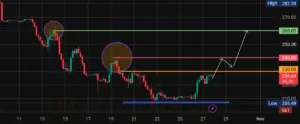
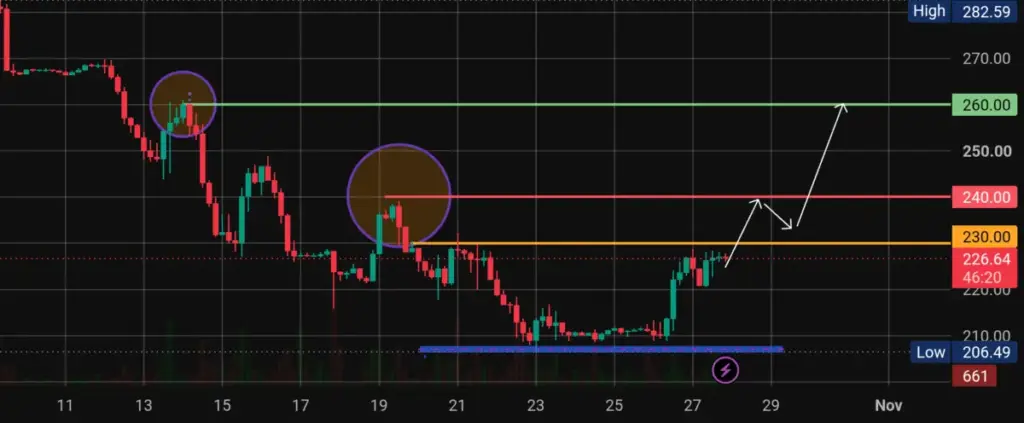
For weeks, ARM shares experienced downward momentum characterized by lower highs and persistent selling pressure. However, recent market sessions have revealed a shift in sentiment as buyers stepped in around the crucial $206 support zone. This influx of demand has successfully injected buying power back into the asset, pushing prices upward toward the $226 threshold. This recovery has reignited discussions among technical analysts regarding the broader market structure and the potential for a renewed upward trend if broader macroeconomic and sector-specific tailwinds persist.
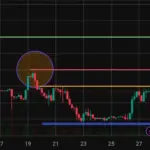
Examining the four-hour chart provides a clearer picture of the structural battlegrounds currently defining ARM’s trajectory. Market observers have identified three pivotal price levels that are likely to dictate the stock’s near-term direction. The immediate resistance level sits at $230, which also serves as the critical marker for breakout confirmation. Beyond that, the first major bullish target is pegged at $240, with an extended target reaching toward $260 should buying momentum strengthen significantly in the sessions ahead.
The technical setup suggests that a confirmed breakout above the $230 threshold, accompanied by a successful subsequent retest of that level as new support, could clear the path for a sustained move toward the $240 and potentially the $260 objectives. At the same time, market participants remain mindful of alternative scenarios. A rejection at the prevailing resistance level could easily trigger another localized pullback. More importantly, a sustained breakdown below the established $206 support zone would invalidate the current bullish outlook and necessitate a reassessment of the prevailing market structure.
Beyond traditional spot price appreciation, traders are also evaluating complementary financial products and exchange features designed to manage positions and optimize holdings. Tools such as tokenized stock dual investment programs offer market participants holding eligible assets the ability to pre-select buy-low or sell-high targets while potentially earning interest yields. Naturally, financial outcomes, returns, and settlement results within these derivative and structured products remain entirely dependent on prevailing market conditions and asset volatility. Furthermore, promotional incentives continue to circulate within the broader trading ecosystem, such as qualifying first-time stock transfers meeting specific minimum thresholds that may offer eligible participants secondary token or platform rewards.
Despite these peripheral offerings, the primary focus for technical analysts remains anchored on the fundamental price action of ARM itself. Rather than succumbing to the pressures of missing out, experienced market participants continue to emphasize patience and technical confirmation over speculative urgency. As artificial intelligence infrastructure investments persistently drive broader interest across the semiconductor landscape, ARM remains a prominent focal point for multi-asset traders assessing market structure, support and resistance boundaries, and disciplined risk management principles.
 Crypto Investing & Trading
 Crypto Investing & Trading
 Crypto Investing & Trading