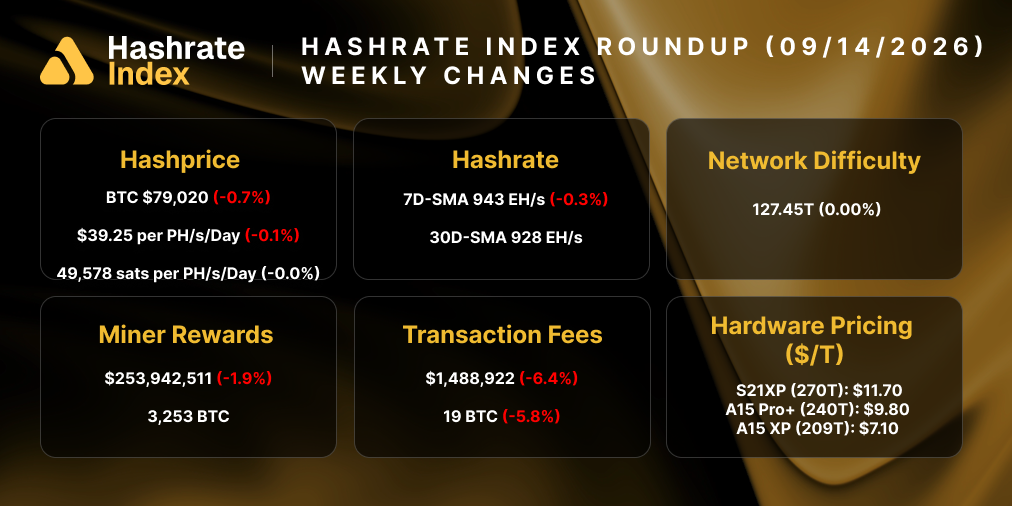
As the Bitcoin ecosystem enters the third week of September 2026, the broader mining landscape has settled into a period of relative consolidation. According to the latest data from the Hashrate Index Weekly Mining Roundup for September 14, 2026, key operational metrics have largely flatlined, offering a moment of quiet stability for industrial miners and independent operators alike following weeks of shifting macroeconomic pressures and regional energy adjustments.
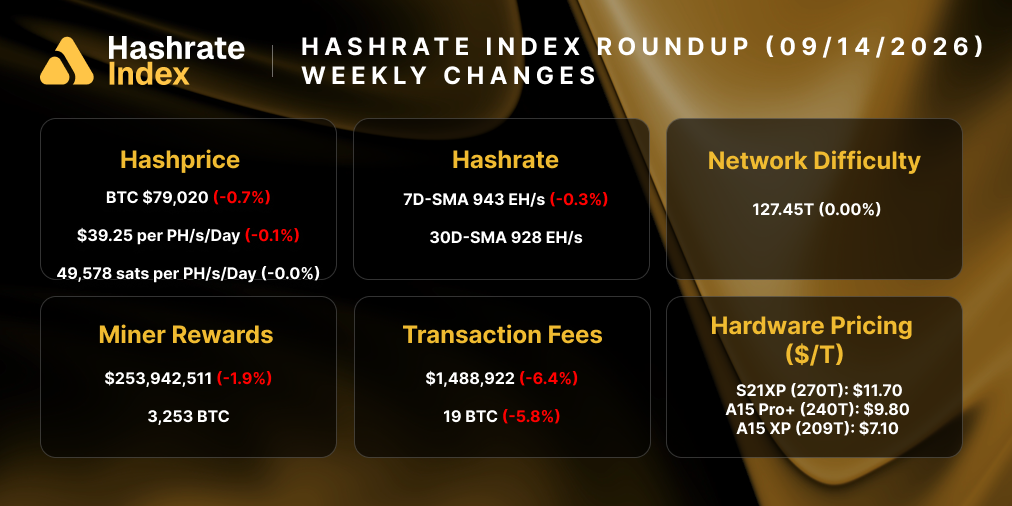
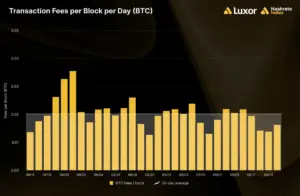
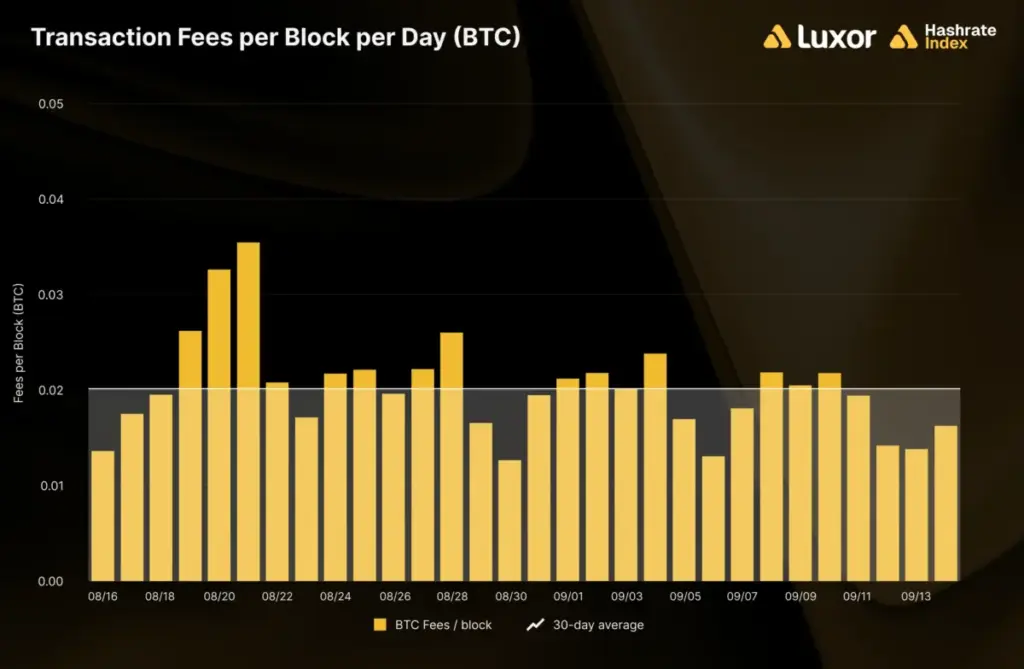
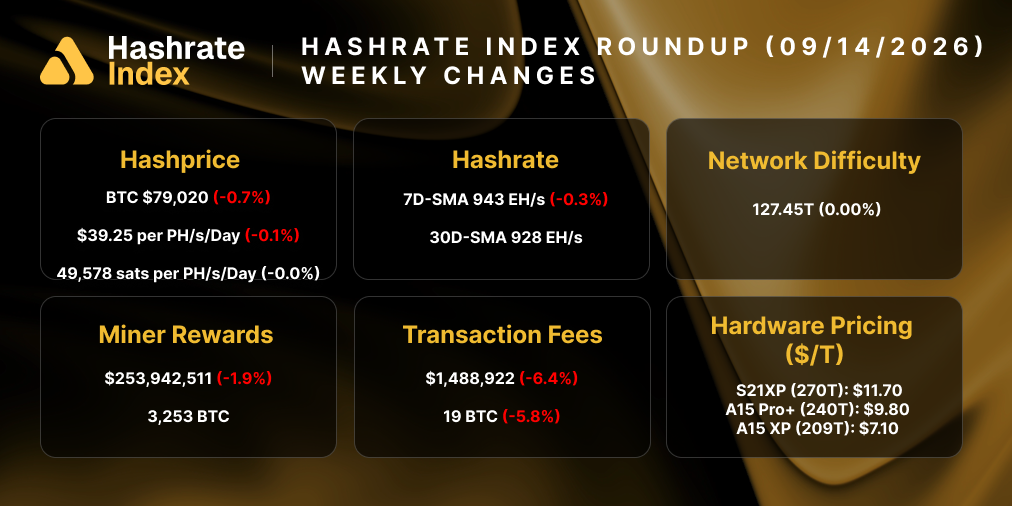
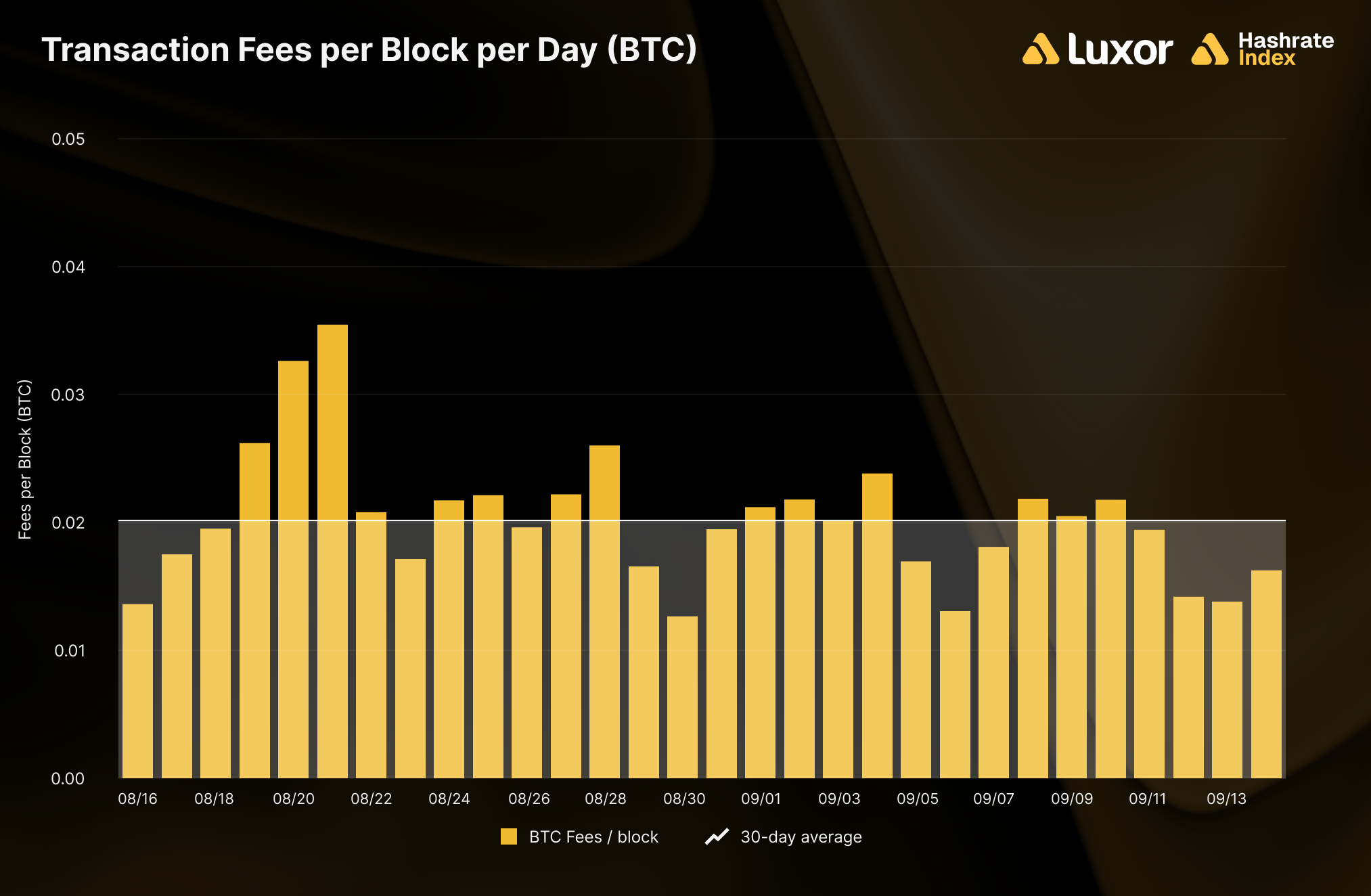
Over the past week, Bitcoin miners successfully collected a total of approximately 3,253 BTC in block rewards, translating to roughly $253 million based on prevailing spot prices. Transaction fees, meanwhile, continued to represent a minor slice of overall miner revenues. Accounting for just 0.59% of total block rewards, transaction fees brought in roughly 19 BTC, or about $1.49 million for the week. The 7-day average for transaction fees sat at 0.0183 BTC per block per day, marking a 5% decline compared to the previous week’s average of 0.0193 BTC, and extending a broader downward trend that has seen 30-day average transaction fees slide by 9.6%.
Bitcoin Price and Market Dynamics
The macroeconomic backdrop for miners remained subdued over the seven-day observation window. Bitcoin spot prices experienced a modest downward drift of 0.7%, moving from approximately $79,581 down to $79,020 by the close of the period. Despite a brief 2.3% recovery over a 24-hour window that saw spot prices bounce from $77,270, Bitcoin’s year-to-date performance remains in negative territory at -9.6%.
Derivatives markets reflected this cautious sentiment. Chicago Mercantile Exchange (CME) futures for September were priced at $79,300, representing a slight 0.4% premium over spot, while October contracts stood at $79,700. However, November CME futures dipped to $77,600, reflecting a 1.8% contraction and signaling that institutional traders are pricing in potential volatility or softer price action heading toward the final quarter of the year.
Hashprice Stability Across USD and BTC Denominations
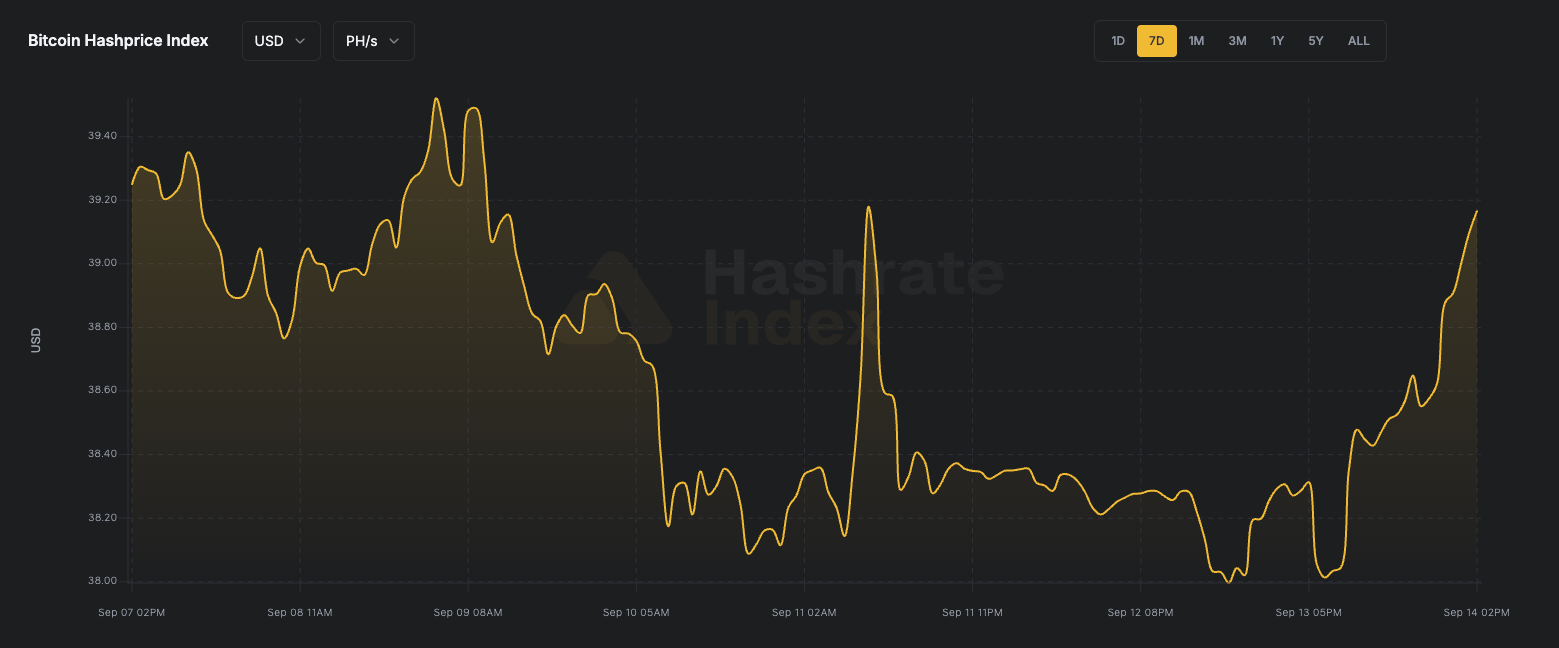
With spot prices holding a relatively tight range, the profitability of computational power—commonly measured as hashprice—remained remarkably flat. The USD hashprice inched down by just 0.1%, moving from $39.29 per PH/s per day down to $39.25 per PH/s per day. Short-term averages paint a picture of steady, if unspectacular, earning potential, with the 7-day average hashprice resting at $38.60 and the 30-day average coming in slightly lower at $38.04.
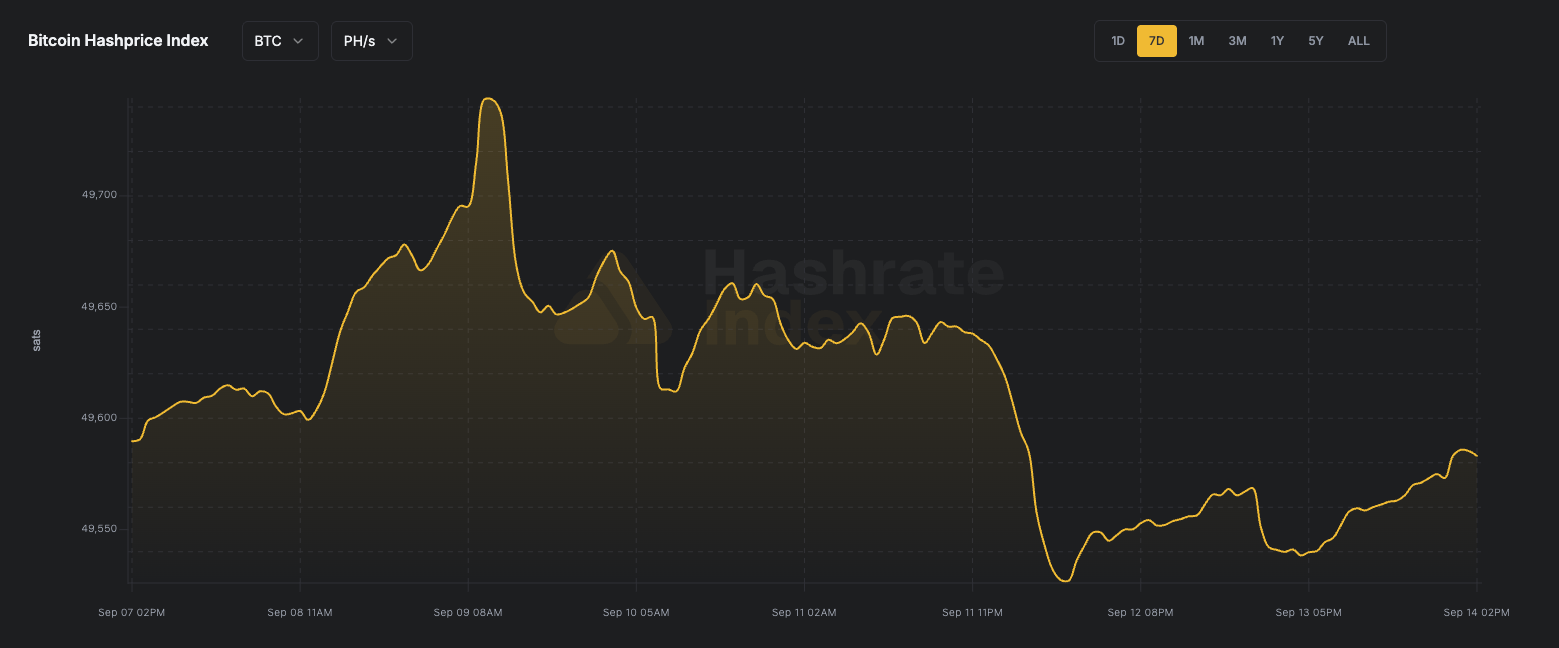
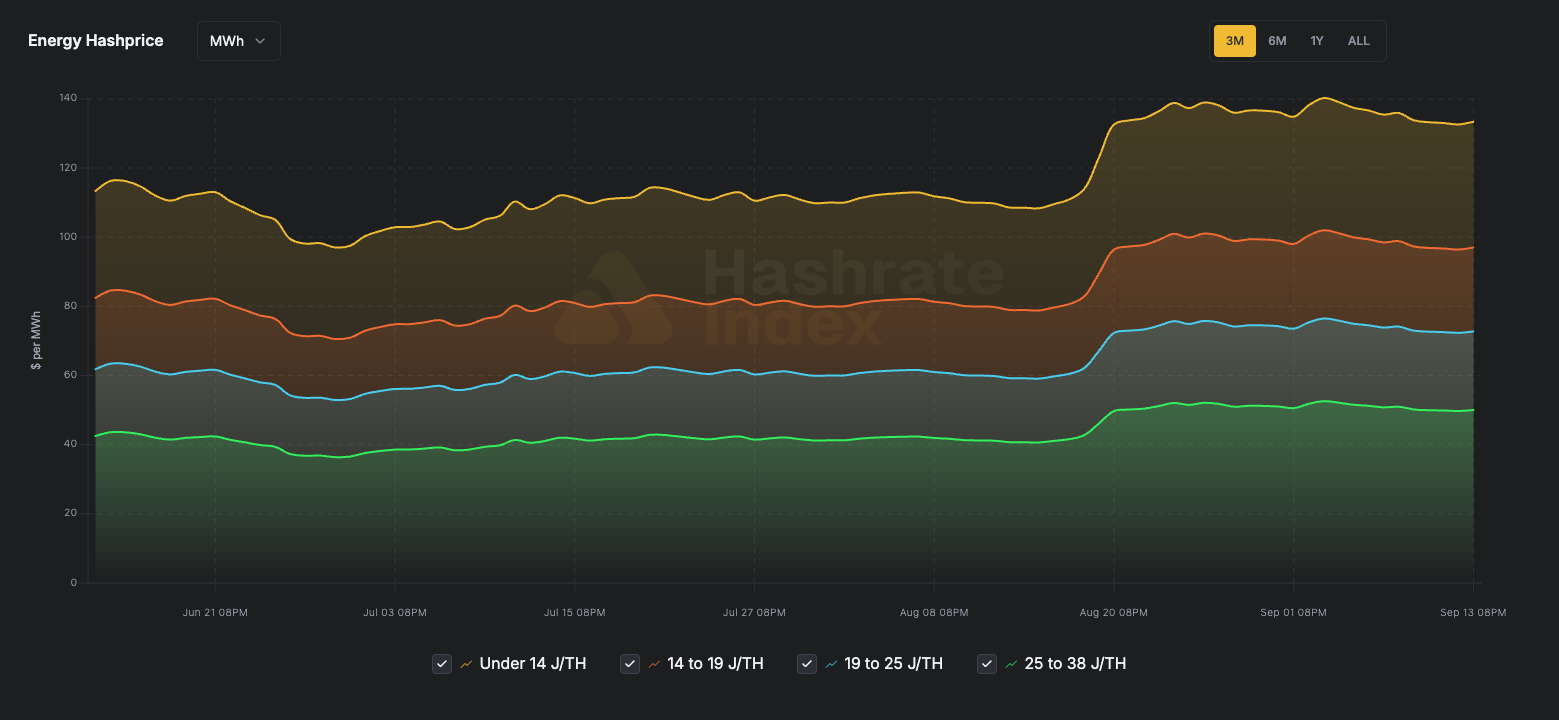
When measured in native token terms, BTC hashprice showed virtually zero change over the week, moving from 0.00049599 BTC per PH/s per day to 0.00049578 BTC per PH/s per day. The 7-day average BTC hashprice stood at 0.00049615 BTC, while the 30-day average hovered around 0.00049941 BTC. These figures underscore a stable equilibrium between network difficulty and overall hash rate deployment, preventing any severe compression of native mining revenues. Energy hashprice metrics, evaluated across varying fleet efficiencies, continue to provide operators with granular insights into SHA-256 compute revenues per watt-hour as facilities balance power costs against static daily rewards.
Network Hashrate and Upcoming Difficulty Adjustment
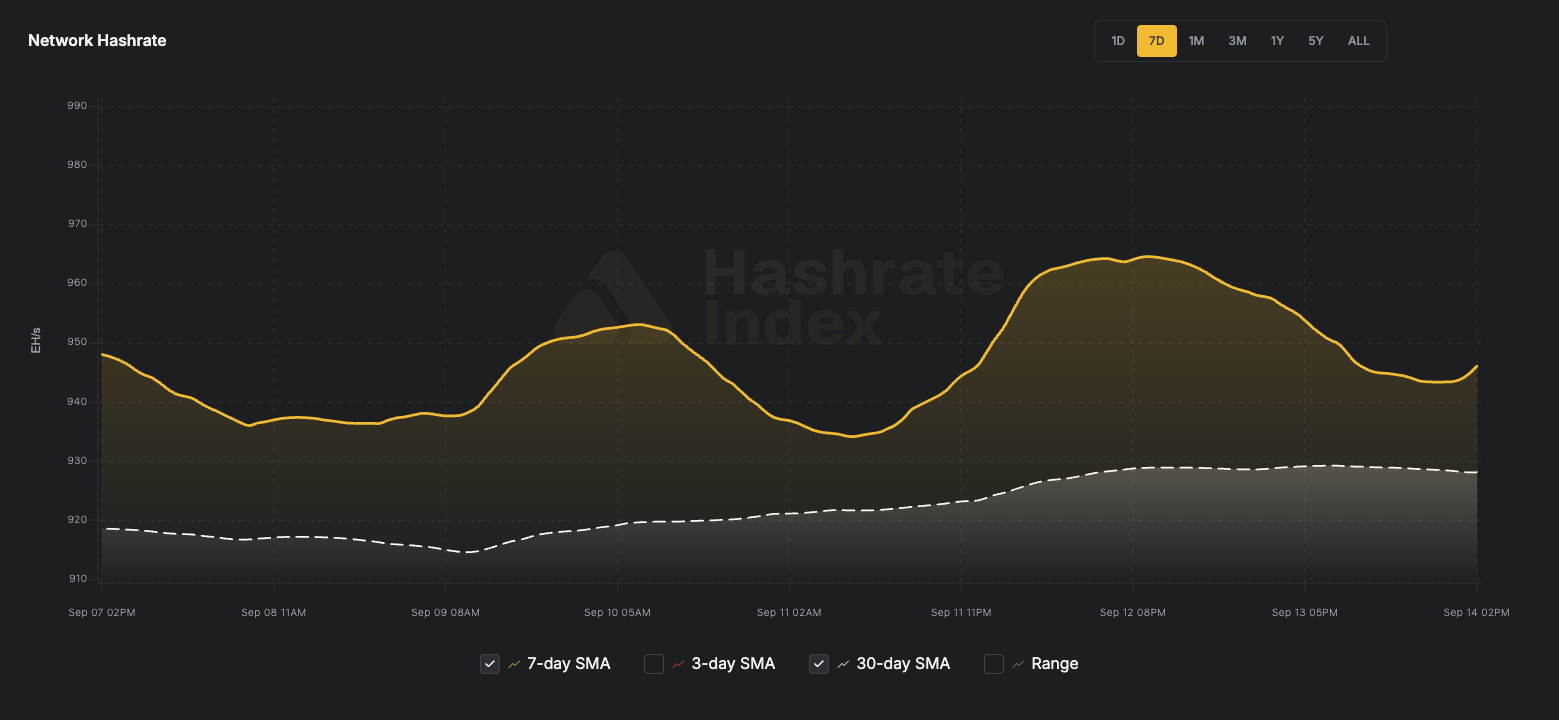
The aggregate computational power securing the Bitcoin network saw a negligible contraction over the past week. The 7-day simple moving average (SMA) for network hashrate dipped by 0.3%, easing from 946 exahashes per second (EH/s) down to 943 EH/s, while the 30-day SMA held firm at 928 EH/s.
Block generation times over the trailing 24 hours have averaged a slightly accelerated 9 minutes and 30 seconds. The network’s current difficulty stands at 127.45T, following the last adjustment on September 5, which saw a 1.31% upward correction. As the network progresses through the current epoch—having completed approximately 67% or 1,350 out of 2,016 blocks—analysts are forecasting another upward difficulty adjustment. Estimated to take place around September 19, 2026, the upcoming adjustment is currently projected to increase difficulty by roughly 5.26%, which will test the operational margins of less efficient fleets.

Forward Outlook and Mining Equities
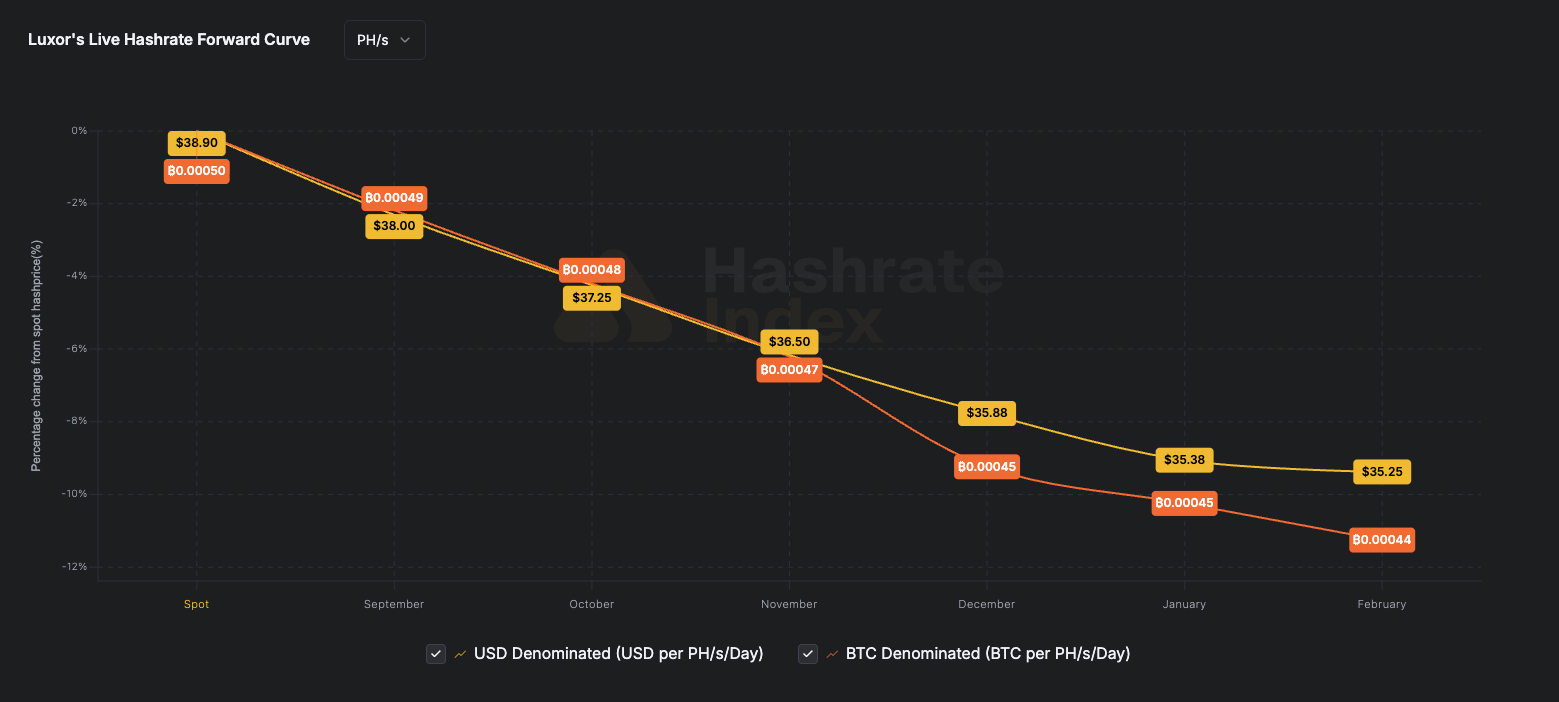
Looking ahead, the Luxor Hashrate Forward Market is currently pricing in an average hashprice of $36.92, or roughly 0.00047 BTC, over the next six months. The forward curve reflects market expectations of continued difficulty growth outpacing spot price appreciation through the winter months, prompting larger operators to hedge their production accordingly.
Publicly traded Bitcoin mining stocks experienced a predominantly downward week as broader equity markets reacted to macroeconomic headwinds. Over the five-day trading period leading up to September 14, major mining equities saw mixed results. While select smaller-cap equities such as Aنى posted notable gains of 18%, and firms like Canadian Digital and ABTC saw modest upticks of 6.3% and 3.2% respectively, the majority of sector heavyweights faced downward pressure. Core Scientific (CORZ) fell 8.0%, Marathon Digital (MARA) dipped 1.8%, Riot Platforms (RIOT) lost 5.6%, and Iris Energy (IREN) declined by 7.0% alongside larger losses from CleanSpark and Bitdeer.
As miners prepare for the upcoming difficulty adjustment later this week, operators remain focused on energy efficiency and fleet optimization to navigate the tighter revenue margins projected for the remainder of the quarter.
 Cryptocurrency Mining
 Cryptocurrency Mining
 Cryptocurrency Mining