
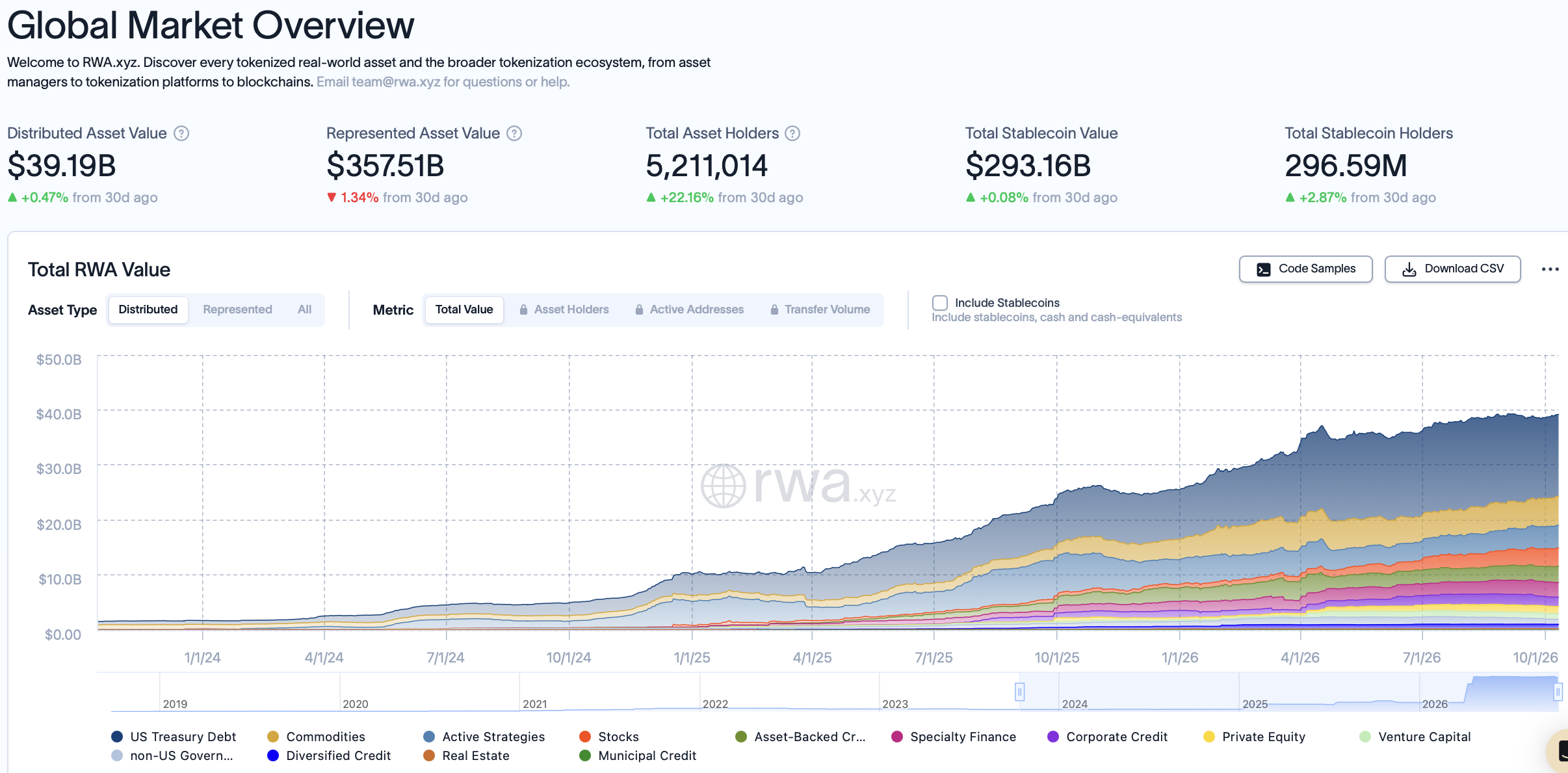
Tokenized assets are rapidly opening up unprecedented trading opportunities across global financial markets, but the burgeoning supply of real-world assets (RWAs) being brought onchain has yet to be met with proportional investor demand. This critical imbalance was a central theme highlighted by industry executives and market makers during recent high-level discussions, shedding light on the structural hurdles facing the tokenization movement as it scales.
Speaking during a panel dedicated to liquidity and market fragmentation at the CONNECT by Cointelegraph: Singapore Edition on Oct. 9, Alex Taaffe, the chief revenue officer at prominent crypto trading firm GSR, detailed the current state of onchain capital formation. According to Taaffe, while liquidity is demonstrably improving for niche financial instruments such as pre-IPO stocks, commodities, and global equities—asset classes that traditional retail and even institutional investors previously struggled to access—the broader market for fully tokenized RWAs tells a different story. The sheer velocity at which asset issuers are bringing new tokens to market has far outpaced the current depth of buyer demand.
The Cointelegraph-hosted event brought together an influential gathering of Web3 founders, venture capitalists, and top-tier financial executives. Over the course of the day, attendees participated in four core panel discussions covering tokenization, stablecoin payments, onchain trading infrastructure, and venture capital exits, alongside a competitive startup pitch showcase.

Addressing the structural bottleneck in tokenized assets, Taaffe emphasized that the disconnect lies squarely in market equilibrium. Specifically regarding real-world assets and fully tokenized instruments, he noted a stark supply and demand imbalance characterized by an abundance of supply. Every asset manager and issuer, he observed, is currently eager to conduct capital formation directly onchain.
However, this rush to tokenize has introduced secondary complications. Taaffe pointed out that the proliferating number of asset issuers, coupled with a fractured landscape of competing blockchains, has further splintered liquidity across tokenized markets.
Lingling Jiang, a partner at DWF Labs, echoed these concerns during the discussion, agreeing that fragmentation remains one of the primary obstacles to mature market operations. Jiang highlighted that the problem is acutely felt when multiple issuers tokenize the exact same underlying asset, inadvertently creating separate, isolated liquidity pools rather than a unified, deep market. Despite these friction points, Jiang acknowledged that general cryptocurrency liquidity has improved significantly over recent years, even as the industry acknowledges it still has substantial work to do to achieve seamless interoperability.
The discussions on tokenization arrive against a backdrop of ongoing experimentation and adoption across various layer-1 networks. Recent developments, such as the market reaction to tokenized United States equities launching on high-speed networks like Solana, underscore both the market’s appetite for innovative products and the volatility that can accompany emerging onchain asset classes.

Stablecoin Adoption Hinges on Everyday Payments
Moving from asset tokenization to transactional infrastructure, the panel titled "Stablecoins at the Point of Sale: Cards, Wallets and the Race for Everyday Spend" explored the friction points keeping digital dollars from achieving ubiquitous consumer adoption. While stablecoins have successfully revolutionized how capital moves across international borders, panelists argued that their broader, long-term success ultimately depends on whether everyday consumers can seamlessly use them for routine, day-to-day expenses.
Mike Silagadze, the founder and CEO of ether.fi, directed attention to advanced financial hubs like Singapore. In such environments, a tech-savvy consumer might comfortably hold digital dollars like USDC in a self-custody or fintech wallet, yet they are still forced to rely on traditional local fiat currency to pay routine utility bills or buy groceries. This stark reality highlights the ongoing gap between sophisticated blockchain payment infrastructure and the practical requirements of everyday financial services.
Echoing this user-centric perspective, Yvonne Chia, head of communications at USDD, stressed that stablecoin issuers must prioritize the end-user experience above all else. Chia explained that the ultimate goal for the industry is to make acquiring, holding, and spending stablecoins so frictionless that users stop thinking about the underlying technology entirely. The vision is for stablecoin transactions to blend seamlessly into the background of a consumer’s regular daily life, mirroring the ubiquity of traditional electronic banking.
Silagadze reinforced this sentiment, explaining that the fundamental reason stablecoins are not actively used in many parts of the world is simply because they do not organically plug into day-to-day life routines.
Beyond consumer-facing usability, structural and regulatory hurdles continue to complicate expansion. Ilya Podoynitsyn, the co-founder and CEO of FinHarbor, highlighted the complex web of compliance requirements that payment providers must navigate. Because regulatory frameworks differ sharply across distinct global jurisdictions, fintech firms are frequently forced to heavily adapt their technical infrastructure and compliance systems to satisfy local legal mandates market by market.
Ashna Vaghela, chief customer officer at crypto payments provider Mercuryo, suggested that the gold standard for stablecoin payments is to make transactions as straightforward and invisible as utilizing mainstream tools like Apple Pay, allowing users to complete purchases effortlessly within existing application interfaces without manual intervention.
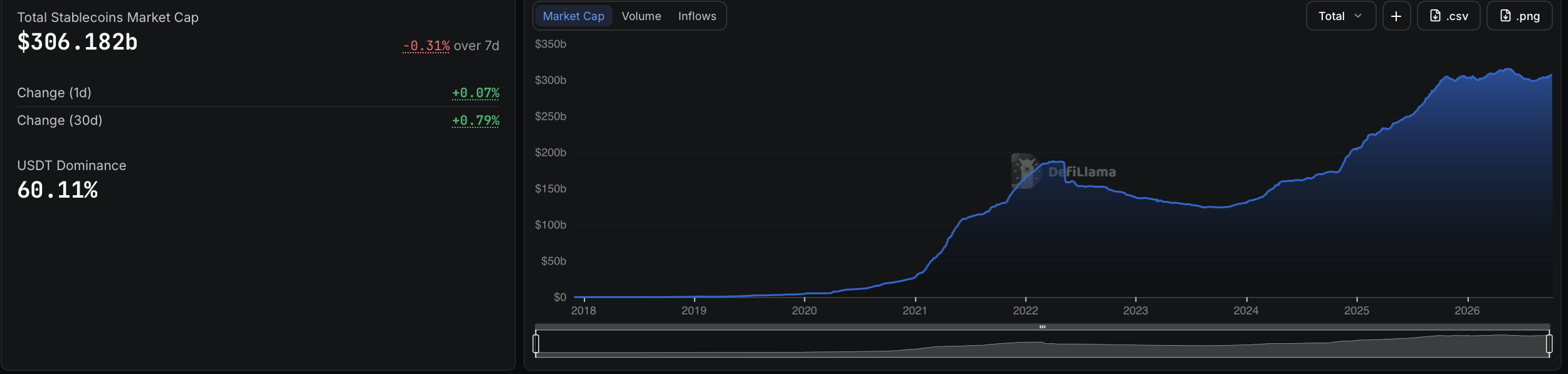
These debates unfolded as the broader stablecoin market capitalization hovered around $306 billion, reflecting a modest year-over-year growth rate following a period of rapid expansion in preceding cycles.

Onchain Trading Faces Liquidity Fragmentation and Risk Management Challenges
As institutional and retail participants increasingly shift trading activity directly to decentralized networks, platforms continue to grapple with the arduous task of identifying fragmented liquidity and managing sophisticated counterparty risks. These themes dominated the panel session titled "What’s Still Missing in the Onchain Trading Stack in 2026."
Austin Federa, co-founder of DoubleZero, noted that routing and moving liquidity efficiently between disparate blockchain networks remains significantly more difficult than in legacy financial systems. Describing fragmentation as a deep data challenge rather than merely an execution hurdle, Federa explained that it is surprisingly difficult for market participants to accurately calculate how much liquidity truly exists across the fragmented onchain ecosystem at any given moment.
On the risk management front, Miguel Morel, founder and CEO of blockchain analytics firm Arkham Intelligence, discussed how sophisticated trading firms are beginning to leverage transparent onchain data to better evaluate counterparty risk. This is particularly crucial in rapidly growing sectors like prediction markets, where certain participants often maintain informational advantages over general traders. Morel pointed out that when a market maker has clear visibility into who is on the other side of a trade and can accurately gauge their risk exposure, they can confidently offer tighter spreads, ultimately resulting in fairer, more efficient pricing for everyday customers.
Furthermore, Morel explained that the exact same public blockchain data can empower centralized and decentralized exchanges alike to intelligently evaluate customer deposits. By analyzing transaction histories and wallet behaviors, platforms can discern the precise origin of incoming funds, thereby streamlining compliance workflows. Morel noted that exchanges can utilize this data to immediately determine whether a deposit is safe to deploy for trading or whether it requires a formal compliance review, all without needing to collect intrusive documentation like passports upfront.
Crypto Investors Face Tougher Exits as Markets Mature
Shifting the lens from market infrastructure to venture capital dynamics, panelists gathered for "The Exit Problem: How Investors Get Their Money Back" discussed how shifting liquidity cycles and stricter market conditions have fundamentally complicated liquidity events for early-stage crypto investors.
Pulkit Gupta of Nomad Capital observed that liquidity across broader crypto markets has remained notably tight over recent quarters, with available capital heavily concentrated in a handful of large-cap cryptocurrencies. For alternative tokens and early-stage projects, Gupta admitted that securing clean, efficient exits has proven to be a formidable challenge, despite Nomad Capital’s extensive portfolio backing prominent projects with publicly traded tokens such as Movement, Solayer, and Berachain.

Reflecting a broader recalibration of industry expectations, Sonia Shaw, CEO of OneAsset, emphasized that the digital asset market has matured past the hyper-speculative phases of previous cycles. Modern markets now demand that emerging blockchain startups demonstrate robust, long-term business fundamentals rather than relying solely on narrative momentum. Comparing current market realities to past eras where investors routinely anticipated lightning-fast liquidity exits within a matter of months, Shaw stated her belief that those days are gone, viewing the shift toward prolonged, fundamentals-driven development as a healthy indicator of long-term market maturation.
Aleksandr Nechaev, a partner at Funders VC, underscored the unique pressures introduced by the blinding pace of product and market evolution in the Web3 space. Nechaev noted that the sheer velocity of change places an immense premium on a founder’s personal expertise and dynamic problem-solving abilities, making human capital central to modern investment underwriting decisions. The nuances of navigating uncertainty and market adaptation remained a focal point throughout the remainder of the conference, prominently featuring in the event’s startup pitch competition powered by Funders VC.
 Crypto Startups & Venture Capital
 Crypto Startups & Venture Capital
 Crypto Startups & Venture Capital