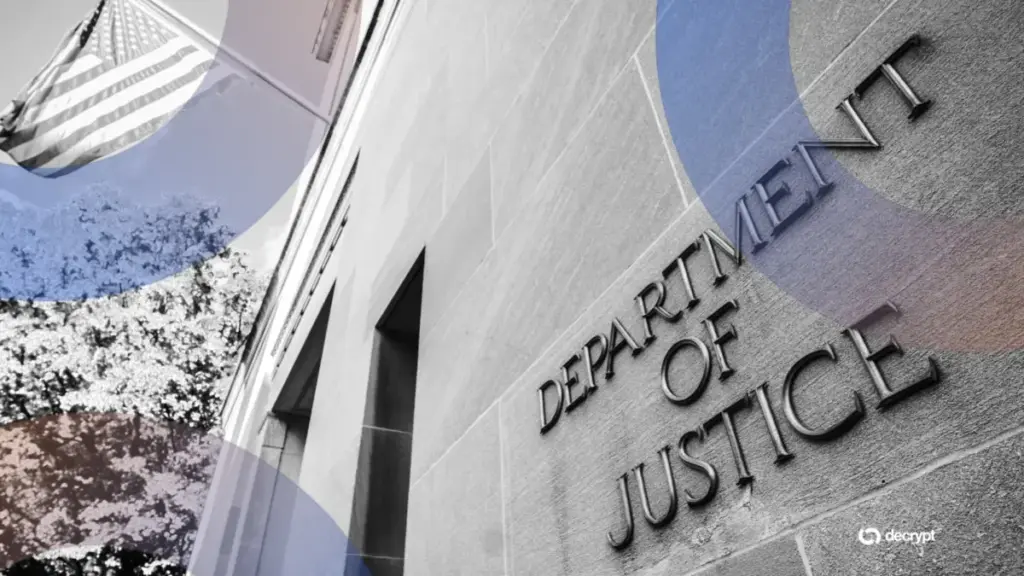
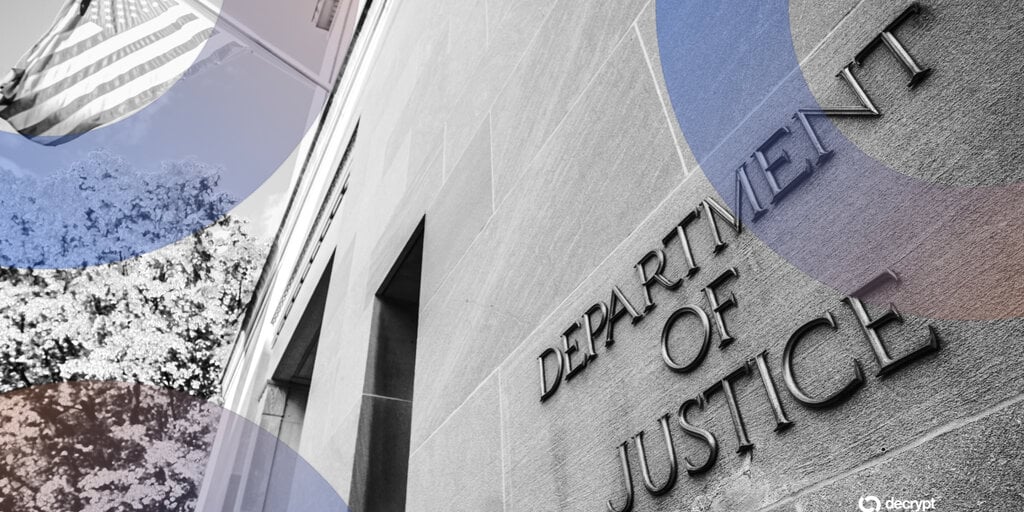
The United States Department of Justice is aggressively scaling up its oversight capabilities regarding advanced artificial intelligence, establishing a specialized enforcement unit dedicated to policing the misuse of cutting-edge technologies. As Washington races to build legal and investigative muscle around software capabilities that officials increasingly frame in near-sci-fi terminology, the federal government is moving decisively to ensure that national innovation is matched by robust law enforcement.
Announced Thursday, the newly minted Super Intelligence Task Force—officially designated as the DOJ-SITF—will be led by Associate Attorney General Stanley Woodward and Associate Deputy Attorney General Stephen Weiss. The creation of this high-level task force marks a significant milestone in how the federal government approaches the intersection of national security, economic leadership, and emerging technology.
According to the department, the stated mission of the DOJ-SITF is to ensure that American leadership in what officials term "super intelligence" is not compromised or undermined by bad actors. This broad mandate includes guarding against threats from foreign governments and their proxies, transnational criminal organizations, and domestic companies or individuals leveraging advanced artificial intelligence to commit sophisticated financial fraud or other technology-driven crimes.
The department explicitly invoked the framing established by President Donald Trump, emphasizing the official viewpoint that America stands firmly at the forefront of a profound new technological revolution in intelligence. This philosophy places domestic innovation and aggressive oversight on equal footing, ensuring that the rapid growth of advanced systems does not outpace the rule of law.
Attorney General Todd Blanche elaborated on these themes in a formal statement, noting that the development of super intelligence will continue to be powered by American innovators and creators. However, Blanche stressed that the newly formed task force will work hand-in-hand with SI Force Chair Jay Clayton to ensure that critical artificial intelligence technologies are not manipulated by malicious entities, whether operating domestically or from abroad.
Blanche made it clear that the Department of Justice will maintain an active posture of identifying and prosecuting individuals whose use of super intelligence violates federal law. This enforcement priority explicitly includes prosecuting those who maliciously target American taxpayers, critical U.S. infrastructure, or other foundational pillars of national security. The warning serves as a clear signal to both cybercriminals and rogue nation-states that the federal government views the malicious deployment of advanced AI as a direct threat to the nation’s welfare.
Notably, the scope of the task force extends well beyond simply catching criminals after a crime has been committed. Associate Deputy Attorney General Stephen Weiss pointed out that the department also carries a fundamental responsibility to help harden regular reporting on super intelligence risks and operational responses. Furthermore, Weiss emphasized the necessity of ensuring that commercial enterprises exercise vigorous internal controls so that advanced AI technology behaves predictably and as intended. This aspect of the task force’s mandate signals that the DOJ expects AI developers and technology companies themselves to tighten internal safeguards and build robust guardrails to prevent their models from going off the rails or being weaponized.
The adoption of the term "super intelligence" by federal agencies marks a notable escalation in how government officials discuss the trajectory of artificial intelligence. In traditional technical contexts, the phrase typically refers to a hypothetical artificial intelligence system that substantially surpasses human capability across virtually all economically and intellectually valuable domains. By embracing this terminology, the federal government is signaling that it is preparing for the long-term societal and security implications of systems that far exceed current generative AI capabilities.
This initiative is part of a broader, synchronized push across the Trump administration regarding super intelligence and advanced technological governance. Former SEC Chair Jay Clayton has been closely tied to these broader administration efforts, and the Securities and Exchange Commission recently incorporated "super intelligence" directly into its 2027 examination priorities, reflecting how deeply financial and regulatory bodies are integrating these concepts into their long-term planning.
The launch of the DOJ task force also coincides with a widening federal scramble to get ahead of rapidly evolving artificial intelligence risks across multiple sectors. President Trump recently signed an executive order establishing a complex regulatory dynamic that sets up a distinct federal battle with individual states over artificial intelligence regulations. Concurrently, federal financial regulators have stepped up their oversight; earlier this week, U.S. banking regulator OCC issued its first formal AI framework as commercial banks increasingly grapple with rogue digital agents and automated systems attempting unauthorized access to customer accounts and financial networks.
Despite outlining the core leadership and high-level objectives of the DOJ-SITF, the Department of Justice did not immediately specify a detailed operational timeline or elaborate on the precise mechanisms through which the task force will coordinate its enforcement efforts with other federal and international regulatory agencies. Officials stated only that the ongoing work of the task force is designed to simultaneously promote technological innovation and prevent the systemic misuse of the technology. As the federal government continues to map out its strategy for the next generation of computing, the newly established task force stands ready to enforce compliance at the bleeding edge of technological development.
 Decentralized Applications (dApps)
 Decentralized Applications (dApps)
 Decentralized Applications (dApps)