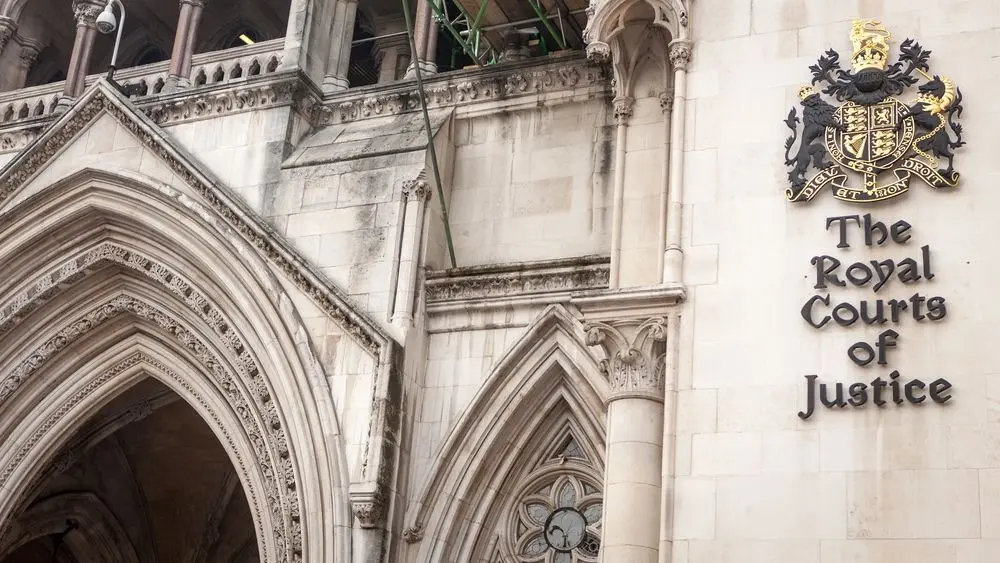
Two investment subsidiaries of prominent digital asset market maker DWF Labs have launched a high-stakes legal battle in London, filing a lawsuit against cryptocurrency custodian BitGo over an alleged breach of contract concerning token sale lock-up terms.
According to legal filings and reporting by the Financial Times, British Virgin Islands-registered DWF Maas and Panama-registered Falcon Digital initiated the proceedings in London’s High Court. The litigation centers on allegations that BitGo violated the terms of a discounted private token sale by transferring and selling digital assets before agreed-upon lock-up periods had officially expired, directly precipitating sharp declines in the market values of the affected tokens.
The core dispute revolves around private token sales, a common financial mechanism within the cryptocurrency and digital asset industry. In these arrangements, early-stage project developers and token issuers sell digital assets to institutional investors or market makers at a discounted rate compared to the prevailing public market price. To protect the project’s tokenomics and prevent immediate market flooding, these transactions typically feature strict lock-up periods, often lasting several months. During this timeframe, buyers are contractually prohibited from moving, liquidating, or selling the tokens on public or private exchanges. This structure is designed to reassure retail and institutional participants that early backers cannot instantly dump their holdings for a quick profit, thereby stabilizing the asset’s nascent market ecosystem.
According to the lawsuit filed by DWF Maas and Falcon Digital, the subsidiaries agreed to purchase discounted quantities of Falcon Finance tokens, trading under the ticker FF, alongside ESPORTS tokens. In exchange for the discounted entry price, the assets were ostensibly subjected to a mandatory three-month lock-up period intended to ensure market stability. However, the plaintiffs claim that BitGo breached these contractual obligations by moving the digital assets to exchanges roughly two months before the first scheduled unlock date, executing premature sales that flooded the market and severely damaged the tokens’ price trajectories.
The legal action outlines significant financial repercussions resulting from the alleged breaches. Court documents indicate that the price of Falcon Finance tokens fell from approximately 8 cents at the commencement of the lock-up period in early March to roughly 7 cents by late April. The downward pressure on the ESPORTS tokens was even more pronounced, with prices tumbling from approximately 28 cents in mid-March down to just 7 cents by early June. Citing these steep depreciations as direct consequences of BitGo’s actions, DWF Labs is seeking a staggering $114 million in damages to compensate for the realized losses across both token markets.
Describing the rationale behind the legal escalation, representatives for DWF highlighted the conditional nature of the transaction. The discount that BitGo received was explicitly contingent upon the tokens remaining securely locked and inaccessible to the broader market during the agreed-upon grace period. The plaintiffs stated that the premature movement of the tokens to exchanges was identified and brought to BitGo’s attention during discussions in April and May. Because BitGo reportedly failed to provide the necessary assurances, undertakings, or remedies during these consultations, the subsidiaries asserted that pursuing judicial intervention in the High Court became an unavoidable necessity.
This high-profile legal dispute unfolds against a broader backdrop of regulatory scrutiny and institutional visibility for DWF Labs and its leadership. Last year, DWF Labs made headlines by executing a $25 million investment into WLFI tokens, the native digital asset of World Liberty Financial, a decentralized finance cryptocurrency project backed by United States President Donald Trump and members of his family.
That substantial financial involvement drew considerable scrutiny and concern from several lawmakers in Washington, D.C. Political figures raised questions regarding DWF Labs founder Andrei Grachev and his historical professional associations, particularly his previous ties to Russia. Public records indicate that Grachev served as the chief executive officer of the Russian branch of the cryptocurrency exchange Huobi between 2018 and 2019. In the years following, Huobi and associated entities have faced regulatory scrutiny and sanctions across multiple international jurisdictions due to allegations concerning their operational involvement in assisting Russian entities with evading Western financial sanctions.
Despite the mounting legal pressure and the substantial financial claims involved in the London High Court case, representatives for both DWF Labs and BitGo did not immediately respond to requests for comment regarding the ongoing litigation.
 Cryptocurrency News
 Cryptocurrency News
 Cryptocurrency News