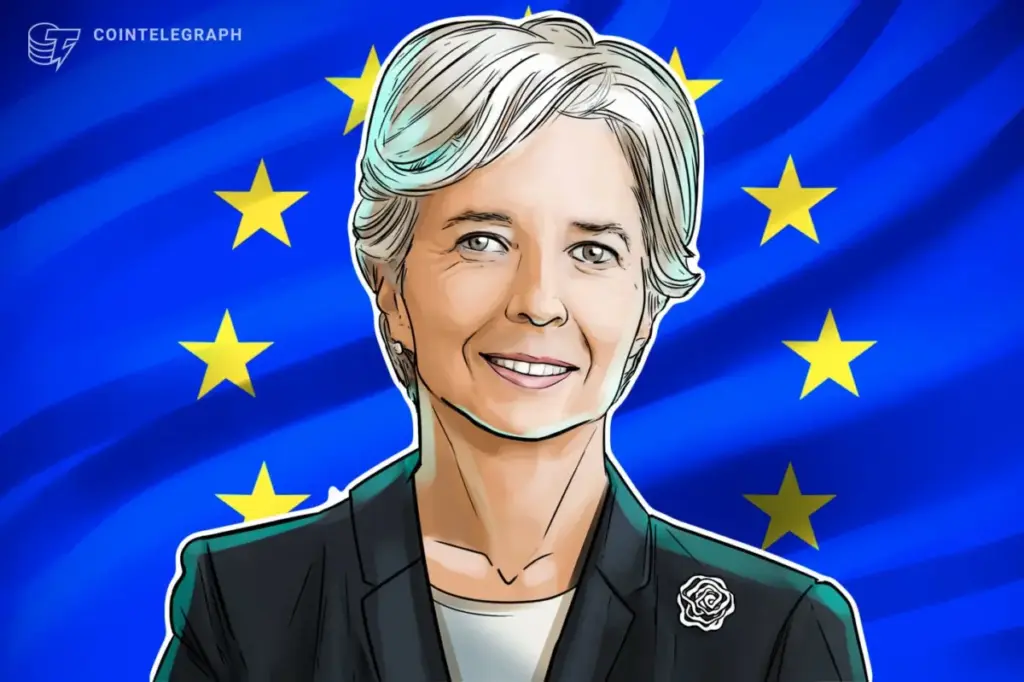
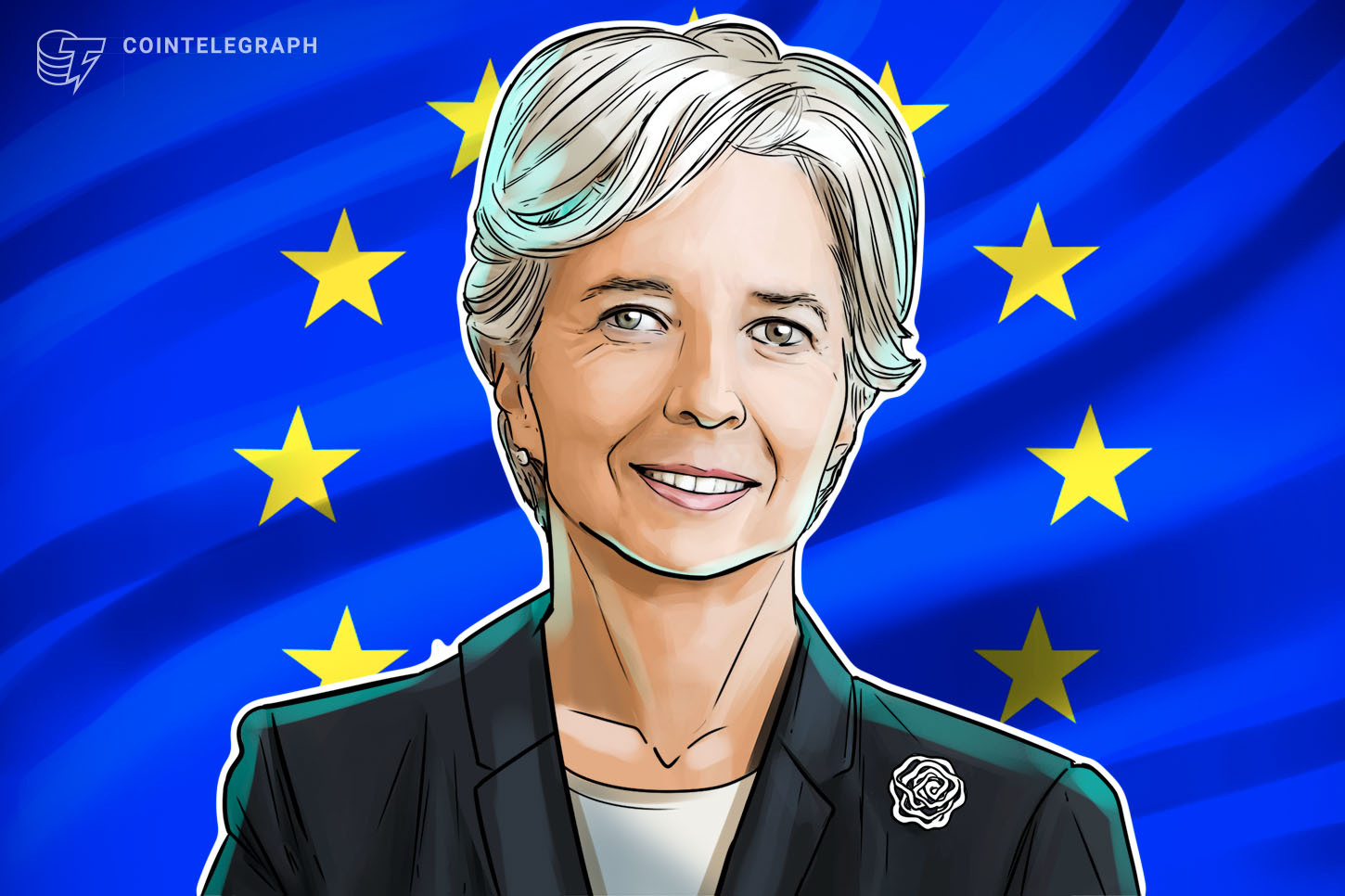
European Central Bank (ECB) President Christine Lagarde has outlined the central bank’s ongoing strategy regarding economic inflation, retail payments, and digital asset integration. Speaking at the Annual Meetings of the International Monetary Fund (IMF), Lagarde addressed the primary drivers behind recent euro-area inflation trends, the central bank’s timeline for monetary policy adjustments, and the ambitious technological evolution currently underway within Europe’s financial infrastructure, anchored by the development of the digital euro and wholesale tokenized settlement systems.
During her address, Lagarde noted that the euro-area inflation rate, which hovered at 3.8% in September, has been largely driven by persistent high energy costs. While these elevated figures remain a challenge for consumers and policymakers alike, the ECB president conveyed a measured outlook, stating that the central bank expects these energy-related pressures to ease in the coming year.
However, Lagarde acknowledged that the residual impact of the recent energy shock will likely keep euro-area inflation above the ECB’s official target through the first half of 2027. Despite this extended timeline for reaching the target inflation rate, she emphasized that a calm, measured policy response remains the most appropriate course of action for the central bank as it navigates economic headwinds without stifling broader market recovery.
Beyond traditional monetary policy and inflation management, a significant portion of Lagarde’s remarks focused on the structural transformation of the European payments landscape. She officially confirmed that the ECB is actively advancing its plans to design and implement a digital euro, positioning it as a vital modernization of public money for the modern digital economy.
"In the retail space we are preparing to complement cash with its digital equivalent — the digital euro — for day-to-day payments," Lagarde stated during her address. "The digital euro will further stimulate innovation and competition in retail payments, ensuring that the continued co-existence of public and private solutions underpins Europe’s strategic autonomy in payments."
The integration of a digital euro represents a cornerstone of the Eurosystem’s broader effort to future-proof the European monetary union. By providing citizens and businesses with a secure, ECB-backed digital payment instrument, the central bank aims to reduce Europe’s reliance on non-European payment providers while fostering a competitive environment where both public digital currency and private commercial solutions can thrive side by side.
This retail-focused initiative is complemented by significant strides in wholesale financial markets. The ECB’s recent technological rollout underscores a comprehensive approach to modernizing money across all tiers of the economy. In late September, the Eurosystem launched Pontes, a dedicated system designed to allow financial institutions to settle wholesale tokenized asset transactions using central bank money.

The introduction of Pontes provides the institutional financial sector with a secure and efficient alternative to private settlement assets, such as commercial stablecoins, ensuring that central bank money remains the ultimate anchor of safety and stability in wholesale tokenized finance. The system has been launched with an initial core set of services, laying the groundwork for a phased rollout that anticipates full implementation by 2028.
As Europe continues to develop both its retail digital currency and its wholesale tokenized settlement rails, the ECB remains focused on accessibility and technological resilience. Recent reports have highlighted that the upcoming digital euro application is being designed to meet and even exceed standard European Union accessibility requirements, ensuring that the digital currency remains inclusive for all demographics. Through these synchronized initiatives in retail innovation and wholesale settlement infrastructure, the European Central Bank is actively shaping the future of European finance.
 Crypto Regulation & Policy
 Crypto Regulation & Policy
 Crypto Regulation & Policy