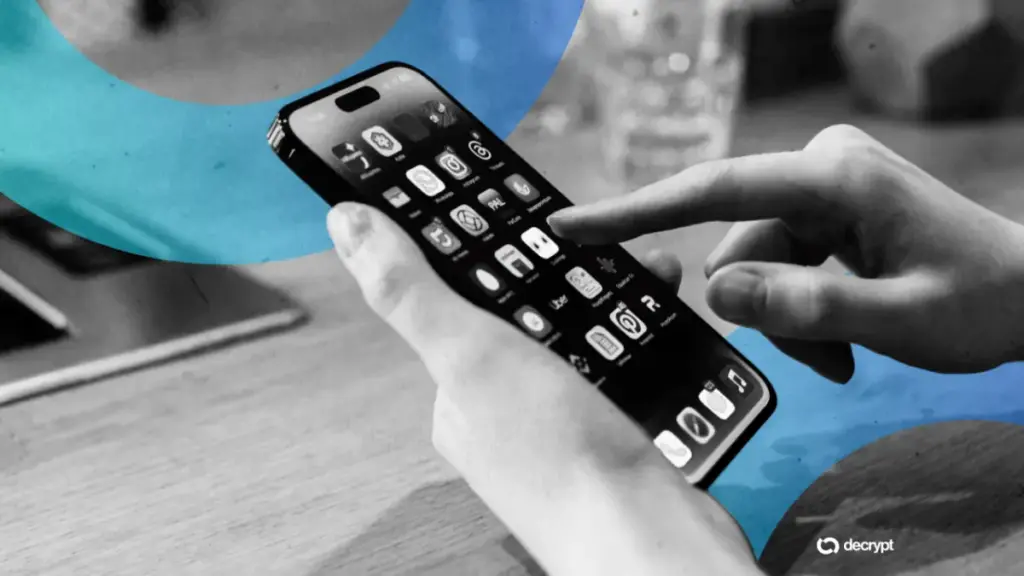
In an impressive feat of reverse engineering that has captured the attention of the global tech community, hobbyists and independent developers have successfully booted Apple’s proprietary iOS operating system onto Android smartphones. The milestone achievement, which breaks down a walled garden that has historically separated the two dominant mobile ecosystems, has sparked widespread fascination as video demonstrations circulate rapidly across social media platforms.
For years, the unwritten law of the mobile device market has been simple: buying a phone meant accepting its native software environment. Apple’s iOS has long been tightly bound to its own manufactured hardware, powering everything from device touchscreens to complex application frameworks with rigid exclusivity. Conversely, Android devices have lived in a separate sphere. While early experiments in the past allowed Android to run on select legacy iPhone models through legacy projects like iDroid and Project Sandcastle, the reverse path—getting Apple’s flagship software to execute on non-Apple hardware—remained an elusive mountain that no engineer had successfully climbed. Until now.
The breakthroughs are currently making waves online, with video clips pulling in millions of views. One prominent demonstration featuring iOS running on a Redmi Note 12 has generated immense traction on X, while another independent developer showcased a parallel build functioning on a Nothing 3a device.
At the center of these public developments is an open-source project hosted on GitHub under the moniker "ios-sweet," which has been specifically tailored for the Redmi Note 10 Pro. The technical mechanics behind the experiment are as complex as they are unconventional. The developers rely on Apple’s openly published XNU kernel—the core component of the operating system responsible for facilitating communication between software and physical hardware components like processors, system memory, and storage arrays.
To bridge the gap between Apple’s software architecture and third-party hardware, the engineering team applies specialized patches to the XNU kernel so that it can interact with the Qualcomm Snapdragon 732G chip housed within the Redmi Note 10 Pro. Layered on top of this modified kernel are unmodified system files taken directly from iOS 16.7.16, originally intended for an iPhone X.

Despite the sheer novelty and viral popularity of the achievement, the developers behind these experimental builds are quick to manage expectations. In their accompanying documentation, they explicitly classify the work as an "experimental bring-up" rather than a usable, daily-driver mobile operating system. The limitations are vast and immediately apparent upon booting. While the Redmi Note 10 Pro manages to reach the lock screen, home screen, Control Center, and Settings menu with responsive touch inputs and functional physical buttons, core smartphone features remain entirely inoperable. Essential functions such as Wi-Fi, Bluetooth, mobile cellular data, audio output, and the onboard camera do not work. Furthermore, because there is no compatible graphics driver, the host processor is forced to render the display entirely through software, resulting in a sluggish frame rate of roughly 20 to 30 frames per second. The initial boot process itself requires a patient four-to-five-minute wait while staring at the Apple logo.
Parallel efforts are underway by separate development circles. A collective referring to itself as OOSexGang has claimed via social media updates that its proprietary "HackiOS" project successfully executes iOS 16.5 on a Poco X5 Pro. Their approach reportedly utilizes a custom UEFI firmware environment combined with the XNU kernel. However, unlike the open-source GitHub repository, this project lacks public source code or independent verification from the wider developer community. In subsequent demonstration footage shared by tech researchers, Safari can be seen attempting to download an Android application package file from APKMirror, only to fail to open it—a humorous irony, given that native iOS has always rejected Android application files by design.
These daring hardware-bending experiments arrive amid a broader cultural shift among tech enthusiasts, accelerated by the rapid evolution of artificial intelligence tools and automated code analysis. The capability to rapidly deconstruct, analyze, and rewrite complex software packages has emboldened independent developers to push boundaries that were once considered practically insurmountable. Just days prior to these iOS-on-Android demonstrations, security researchers from Calif.io successfully jailbroke an iPhone 18 Pro live on stage at the Hexacon security conference in Paris, achieving root access that remarkably survived a complete device reboot.
Another catalyst for this wave of ambitious reverse-engineering projects is REA, shorthand for Reverse Engineer Anything. This free developer toolkit empowers AI coding assistants to systematically tear down and analyze complex software architectures. The toolkit recently gained notoriety when a developer utilized it to demonstrate Grand Theft Auto V running natively on iOS hardware, highlighting how rapidly the tooling available to hobbyist programmers is advancing.
For everyday smartphone users, however, turning an Android device into an experimental Apple handset comes with steep practical warnings. Beyond the fact that critical hardware components like wireless connectivity and audio are entirely non-functional, installing these experimental builds completely wipes out all existing Android user data on the device. Furthermore, the installation process leaves core security protections disabled, prompting the developers themselves to sternly warn enthusiasts against storing any personal data, accounts, or sensitive information on a phone running these unauthorized builds.
 Web3 & Decentralized Web
 Web3 & Decentralized Web
 Web3 & Decentralized Web