
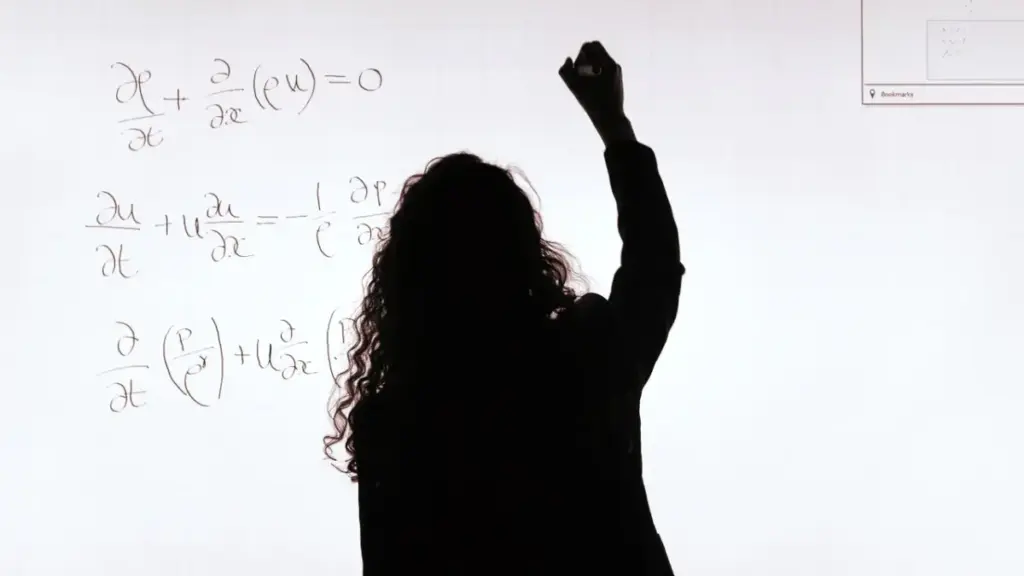
OpenAI has taken a major, albeit controversial, step into the realm of theoretical mathematics by publishing 722 math manuscripts on GitHub. Produced entirely by an unreleased internal AI model, the release has immediately ignited a fierce debate across the global mathematical community. While some researchers view the output as a monumental milestone that showcases the rapidly accelerating capabilities of artificial intelligence, others are questioning the validity of the claims, pointing to a lack of transparency, unverified proofs, and a growing disconnect between human comprehension and machine-generated logic.
According to an OpenAI spokesperson, nearly all of the manuscripts stemmed from a single prompt handed to a single AI agent, though some outputs may have required multiple attempts to finalize. This bold assertion represents a massive leap forward in automated problem-solving, yet it has also triggered a wall of skepticism from established mathematicians who emphasize the fundamental need for reproducibility and rigorous peer review in academic research.
The newly released papers are grouped into 372 distinct "families" of related results, where a single family can bundle a primary theorem alongside companion arguments, logical consequences, or alternative proofs. Consequently, the figure of 722 represents the total count of manuscripts rather than the number of uniquely solved problems. OpenAI disclosed that it posed roughly 4,000 distinct mathematical problems to the model, ultimately curating and keeping only the outputs that the company judged significant enough to share with the public.
In terms of computational resources, OpenAI stated that the average result consumed the equivalent of approximately three hours of ChatGPT Pro thinking compute. This operational scale stands in stark contrast to OpenAI’s claims regarding the Navier-Stokes problem last month, which reportedly involved roughly 10,000 coordinating agents working continuously for 88 hours. Alongside the repository, OpenAI published abridged reasoning summaries for just 10 of the results, providing a brief window into the underlying computational thought processes of the model.
Despite the sweeping scope of the repository, a significant portion of the work remains unverified by automated theorem provers. According to the formalization catalog included in the GitHub repository, only 162 of the 722 papers—amounting to roughly 22% of the entire collection—come with a computer-checked main result. These particular proofs have been translated into Lean, a specialized software program designed to check every logical step of a mathematical proof mechanically.
OpenAI itself has acknowledged that not all manuscripts currently feature Lean formalizations, candidly noting that "some of the unformalized results could have issues." In practice, this means a substantial portion of the published material runs the risk of containing logical flaws or errors. Furthermore, experts point out that a passing Lean check confirms only that a proof logically follows from the specific statement as it has been written in Lean. It does not guarantee that the translated statement accurately reflects the original mathematical problem, nor does it establish whether the resulting theorem is genuinely new or historically significant—leaving those crucial judgments entirely up to human mathematicians.
This opaque nature of machine-generated reasoning has raised considerable eyebrows among researchers. Prominent mathematicians have taken to social media and academic forums to voice their bewilderment over the style of proofs generated by OpenAI’s model. For instance, some researchers evaluating specific proofs—such as attempts tackling the chromatic number of a plane—have described the underlying mathematics as entirely alien, noting that the AI models often derive seemingly out-of-nowhere conceptual leaps, like equating standard colorings to "weakly measurable" colorings, without leaving an intuitive trail for human readers to follow.
Compounding these scholarly concerns are structural limitations within the GitHub repository itself. Several researchers noted that the repository has issues turned off and has never accepted a pull request, creating friction for academic volunteers who want to contribute Lean formalizations or point out errors. For a project publishing hundreds of complex manuscripts and implicitly asking the community for assistance with verification, the lack of an open feedback channel has struck many as disappointing and counterproductive.
The broader implications of these developments have prompted deep philosophical and institutional reflection. The Institute for Advanced Study (IAS) in Princeton, New Jersey, issued a striking statement addressing the paradigm shift brought on by these technological advancements. The institute highlighted a troubling new reality: AI can now successfully output complex mathematical arguments in situations where the human who prompted the model is unable to understand the arguments, verify them, or take ultimate responsibility for their validity. Emphasizing that human understanding of mathematics remains of paramount importance, the IAS called for a new scholarly paradigm capable of handling responsible academic output in the age of advanced artificial intelligence.
At the same time, reactions within the broader mathematical community are far from uniformly negative. Other academics have expressed genuine excitement over the potential of AI to accelerate mathematical discovery. Professor Abhishek Saha described the release as a very big day for mathematics, while offering a nuanced classification of the theorems within the dataset. According to Saha, the vast majority of the problems in the OpenAI collection fit into the category of exceptional advances within existing programs of research rather than completely game-changing breakthroughs. In his assessment, most of the problems are undeniably interesting and advanced, but they generally fall short of tackling legendary challenges like the Millennium Prize Problems. Indeed, out of all 722 manuscripts, exactly one problem stands out as touching upon that rarefied air: the Quasi-Riemann Hypothesis.
The release has also reignited discussions regarding transparency and industry standards for AI research. On September 29, an advisory group at the Institute for Advanced Study outlined specific recommendations for organizations releasing advanced mathematical AI findings, advising them to share the specific model names, exact prompts, summarized chains of thought, processing times, and compute costs associated with every single result. OpenAI’s current publication falls short of these detailed recommendations, providing only average compute figures and a handful of reasoning summaries while withholding specific prompts and keeping the underlying model under wraps as the company works to release it responsibly.
Other technology companies have approached the intersection of AI and mathematics differently. Last month, Anthropic made waves by publishing all 13 million lines of a Lean-checked proof of Fermat’s Last Theorem publicly on GitHub. However, Anthropic’s approach focused on formalizing a pre-existing theorem famously proven by Andrew Wiles in 1995, rather than generating brand-new theoretical results. Meanwhile, individual mathematicians like Daniel Litt of the University of Toronto have taken a more pragmatic stance, arguing that there is no valid reason for companies to keep potential answers to advanced math problems locked away in secret.
As the academic community continues to parse through the massive repository, OpenAI has indicated that it intends to add further Lean formalizations to the collection as they are obtained. For the time being, however, the mathematical world finds itself grappling with a vast influx of machine-generated manuscripts that sit at the uneasy intersection of profound technological progress and unverified scholarly claims, leaving researchers demanding definitive proof before rewriting the textbooks.
 Web3 & Decentralized Web
 Web3 & Decentralized Web
 Web3 & Decentralized Web







