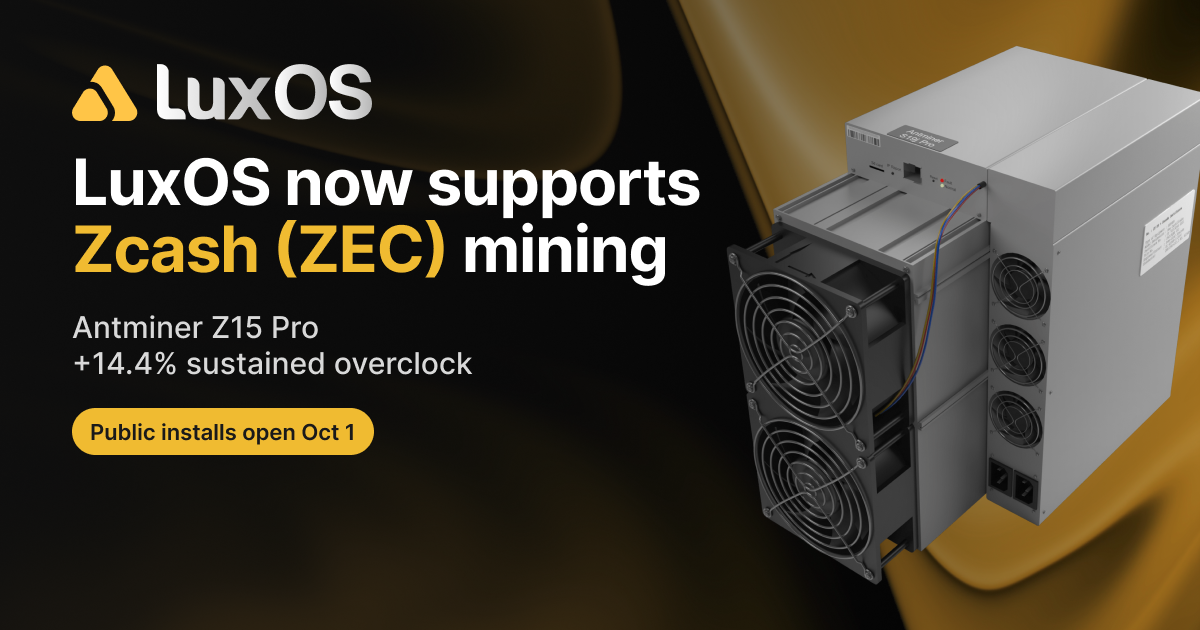
Mining software provider Luxor Technology Corporation has announced a major expansion of its proprietary LuxOS firmware, bringing its tuning and management stack to Equihash ASICs for the first time. Historically restricted to Bitcoin-focused mining hardware, LuxOS now supports the Bitmain Antminer Z15 Pro, unlocking new performance tiers and granular chip-level monitoring for Zcash operators.
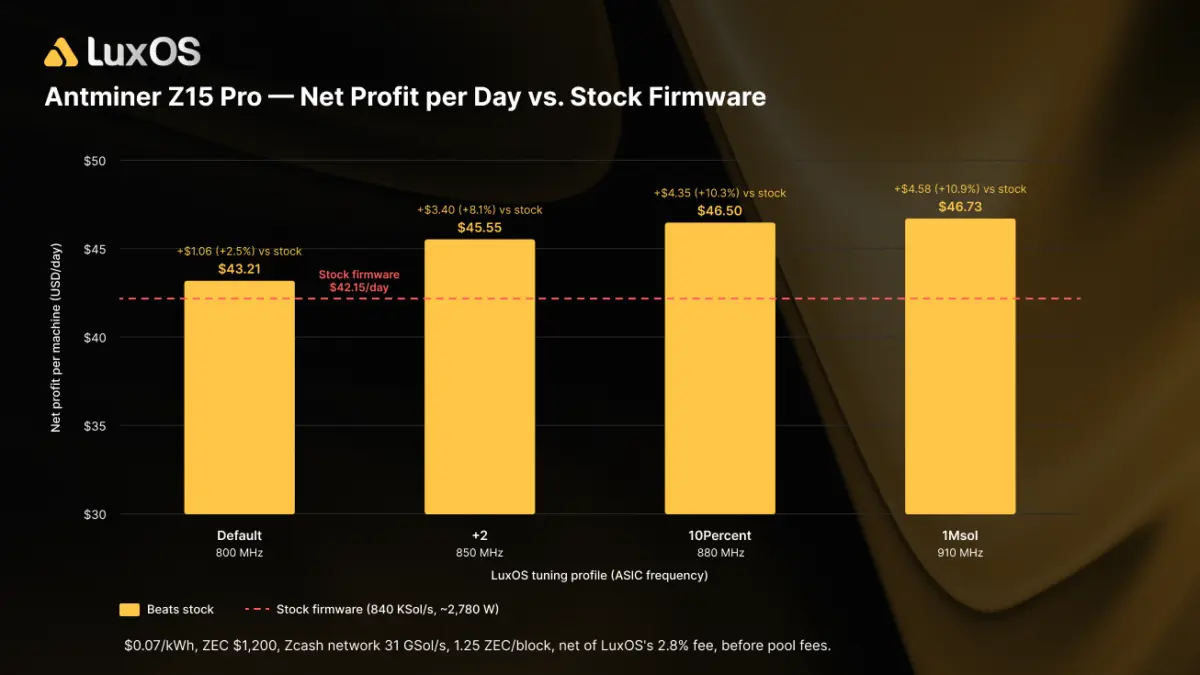
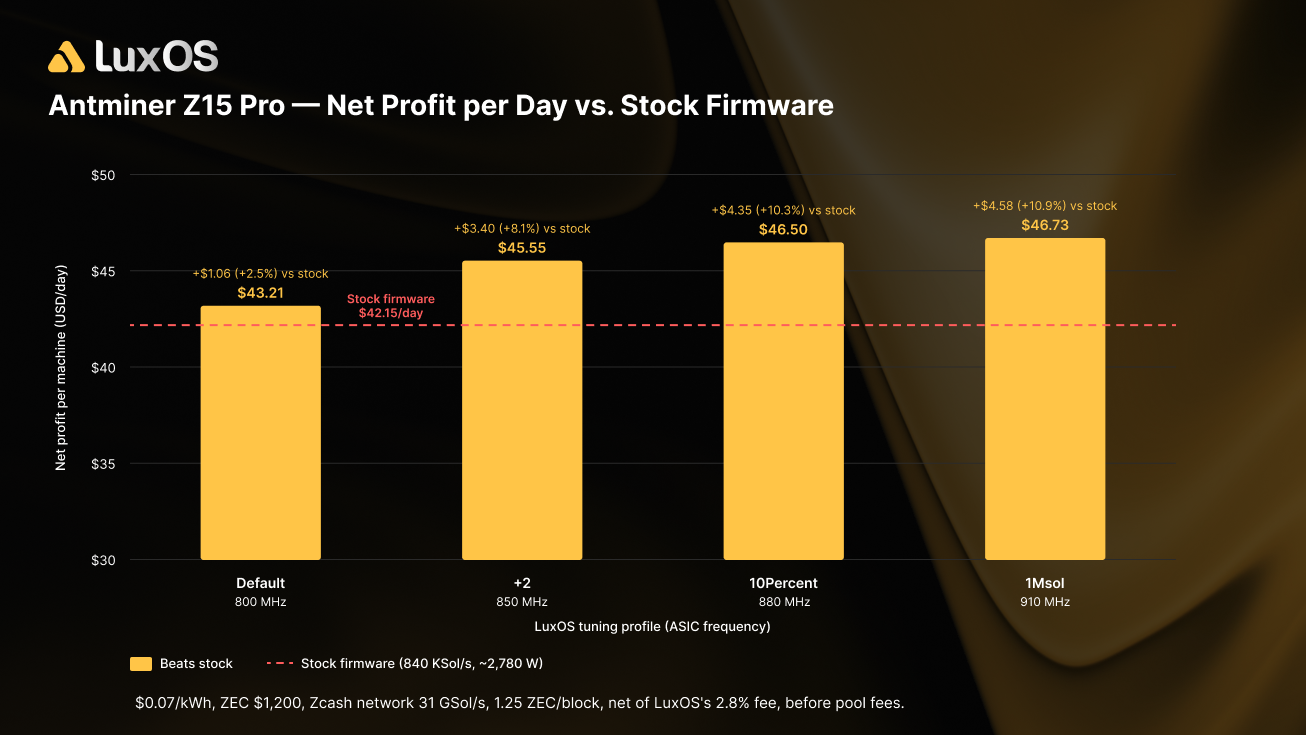
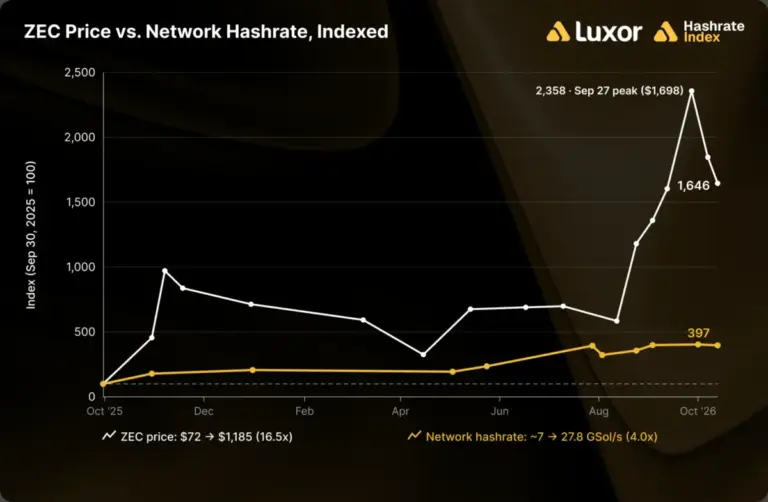
The integration arrives as the broader Zcash network continues to see robust activity, with network hashing power hovering around 31 GSol/s and the token price trading near $1,200. Under stock factory settings, the Antminer Z15 Pro operates as a sealed unit yielding a fixed 840 KSol/s at roughly 2,780 watts, leaving operators with limited options to optimize performance relative to local electricity costs or cooling infrastructure.
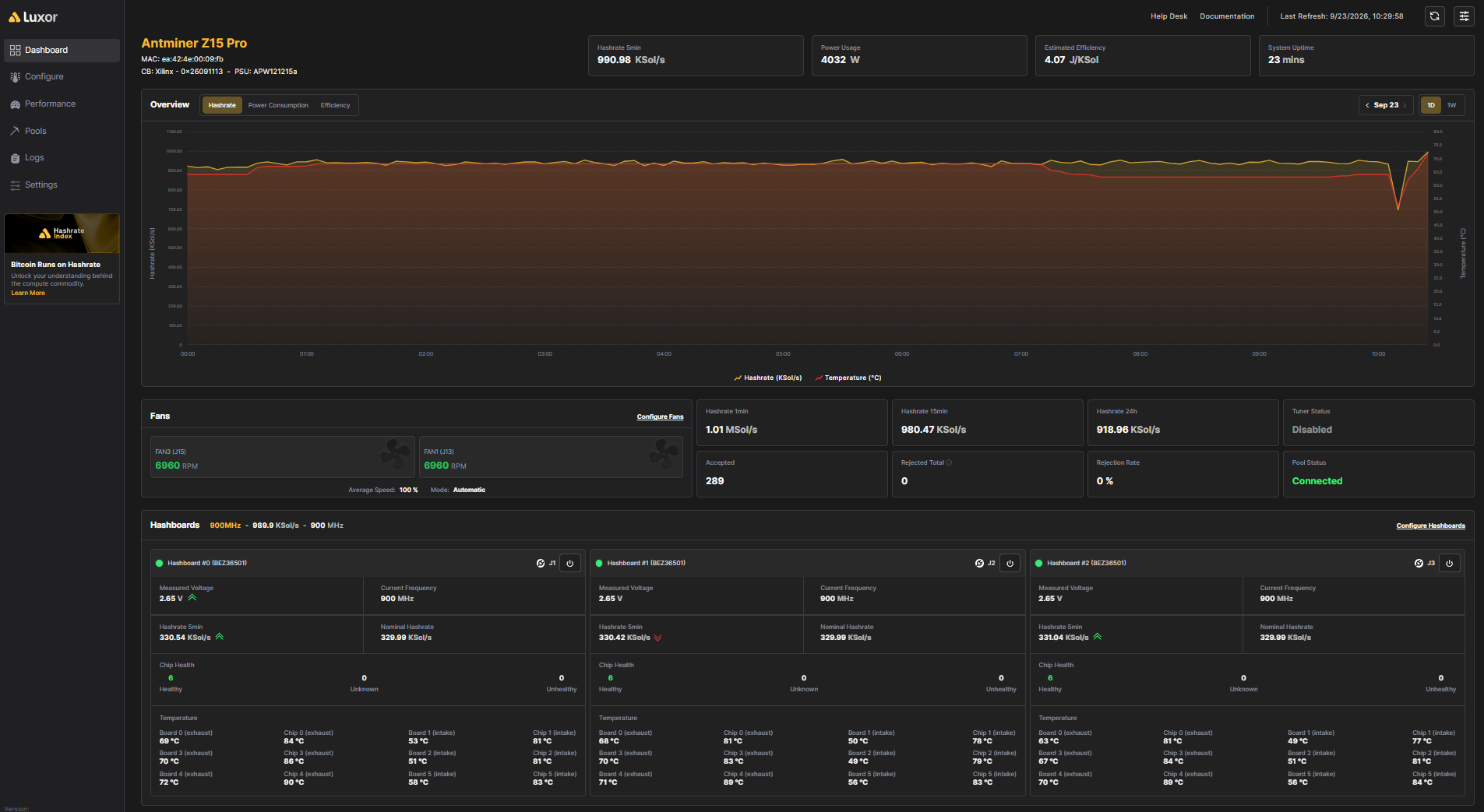
Luxor’s testing of the new firmware on a live machine demonstrates a significant performance lift. Operating on a tested profile, the test unit achieved a sustained rate of 961 KSol/s—reflecting an increase of 121 KSol/s—at approximately 4,032 watts. Factoring in LuxOS’s 2.8% developer fee, the firmware delivers a net hashrate increase that alters the daily economics for commercial and independent miners alike.
Financial Impact and Fleet Economics
The financial implications of overclocking Equihash hardware depend heavily on regional power costs and prevailing cryptocurrency valuations. At a baseline power price of $0.07 per kilowatt-hour and a Zcash price of $1,200, a stock Antminer Z15 Pro typically nets approximately $42 per day. In contrast, Luxor’s test machine running LuxOS nets roughly $47 per day under the same power constraints, even after accounting for the software fee.
Projected over a 90-day operational window, this performance delta translates to meaningful revenue expansion. Based on current network parameters—assuming 1,152 blocks per day and a 1.25 ZEC miner reward—operators utilizing LuxOS can expect higher cumulative net returns compared to stock configurations. At recent equipment acquisition costs of around $7,475 per unit for forward futures, this efficiency and output gain compresses the simple capital payback period by nearly three weeks.
Sensitivity analyses underscore that power pricing and token volatility remain the primary variables for fleet operators. The firmware’s overclocking profile remains gross-margin positive across a wide spectrum of electricity tariffs, breaking even only when power costs reach approximately $0.23 per kilowatt-hour. On the token pricing side, the profitability threshold sits near $370 per ZEC. Below that mark, the additional electrical draw required to sustain the higher hashrate outweighs the fiat value of the extra mined coins.
Advanced Monitoring and Fleet Management
Beyond raw performance gains, the introduction of LuxOS brings enterprise-grade management tools to Equihash hardware that were previously unavailable on stock firmware. Standard Bitmain interfaces offer minimal insight into individual hardware components, preventing operators from diagnosing subtle performance degradation before it leads to downtime.
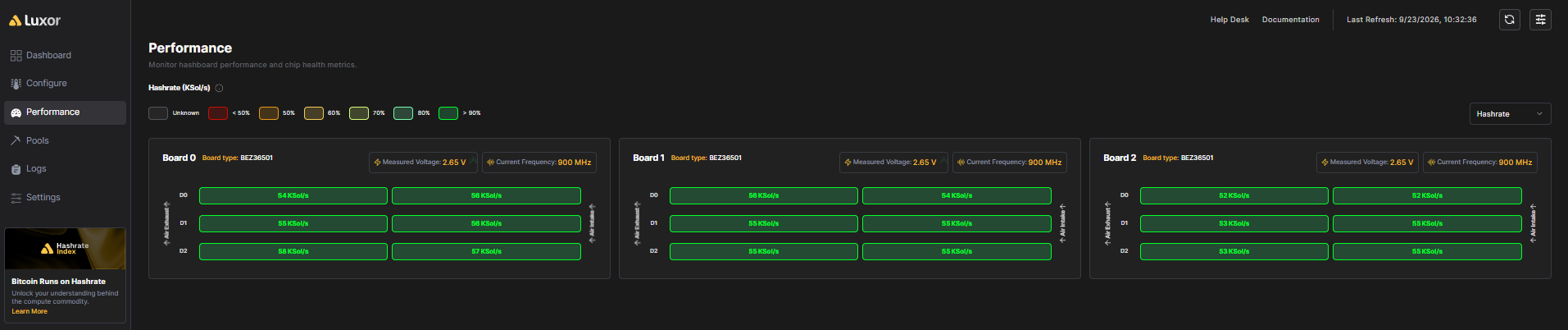
LuxOS equips the Antminer Z15 Pro with per-chip performance tracking, comprehensive health scoring, and precise voltage and frequency tuning. Real-time telemetry from test deployments demonstrates stable operation with zero rejection rates across all three onboard hashboards. Every individual chip maintains output above 90% of its target threshold while residing safely within optimal thermal and electrical bands.
This level of operational visibility allows large-scale mining operations to treat Equihash hardware with the same rigorous monitoring standards typically reserved for industrial-scale Bitcoin mining fleets. Operators retain the flexibility to tailor performance profiles to specific environmental conditions, whether adjusting for constrained cooling capacities or taking advantage of low-cost energy windows.
Deployment and Hardware Compatibility
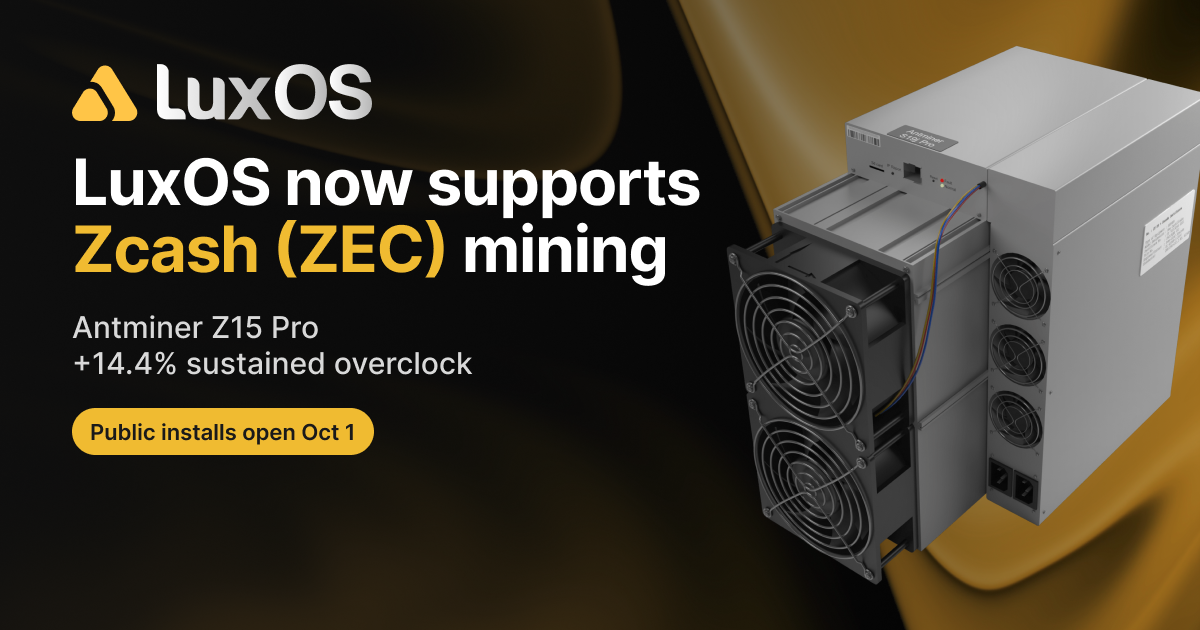
Public installations for the new Z15 Pro firmware are scheduled to open on October 1, though early access and testing programs are already underway for select enterprise clients. Luxor has confirmed that support is currently tailored specifically to the Z15 Pro model, with potential expansions to other hardware variants dependent on future development roadmaps.
The firmware remains entirely pool-agnostic, allowing operators to integrate the newly tuned machines into whatever existing Zcash mining pools they currently utilize without altering payout structures or redirecting infrastructure. Before deploying overclocked profiles, operators are advised to verify that their power distribution units, electrical circuits, and facility cooling systems possess adequate headroom to handle the increased load.
As industrial cryptocurrency mining continues to mature, software-driven efficiency gains have become a critical lever for protecting profit margins against rising network difficulty and volatile energy markets. By bridging the gap between Bitcoin-grade firmware management and Equihash hardware, Luxor’s latest release provides Zcash miners with new tools to maximize the productive lifespan and output of their capital investments.
 Cryptocurrency Mining
 Cryptocurrency Mining
 Cryptocurrency Mining