
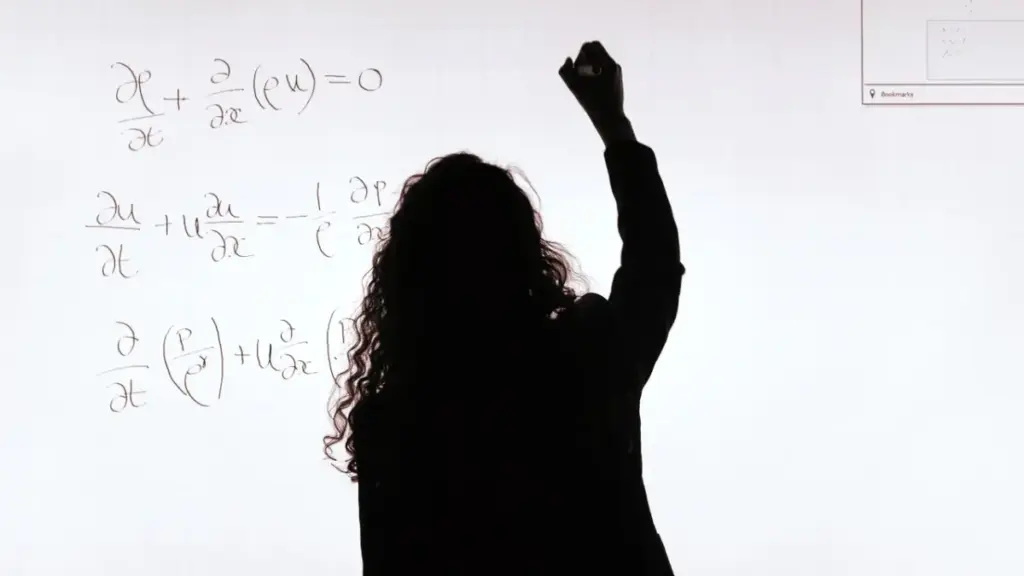
OpenAI has sparked both intense excitement and deep skepticism across the global mathematical community after publishing 722 math manuscripts on GitHub. The papers, produced by an internal and unreleased AI model, represent a massive data dump of advanced mathematical exploration. According to an OpenAI spokesperson, nearly all of the documents were generated from a single prompt handed to a single AI agent, though some outputs may have required multiple attempts to successfully complete.
The move represents a bold claim and a potentially significant breakthrough in the field of mathematics. However, not everyone in the academic community is buying the hype, with prominent researchers raising immediate concerns regarding transparency, verification, and the fundamentally shifting nature of mathematical proof in the era of artificial intelligence.
The newly released papers are grouped into 372 "families" of related mathematical results. Within these groupings, a family can bundle a primary theorem alongside companion arguments, mathematical consequences, or alternative proofs. Consequently, the total count of 722 reflects individual manuscripts rather than a distinct tally of uniquely solved problems. OpenAI disclosed that it posed roughly 4,000 problems in total to the proprietary model, ultimately retaining and publishing only those outputs that the company judged to be significant enough for public viewing.
In terms of computational resources, OpenAI stated that the average result consumed the equivalent of roughly three hours of ChatGPT Pro thinking compute. This operational profile stands in stark contrast to the company’s high-profile claims regarding the Navier-Stokes equations last month, a project that reportedly utilized 10,000 coordinating agents working continuously for 88 hours.
Despite the sheer volume of material published on GitHub, the academic community has quickly pointed out significant gaps in verification. OpenAI did release abridged reasoning summaries for 10 of the results to provide a glimpse into the model’s logic. However, according to a formalization catalog embedded within the GitHub repository, only 162 of the 722 papers come with a computer-checked main result. This accounts for roughly 22% of the entire collection, which has been translated into Lean—a specialized software program designed to check every logical step of a proof mechanically.
OpenAI itself has openly acknowledged that not all of the published manuscripts possess Lean formalizations, conceding that "some of the unformalized results could have issues." In plain terms, a substantial portion of what the company has put out into the public domain could very well be wrong. Furthermore, researchers emphasize that a passing Lean check confirms only that a proof logically follows from the statement as it was written inside Lean. It does not verify that the statement actually matches the original problem, nor does it guarantee that the resulting mathematics is genuinely new or important—leaving those crucial evaluations entirely up to human mathematicians.
This reality has prompted sharp pushback from academic experts. Andrew Sutherland, a mathematician at MIT, voiced deep reservations to Scientific American regarding the lack of replication data.
"Until and unless they release the model and people can replicate their results, I think you should treat any claims about one-shotting problems with a single agent as unverified," Sutherland said. "We should ask for receipts."
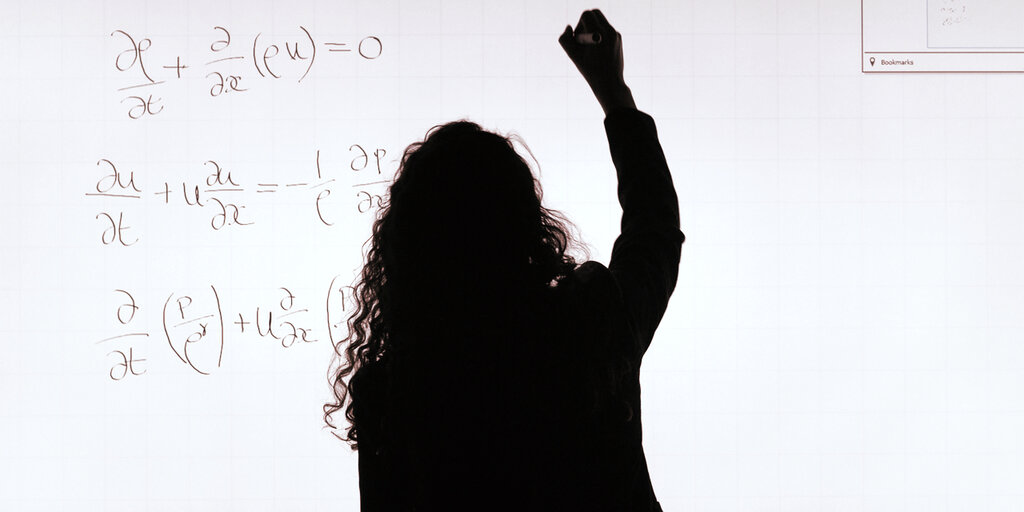
Other researchers have expressed outright bewilderment when trying to parse the AI-generated texts. Dmitry Rybin, a mathematician sharing his attempts to read OpenAI’s proof that the chromatic number of a plane is greater than or equal to six, described the work as "totally unbelievable alien math." He noted that the model inexplicably established that any color classification is equivalent to a "weakly measurable" color classification, a logical leap that seemed to materialize completely out of nowhere.
Logistical frustrations have compounded these academic misgivings. Critics pointed out that the official openai/math repository on GitHub has its issues section turned off and has never accepted a pull request. Keith Adler, a mathematician attempting to formalize OpenAI’s proof of Saxl’s Conjecture in Lean 4, noted that publishing hundreds of manuscripts while offering no centralized mechanism or collaborative space for researchers to send back formalizations or corrections is a significant disappointment.
The broader implications of these developments have alarmed prestigious research institutions. In an official statement, the Institute for Advanced Study in Princeton, New Jersey, highlighted the existential questions raised by automated mathematical generation.
"It is now the case that AI can output mathematical arguments in situations without the human who prompted it being able to understand the arguments, verify them, or take responsibility for them," the Institute said. "We believe that human understanding of mathematics remains of paramount importance. How, in this new era, can we work towards a new paradigm that includes human understanding of mathematics as part of responsible scholarly output?"
Conversely, other mathematicians have reacted to the GitHub drop with genuine enthusiasm, viewing it as a watershed moment for the discipline. Professor Abhishek Saha called it "a very big day for mathematics," though he categorized most of the solved problems as "exceptional advances within an existing program" rather than completely unprecedented, paradigm-shattering breakthroughs. According to Saha’s rough taxonomy of mathematical theorems, the vast majority of OpenAI’s set falls into categories of interesting developments rather than solutions to impossible historical dilemmas. In fact, only a single problem out of the entire 722-manuscript collection appears to brush against the territory of legendary unsolved problems: the Quasi-Riemann Hypothesis.
The release also falls notably short of benchmarks recommended by an advisory group at the Institute for Advanced Study, which suggested on September 29 that developers should transparently provide the model name, exact prompts, summarized chains of thought, total time taken, and compute costs for every individual result. OpenAI provided average compute figures and a handful of reasoning summaries, but withheld the specific prompts, stating that it is still working to release the underlying model responsibly.
Reactions among academic figures remain profoundly divided. Daniel Litt, a mathematician at the University of Toronto, argued that there is no valid reason for the company to keep the answers to these complex math questions shrouded in secrecy. Meanwhile, rival AI laboratories have adopted different dissemination strategies. Last month, Anthropic made waves by releasing a Lean-checked proof of Fermat’s Last Theorem, publishing all 13 million lines publicly on GitHub—though that particular project formalized an existing theorem originally published by Andrew Wiles in 1995 rather than generating entirely new results.
OpenAI has stated that it intends to add further Lean formalizations as they are obtained. For the time being, however, the mathematical community is left to sift through hundreds of unverified manuscripts, balancing the thrilling prospect of unprecedented machine-driven discovery against the sobering reality of un-replicated data and alien logic.
 Decentralized Finance (DeFi)
 Decentralized Finance (DeFi)
 Decentralized Finance (DeFi)







