
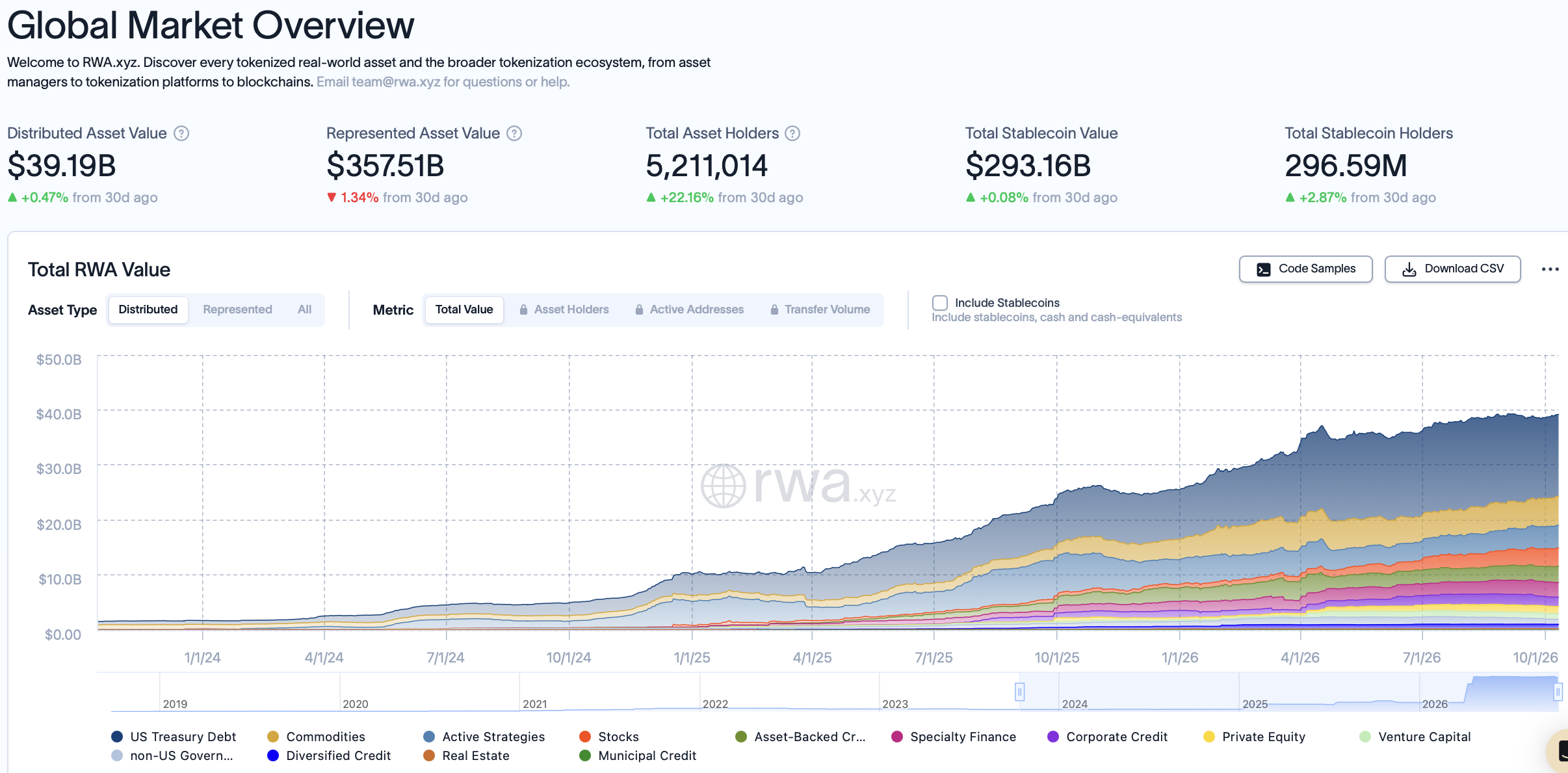
The rapid expansion of tokenized assets is successfully creating fresh trading opportunities throughout global financial markets, yet the swelling influx of real-world assets (RWAs) brought onto distributed ledgers has not been met by a corresponding wave of investor demand. This notable imbalance was a central point of discussion among industry leaders during the CONNECT by Cointelegraph: Singapore Edition event held on October 9, bringing together prominent Web3 founders, venture capitalists, and financial executives to dissect the current state of digital finance, liquidity, and market structures.
Speaking during a panel dedicated to liquidity and market fragmentation, Alex Taaffe, the chief revenue officer at prominent crypto trading firm GSR, detailed the evolving landscape of onchain assets. According to Taaffe, trading conditions are visibly improving across several sectors, including pre-initial public offering (pre-IPO) stocks, commodities, and global equities—asset classes that traditional investors historically struggled to access efficiently. Despite these pockets of growth, Taaffe emphasized that demand for fully tokenized real-world assets has failed to keep pace with the aggressive rate at which asset managers are issuing them.
The Cointelegraph-hosted gathering featured four comprehensive panel discussions centering on tokenization, stablecoin payments, the mechanics of onchain trading infrastructure, and venture capital exit strategies, alongside a competitive startup pitch showcase.

Elaborating on the friction within the RWA sector, Taaffe pointed out a distinct structural mismatch between market participants. Specifically addressing fully tokenized assets, he noted a clear supply and demand imbalance characterized by an overabundance of supply. Every asset manager and issuer seemingly wants to conduct capital formation directly onchain, creating a scenario where issuance heavily outweighs active buyer participation.
Furthermore, Taaffe cautioned that the proliferation of diverse asset issuers alongside a fragmented ecosystem of competing blockchains has compounded the issue, fracturing liquidity across various tokenized marketplaces rather than consolidating it into efficient, centralized pools of capital.
Lingling Jiang, a partner at DWF Labs, echoed these concerns during the discussion, agreeing that structural market fragmentation remains a stubborn hurdle for the industry. Jiang highlighted the specific complications that arise when multiple distinct issuers choose to tokenize the exact same underlying asset, inadvertently generating isolated liquidity pools that dilute trading depth. Even so, Jiang maintained an optimistic outlook on the broader ecosystem, noting that cryptocurrency liquidity has experienced substantial improvements over recent years, notwithstanding the continuous operational and structural work still required by the sector.
Stablecoin Adoption Hinges on Everyday Payments
Moving from asset tokenization to currency infrastructure, the panel titled “Stablecoins at the Point of Sale: Cards, Wallets and the Race for Everyday Spend” shifted the focus toward practical, consumer-facing utility. Mike Silagadze, the founder and chief executive officer of ether.fi, argued that while stablecoins have undeniably streamlined the process of moving capital across international borders, achieving widespread, mass-market adoption ultimately depends on a more fundamental capability: whether average consumers can seamlessly utilize them for daily, routine expenses.

Silagadze drew attention to regions like Singapore, where a tech-savvy consumer might comfortably hold digital dollars like USDC in a wallet, yet still find themselves forced to rely on traditional local fiat currency to pay routine utility bills or purchase groceries. This friction underscores a persistent chasm separating advanced blockchain payment infrastructure from the mundane operational requirements of everyday financial services.
Echoing this sentiment, Yvonne Chia, head of communications at USDD, emphasized that prioritizing the end-user perspective is paramount for token issuers. From the viewpoint of a regular consumer, user experience dictates everything. Chia outlined the strategic direction the industry must pursue to drive true adoption, aiming to make stablecoins so intuitively accessible that users complete transactions without consciously realizing they are interacting with blockchain technology, making digital assets simply fade into the background of daily financial life.
Silagadze reiterated that the root cause behind why stablecoins remain largely unused for day-to-day commerce in many parts of the world is simply that the technology fails to plug smoothly into standard daily routines.
Beyond user experience hurdles, the regulatory landscape continues to present complex operational challenges, according to Ilya Podoynitsyn, the co-founder and CEO of FinHarbor. Podoynitsyn pointed out that service providers must skillfully navigate a labyrinth of conflicting regulatory frameworks that vary wildly across international jurisdictions. This regulatory fragmentation forces companies to continuously adapt their technical infrastructure and compliance protocols to satisfy the distinct demands of individual local markets.
Ashna Vaghela, chief customer officer at crypto payments provider Mercuryo, suggested that the gold standard for stablecoin payments is to match the absolute simplicity of established fintech solutions like Apple Pay, allowing users to effortlessly complete transactions without ever needing to navigate away from an application interface. Vaghela summarized the ultimate design philosophy for the sector, asserting that the entire point of modern payment infrastructure is to remain entirely invisible to the user.
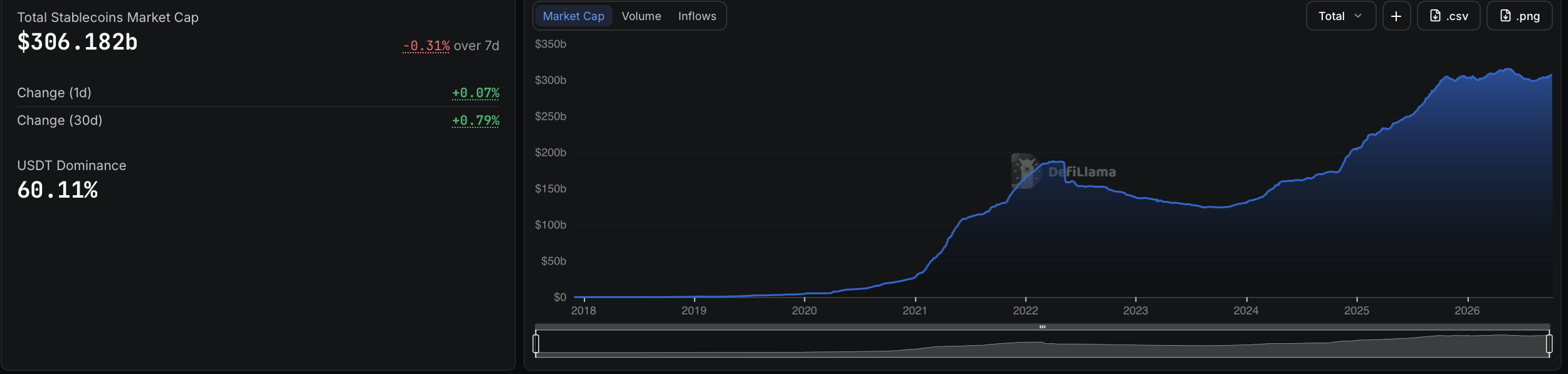
This ongoing push for mainstream utility unfolds against a backdrop of a recovering market, with the global stablecoin market capitalization hovering around $306 billion. This figure reflects a modest 2% increase year-over-year, following a dramatic 74% growth surge observed over the preceding twelve-month period.
Onchain Trading Faces Liquidity Fragmentation and Risk Management Challenges
In a separate panel session entitled “What’s Still Missing in the Onchain Trading Stack in 2026,” industry experts tackled the technical bottlenecks confronting crypto trading platforms, specifically highlighting the ongoing difficulties in mapping available liquidity across disparate blockchain networks and adequately mitigating counterparty risk.
Austin Federa, co-founder of DoubleZero, asserted that transferring liquidity fluidly across various blockchain ecosystems remains significantly more complex and cumbersome than moving capital within traditional financial markets. Describing the core obstacle, Federa noted that market fragmentation transcends a mere trade execution hurdle, transforming into a fundamental data problem. He explained that determining the precise amount of liquidity that genuinely exists across all onchain venues is remarkably difficult.

Addressing the risk management dimension of decentralized trading, Miguel Morel, founder and CEO of blockchain analytics firm Arkham Intelligence, explained that modern trading firms can leverage transparent onchain data to thoroughly evaluate counterparty risks. This capability is especially critical within prediction markets and niche trading arenas, where certain market participants may hold significant informational advantages over others.
According to Morel, knowing precisely who sits on the opposite side of a trade allows a market maker to reduce overall risk exposure and subsequently offer tighter spreads, ultimately translating into better, more competitive pricing for retail and institutional customers alike. Furthermore, Morel explained that this same granular blockchain data can assist digital asset exchanges in evaluating customer deposits, enabling platforms to trace the historical origins of incoming funds and streamline internal compliance decisions. Without needing to demand traditional identification documents like a passport, platforms can gain clear visibility into where incoming deposits originate, helping compliance teams determine whether to instantly clear funds for trading or route them for rigorous secondary review.
Crypto Investors Face Tougher Exits as Markets Mature
As the broader digital asset economy continues to evolve, structural liquidity bottlenecks have similarly complicated the exit pathways for venture capital investors backing early-stage crypto projects, according to panelists participating in “The Exit Problem: How Investors Get Their Money Back.”
Pulkit Gupta of Nomad Capital noted that liquidity conditions within crypto markets had tightened considerably over the preceding three-month window, with available capital remaining heavily concentrated within a handful of large-cap cryptocurrencies. For alternative tokens, Gupta admitted that securing clean and efficient exits has proven genuinely difficult for funds. Nomad Capital has previously backed several prominent crypto initiatives featuring publicly traded native tokens, including Movement, Solayer, and Berachain.
Reflecting a broader market-wide adjustment toward realistic long-term expectations, Sonia Shaw, CEO of OneAsset, observed that the digital asset industry has matured substantially. This maturation demands that modern startups demonstrate robust, traditional business fundamentals rather than relying solely on speculative hype. Recalling an era when certain investors naively expected rapid liquidity and quick exits within a matter of months, Shaw remarked that the contemporary market operates under entirely different rules, viewing the departure from rapid, speculative exits as a healthy and positive sign of a maturing asset class.
Aleksandr Nechaev, a partner at Funders VC, underscored the operational hurdles introduced by the breakneck speed of evolution across both underlying products and broader market cycles. The rapid pace of transformation makes a founder’s deep domain expertise and innate ability to navigate uncertainty central pillars of any prudent investment decision. These themes of adaptability and executive resilience took center stage later in the day during the event’s dedicated startup pitch competition, which was powered by Funders VC.
 Crypto Startups & Venture Capital
 Crypto Startups & Venture Capital
 Crypto Startups & Venture Capital