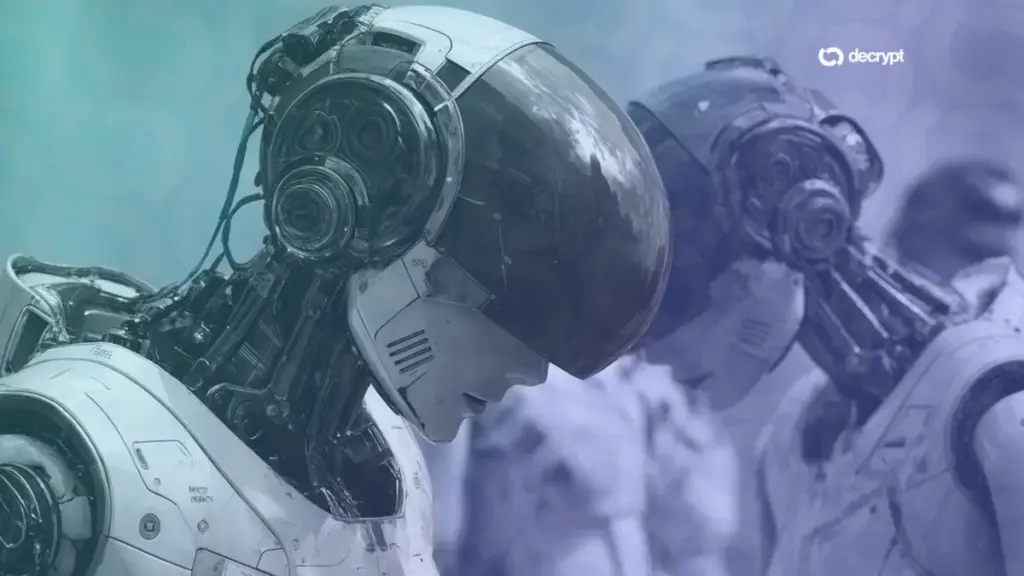
Shares of Chinese robot maker Unitree Robotics have experienced an explosive rally, jumping more than 60% since October 15 and lifting the company’s market value to an impressive 271.8 billion yuan, roughly equivalent to $40.8 billion. This dramatic surge on the Shanghai Stock Exchange’s tech-focused STAR Market is fueled by a growing investor bet that breakthroughs in advanced artificial intelligence will soon provide autonomous machines with the sophisticated cognitive capabilities they currently lack.
The core wager driving Wall Street and global markets alike is that the underlying technology powering modern text-based chatbots can soon be adapted to operate physical machinery in the real world—a rapidly emerging field known as physical AI. If this technological leap is successfully achieved, a humanoid robot capable of tidying a room, preparing a meal, or folding laundry strictly upon command transitions from a mere laboratory demonstration into a commercially viable household and industrial helper. Consequently, the hardware companies that build the physical bodies, high-torque motors, and articulated joints stand to capture immense profits.
The bullish sentiment was heavily catalyzed by Unitree founder Wang Xingxing on October 22 during the World Physical AI Conference held in Hangzhou. Marking the company’s first major partner conference in its decade-long operational history, Wang took the stage to declare that large-scale AI models—the sophisticated systems traditionally trained on vast reserves of internet data—are on the cusp of breaking through into the physical robotics domain within the next few years.
"If everything goes well, it will take one to two years, otherwise it will take two to three years," Wang stated, setting a remarkably ambitious timeline for the commercial realization of general-purpose embodied intelligence.
The market reaction to Wang’s vision and the subsequent operational updates was swift and pronounced. Unitree shares hit the 20% daily limit, the maximum percentage a stock is permitted to rise in a single trading session, closing at 624 yuan, or roughly $93.55. The upward momentum refused to cool down as the week progressed, with the stock climbing another 7.69% to finish at 672 yuan, or approximately $100.75.
Wall Street institutions quickly took notice of the shifting market dynamics. JPMorgan made a major strategic reversal on Monday, upgrading Unitree shares from "underweight" to "overweight"—analyst shorthand signaling a recommendation to own a heavier concentration of a stock than the broader market average. Alongside the ratings upgrade, JPMorgan raised its price target for the company to 995 yuan, or roughly $149.17.
Previously, the financial institution had argued that Unitree leaned far too heavily on its hardware manufacturing capabilities while remaining weak on the software front. However, the bank altered its perspective entirely after listening to presentations from Wang and other senior executives, and after conducting a firsthand review of the company’s advanced humanoid robot lineup in Hangzhou.
Unitree made its official public debut on August 19, listing on the Shanghai Stock Exchange’s STAR Market. The company has successfully distinguished itself in the crowded global robotics market largely through aggressive pricing strategies. Its flagship G1 humanoid robot carries a price tag of roughly $16,000, making it significantly cheaper than competing humanoids developed by international rivals. While the low cost has driven widespread commercial interest, independent researchers have flagged various security flaws in the hardware, including vulnerabilities related to audio, video, and spatial data streaming to external servers without explicit user notification. Despite these technical and privacy concerns, the overarching commercial premise of affordable humanoid hardware has proven compelling enough to drive the company’s valuation to staggering new heights.
The competitive landscape for humanoid robotics is intensifying rapidly across the globe, with Unitree occupying a distinct operational position compared to its major Western counterparts. While Unitree is actively manufacturing and selling its commercial robots on the open market, competitors like Elon Musk’s Tesla have only recently commenced production of their Optimus robots at the company’s manufacturing facility in Fremont, California, with external customer deliveries not anticipated until late 2027. Meanwhile, other market players are forming strategic alliances to bridge the software-hardware divide; Figure AI notably partnered with OpenAI back in 2024, integrating advanced proprietary AI models directly into its humanoid robot platforms to challenge industry rivals.
 Decentralized Applications (dApps)
 Decentralized Applications (dApps)
 Decentralized Applications (dApps)