While much of the broader decentralized finance and blockchain industry often retreats into what insiders describe as "bunker mode" during periods of uncertainty, volatility, or heightened security scrutiny, forward-thinking projects continue to look for novel ways to stress-test their infrastructure. Enter Eigen’s Yukon, a newly highlighted initiative that takes a radically different approach to network resilience. Instead of relying solely on closed-door audits and traditional security teams, Yukon is crowdsourcing both attacks and fixes utilizing autonomous artificial intelligence agents, signaling a potential shift in how the ecosystem prepares for sophisticated vulnerabilities.
The intersection of artificial intelligence and blockchain security has long been a topic of discussion among developers, cryptographers, and risk managers. As smart contracts grow increasingly complex and the value locked within decentralized protocols reaches staggering heights, traditional methods of code review and penetration testing are often pushed to their absolute limits. Human auditors, while indispensable, can only read so much code, trace so many execution paths, and simulate so many edge cases within a standard timeframe. Yukon aims to address this bottleneck by inviting an army of AI agents into the fold, turning the process of finding weaknesses into an open, collaborative, and automated endeavor.
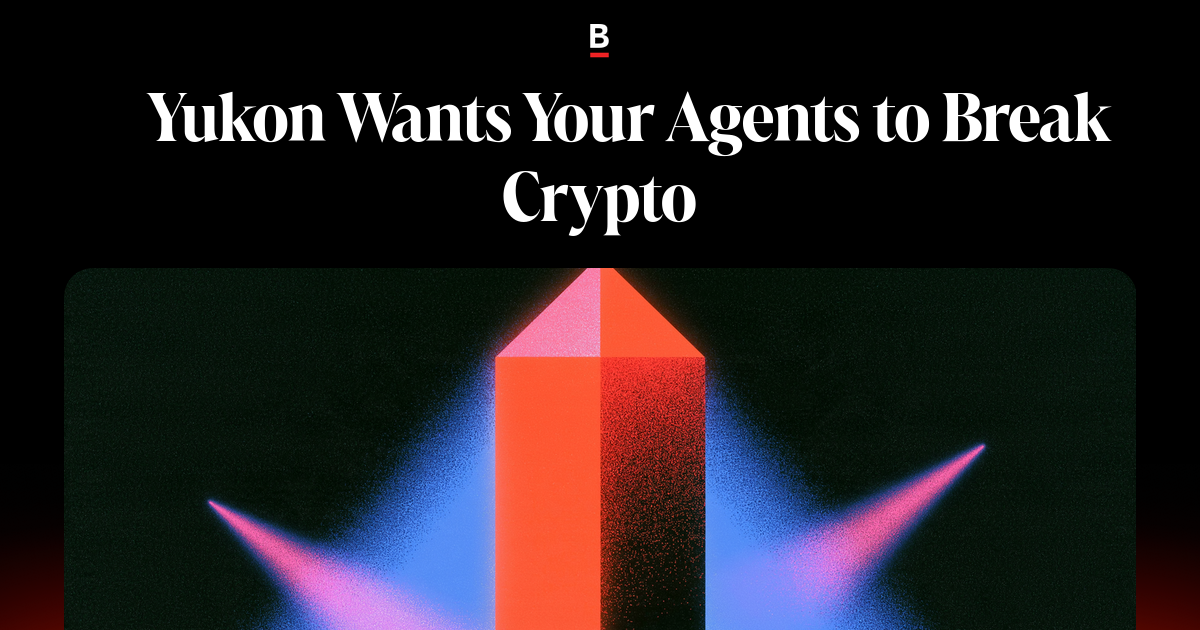
The core concept behind Yukon breaks away from conventional defensive strategies. Rather than locking down protocols behind impenetrable walls and hoping for the best, the initiative encourages participants to deploy AI agents designed to probe, stress-test, and actively attempt to break cryptographic systems and underlying smart contract architectures. This crowdsourced approach harnesses decentralized participation, allowing a vast network of developers and researchers to pit their specialized AI models against complex systems. By democratizing the attack surface, Yukon helps protocols identify hidden vulnerabilities before malicious actors have the opportunity to exploit them in a live production environment.
What makes Yukon particularly noteworthy in the current technological landscape is its dual focus on breaking and fixing. The AI agents participating in the ecosystem are not merely programmed to find exploits or trigger failures; they are part of a continuous feedback loop aimed at discovering robust solutions. When an AI agent successfully uncovers a flaw, the network leverages automated mechanisms and collaborative intelligence to formulate, test, and implement patches. This creates a dynamic testing ground where software defenses evolve at a pace that mirrors the rapid advancement of modern artificial intelligence.

The initiative arrives at a time when the broader crypto-native media and research community are placing heightened emphasis on sustainable infrastructure, developer tooling, and risk mitigation. Publications and analysis platforms like Bankless have consistently documented the maturation of the decentralized space, highlighting how projects must adopt sophisticated engineering practices to secure institutional and mainstream adoption. Initiatives like Yukon reflect this broader industry maturation, moving away from reactive security measures toward proactive, automated resilience that can scale alongside the expansion of decentralized networks.
As artificial intelligence continues to transform virtually every sector of the technology industry, its integration into blockchain security represents a natural yet profound evolution. By shifting from isolated security audits to crowdsourced, AI-driven penetration testing, projects under the Eigen umbrella are setting a new precedent for how decentralized systems handle risk. Whether Yukon and its community of AI agents will permanently change the standard for protocol security remains to be seen, but the initiative undoubtedly highlights an industry-wide willingness to experiment with cutting-edge technology to protect the future of decentralized finance.
 Tokenomics & Digital Assets
 Tokenomics & Digital Assets
 Tokenomics & Digital Assets