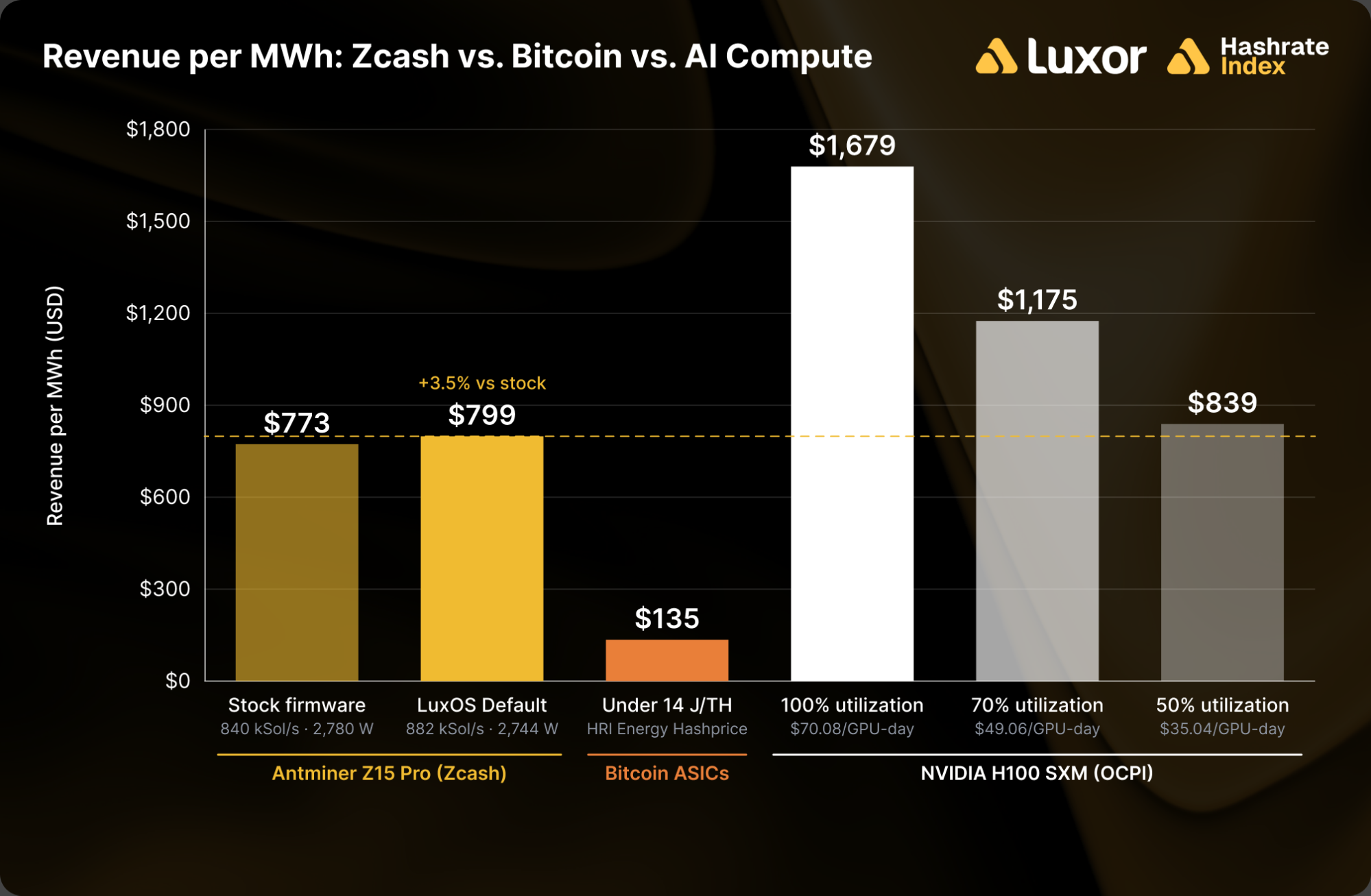
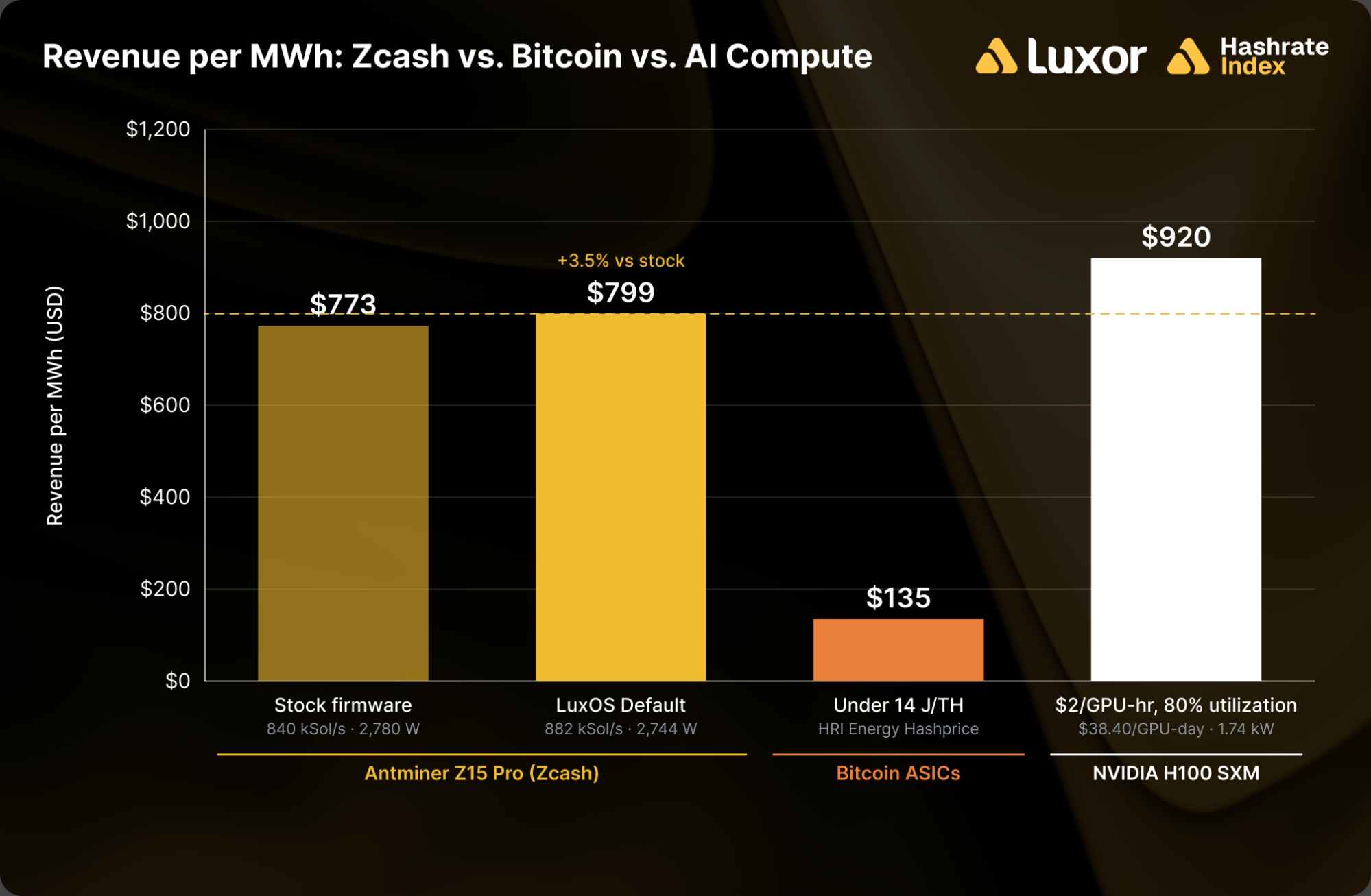
The global race for electrical power has turned data centers into high-stakes battlegrounds where three distinct forms of heavy compute compete directly for the same megawatts. At a baseline electricity cost of $0.08 per kilowatt-hour, a single Antminer Z15 Pro mining Zcash yields approximately $770 in revenue for every megawatt-hour consumed. By comparison, top-tier Bitcoin ASICs generate roughly $135 under the same energy parameters, while a rented NVIDIA H100 graphics processing unit pulls in about $1,680, provided it maintains continuous operational activity.
This financial divergence highlights a fundamental reality in modern digital infrastructure: energy is the ultimate shared denominator, but the financial returns vary wildly depending on the type of hardware plugged into the wall. Evaluating these machines requires looking closely at how they consume power, generate revenue, and command capital in an increasingly constrained grid environment.
Three Machines, One Megawatt
Because energy is the single input shared by Zcash miners, Bitcoin ASICs, and artificial intelligence clusters, revenue per megawatt-hour serves as the cleanest metric for comparison. Recent market snapshots underscore how dramatically these asset classes diverge.
When Zcash traded at $1,185 with a network hashrate of 27.8 gigasol/s, the economics favored specialized mining hardware in ways that surprised many market observers. Miners share a fixed daily reward of 1,440 ZEC. A stock Z15 Pro unit grosses over $51 daily while incurring minimal electricity costs, leaving operators with a staggering profit margin hovering near 90 percent. The power break-even point for the machine sits at an extraordinary $0.77 per kilowatt-hour, nearly ten times what industrial-scale miners typically pay for power.
Bitcoin hardware, meanwhile, struggles to match those margins under current conditions. With hashprice fluctuating near $39.71 per petahash per day, energy hashprice metrics place modern fleets under 14 joules per terahash at roughly $135 per megawatt-hour, with newer S21-class hardware lagging behind at approximately $98.
Yet, the NVIDIA H100 introduces a compelling twist to the equation. Operating at standard cloud settlement rates of $2.92 per GPU-hour, a single H100 generates over $70 a day. When factoring in facility power consumption—accounting for both the raw board draw and facility cooling overhead—the revenue scales to roughly $1,679 per megawatt-hour. This figure doubles the output of a stock Zcash ASIC. However, isolating board-level power consumption inflates the theoretical return even higher, demonstrating why accurate infrastructure comparisons demand standardized power metrics that include facility efficiency overhead.
Where the ASIC Wins: Capital, Not Energy
Despite the impressive revenue-per-megawatt-hour figures posted by artificial intelligence hardware, the financial narrative flips entirely when viewed through the lens of capital expenditure.
Deploying one megawatt of Zcash power requires roughly 360 Antminer Z15 Pro units, housed inside basic and inexpensive warehouse shells that cost a fraction of traditional data center builds. Acquiring these machines requires a relatively modest capital outlay, allowing operators to achieve full payback on their hardware investments in a matter of months.
In stark contrast, deploying a megawatt of H100 hardware involves purchasing approximately 575 advanced graphics processing units. New nodes command tens of thousands of dollars per unit, pushing total hardware costs well past the ten-million-dollar mark. Furthermore, these GPUs must reside inside Tier-3 facilities equipped with advanced liquid cooling and redundant power architectures, where the infrastructure expenses frequently rival the cost of the silicon itself.
This stark capital disparity validates observations from financial analysts and market researchers regarding the speed and efficiency of deploying cryptocurrency mining infrastructure versus AI clusters. While artificial intelligence hardware wins decisively on energy efficiency and top-line hourly revenue, mining hardware claims an insurmountable lead in capital intensity and deployment velocity.
Price Outran Hashrate in the Zcash Ecosystem
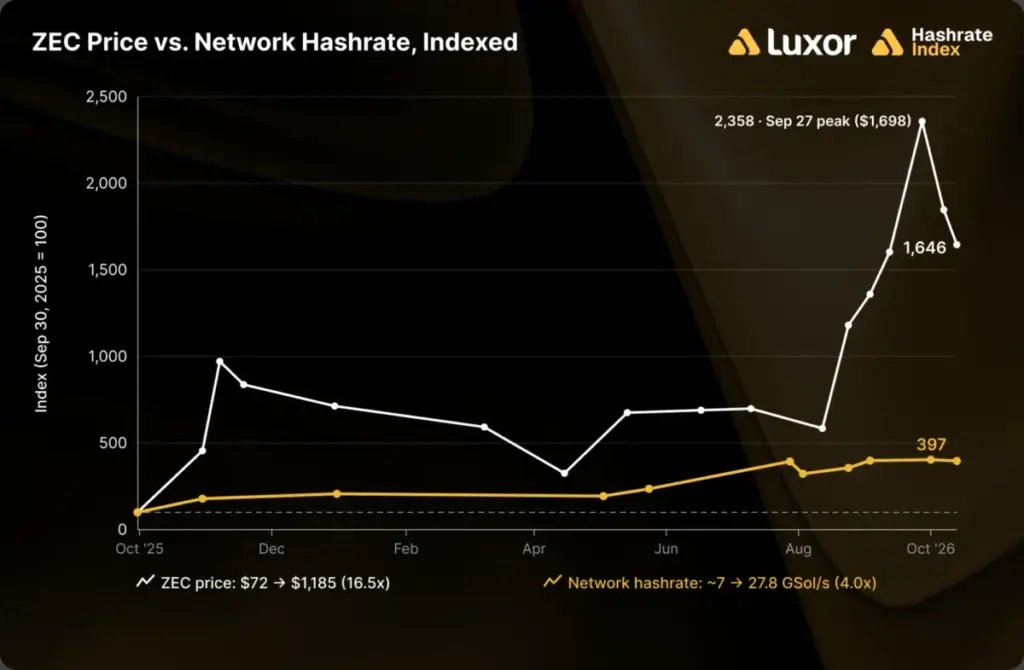
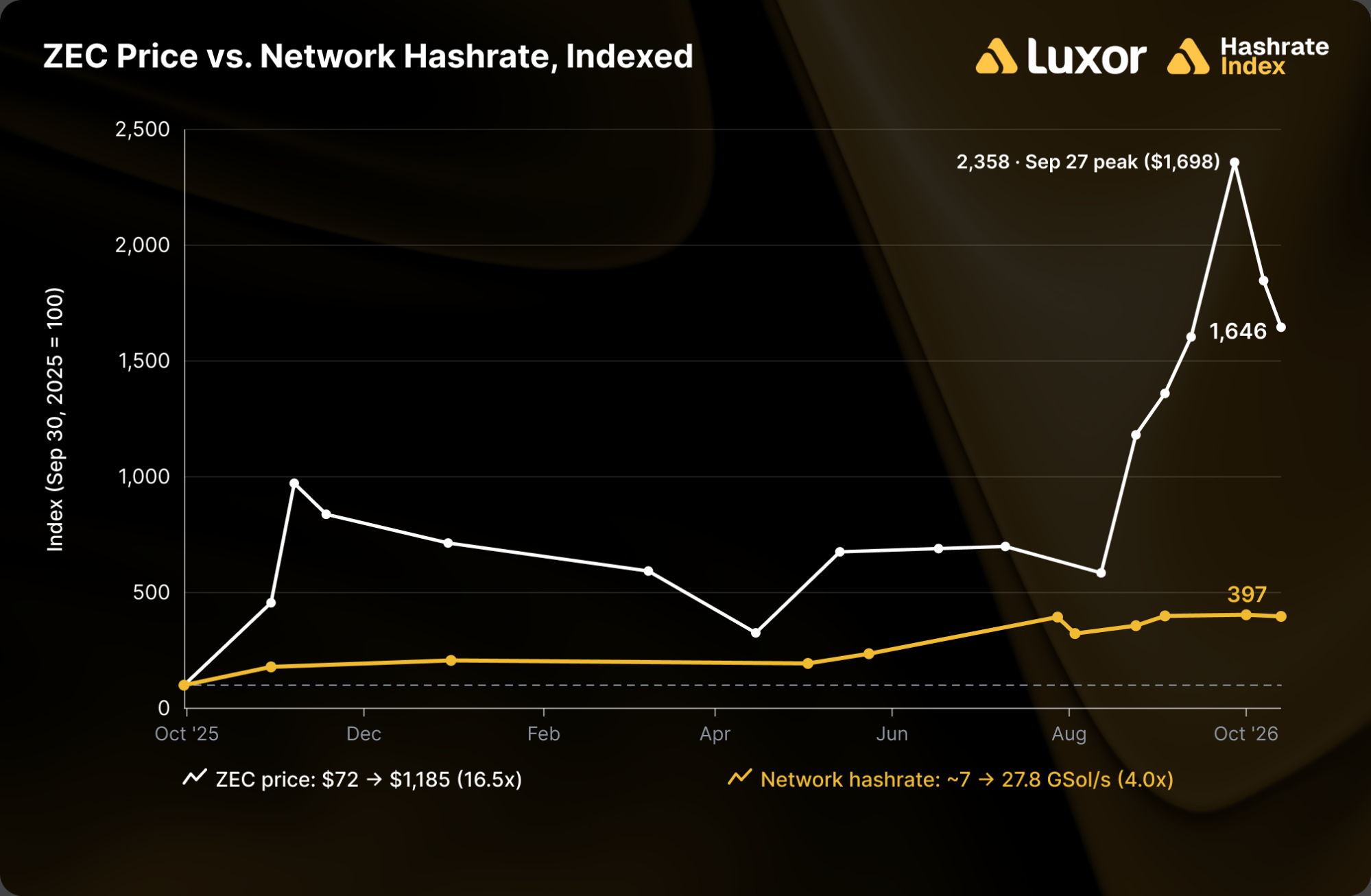
The underlying dynamics of the Zcash network have undergone a dramatic transformation over the past year. Driven by significant price appreciation, the network’s total hashrate expanded roughly fourfold, climbing from roughly 7 gigasol/s to nearly 28 gigasol/s. As the market valuation of ZEC surged past previous thresholds, network hash rates lagged behind the rapid price action, allowing per-machine revenue to remain elevated as coin prices outpaced the influx of new hardware.
Because the daily issuance of Zcash is strictly capped, every new machine introduced to the network dilutes the earnings of existing operators. The aggregate network compute now equals tens of thousands of specialized miners drawing substantial power loads. Yet, even with this expanded competition, existing hardware remains exceptionally cash-positive, with machines capable of absorbing significant difficulty increases before breaking even.
Supply constraints, rather than grid capacity, have emerged as the primary bottleneck for network expansion. New mining units remain scarce, and secondary market prices have climbed multiple times over. With next-generation Equihash silicon not expected to hit the market in volume until the middle of 2027—and major industrial miners already securing priority allocations—operators are forced to look inward for immediate efficiency gains.
Firmware Optimization as the Sole Near-Term Lever
With no major deliveries of new mining hardware expected on the immediate horizon, operators seeking to boost performance must rely entirely on firmware optimization. The introduction of advanced third-party firmware support for the Z15 Pro has provided fleet managers with tuning profiles previously reserved for the Bitcoin mining sector.
Performance testing reveals a nuanced operational trade-off. While default tuning profiles can extract modest performance gains while slightly reducing power consumption, more aggressive overclocking profiles trade electrical efficiency for absolute revenue generation. At low power costs and high profit margins, pushing hardware to higher hashrate thresholds makes sound financial sense. However, for sites facing strict power constraints or higher electricity tariffs, aggressive tuning can quickly erode profit margins. Because each incremental firmware adjustment alters the power break-even calculus, operators must continuously balance local energy expenses against network difficulty adjustments.
Navigating the Compute Landscape
The modern compute landscape is defined by distinct races rather than a single unified competition. Per megawatt-hour of electrical consumption, a fully utilized artificial intelligence accelerator outperforms specialized cryptocurrency mining hardware, while Zcash ASICs outpace traditional Bitcoin miners by a wide margin. Per dollar of deployed capital, however, mining hardware secures a decisive advantage, offering rapid payback periods and lower facility barriers to entry.
Ultimately, success across all three compute classes hinges on operational uptime. Idle graphics processing units and unoptimized mining rigs alike forfeit vital revenue in a market where efficiency and availability dictate survival. As operators increasingly explore multi-use facilities capable of housing diverse compute workloads under one roof, the ability to dynamically route power and hardware resources will define the next evolution of digital infrastructure.
 Cryptocurrency Mining
 Cryptocurrency Mining
 Cryptocurrency Mining