Luxor’s Monthly Lookback Series for September 2026 reveals a month of tight equilibrium for the Bitcoin hashrate market. Following a robust August rally that injected significant momentum into hashprice, September delivered a balancing act where Bitcoin’s steady climb was kept in check by rising network difficulty. The result was a month where spot hashprice essentially held the ground it had previously won, closing nearly unchanged even as macroeconomic headwinds and seasonal shifts played out across the global mining landscape.

September 2026 Spot Hashprice and Its Constituents
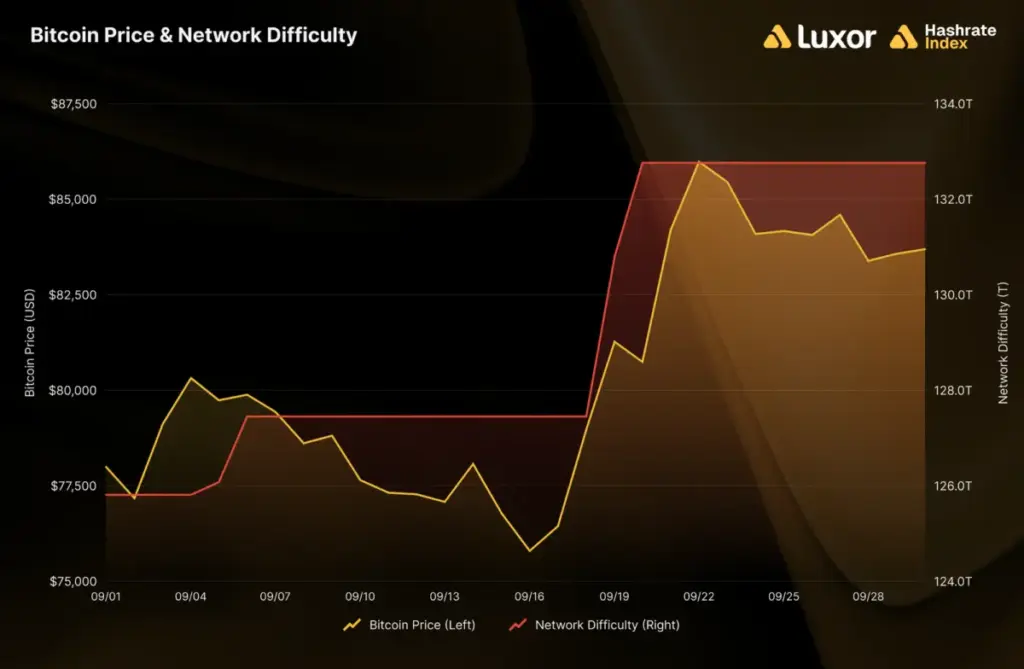
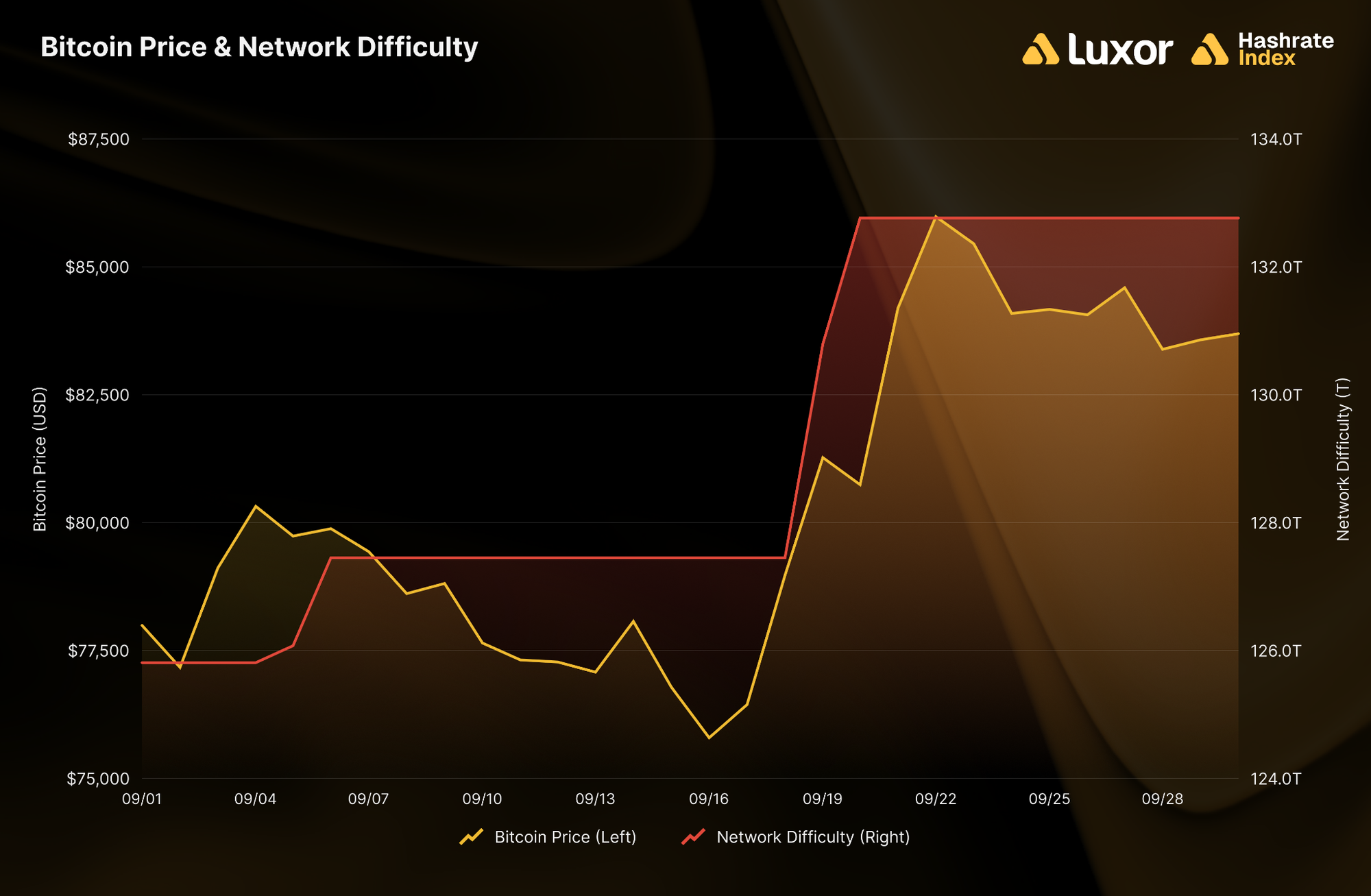
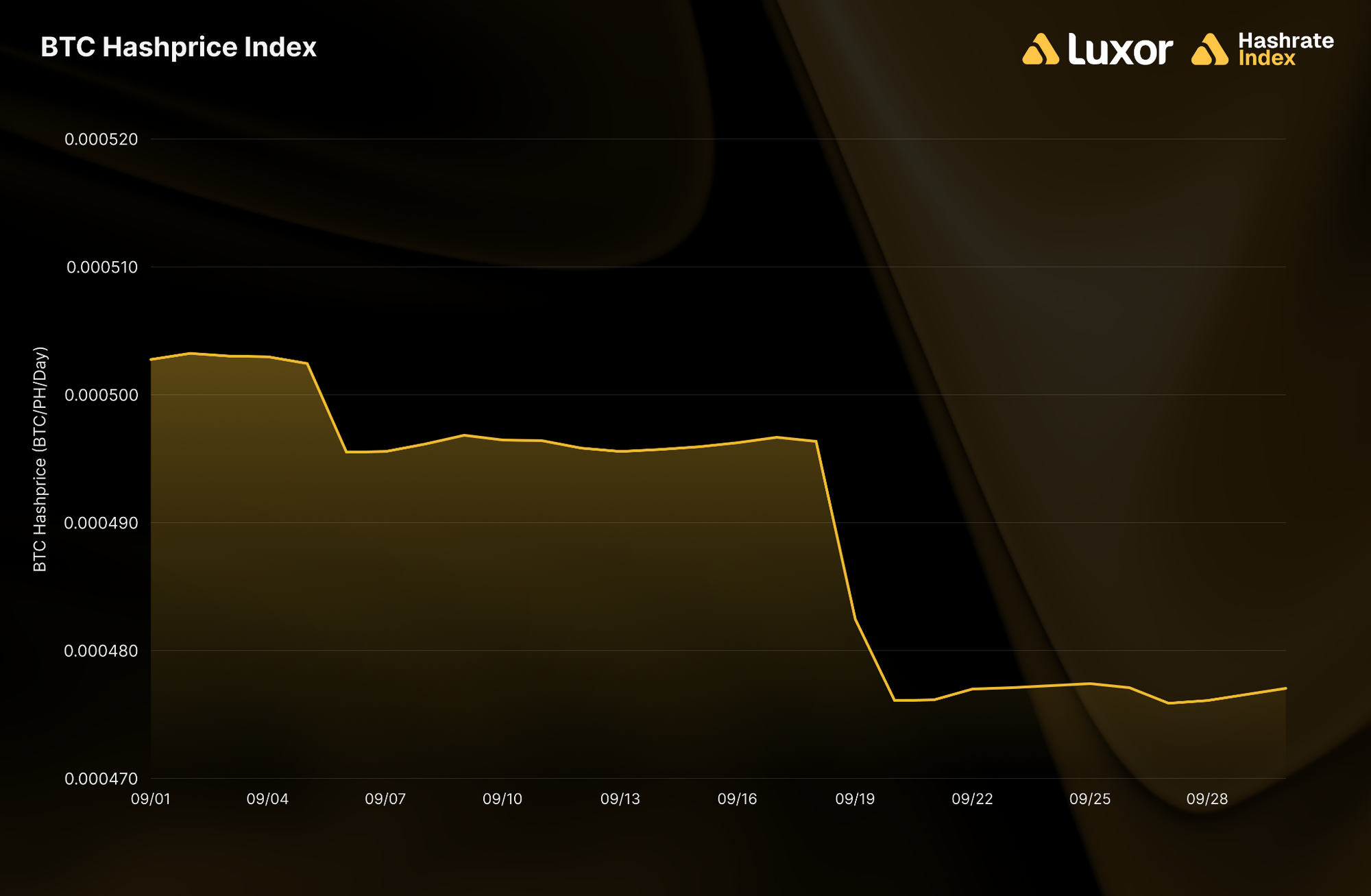
August’s strong performance had left market participants questioning whether Bitcoin could maintain its upward trajectory or if network difficulty adjustments would eventually erode the gains. September answered with a mix of both forces. Bitcoin climbed roughly 7.3% from its monthly open to close, but network difficulty expanded by 5.5% across two upward retargets. Consequently, spot hashprice finished the month within striking distance of where it began.
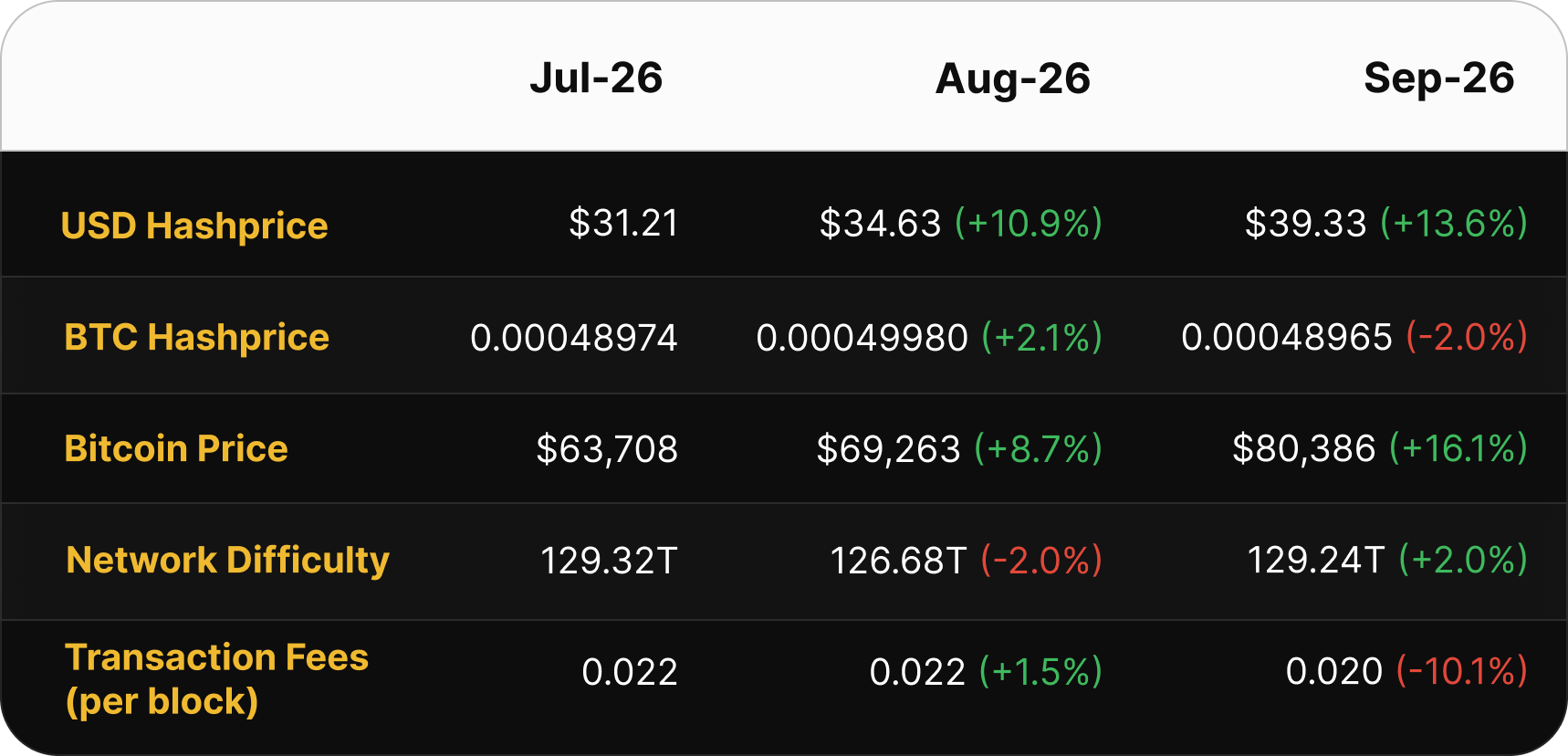
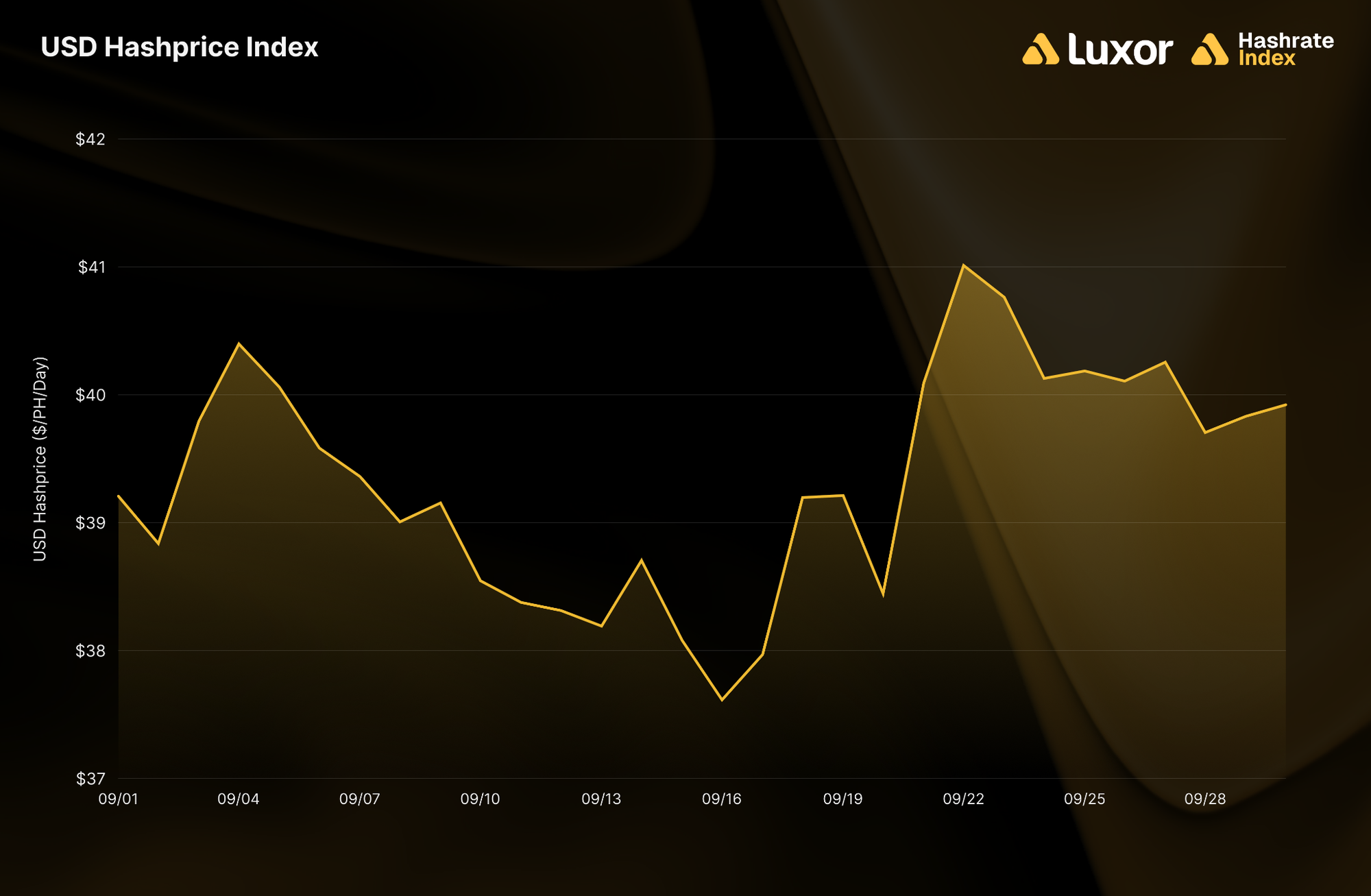
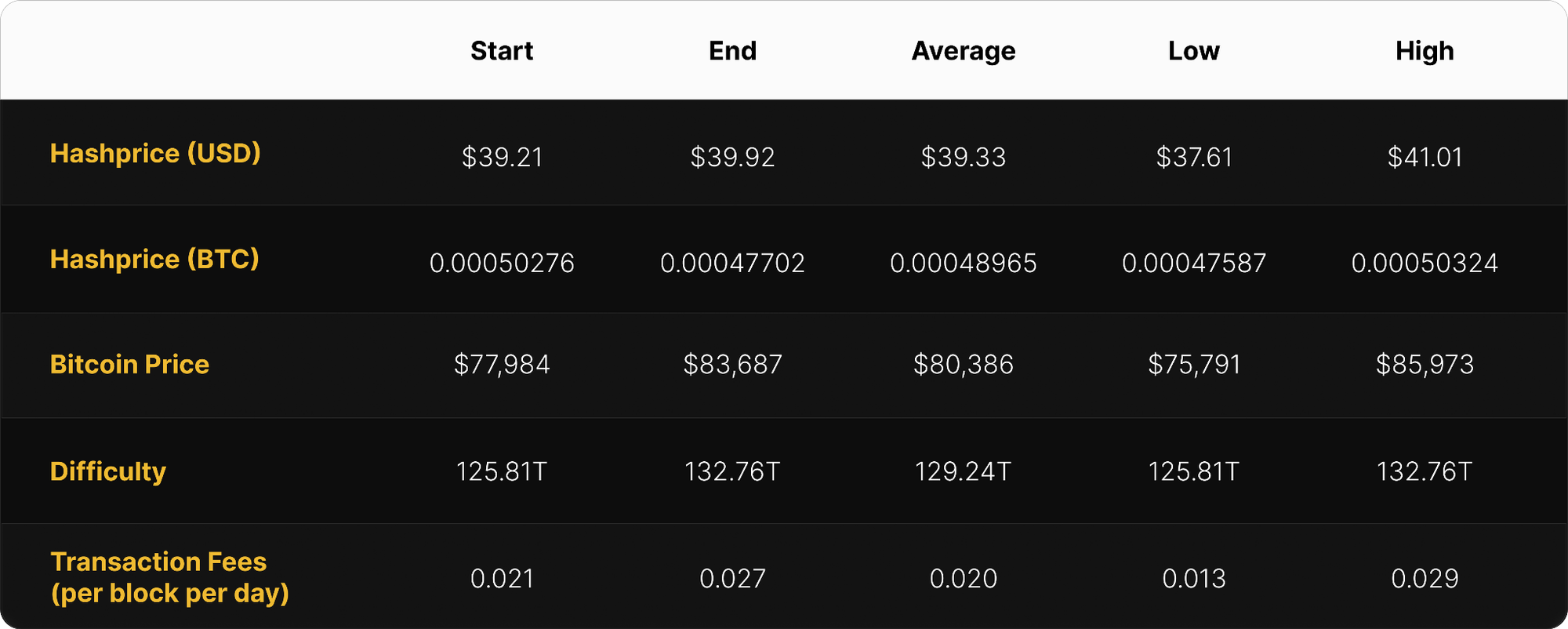
USD hashprice successfully maintained the baseline established during the previous month. Opening at $39.21 per PH/s/day, the index closed at $39.92, representing a modest 1.8% gain, while averaging $39.33 for the month—marking the highest monthly average since January. Days settling above the $40 mark became more frequent, with nine sessions crossing the threshold, the highest tally in any single month since November 2025. The trading range remained relatively narrow by the standards of 2026, touching a low of $37.61 on September 16 before peaking at $41.01 six days later. Beneath these headline figures, Bitcoin’s appreciation pulled hashprice upward, while escalating mining difficulty pulled it right back down in a nearly equal tug-of-war.
Bitcoin Price Volatility: Regulatory Setbacks, Macro Pressures, and a Strong Rebound
Bitcoin opened September trading at $77,984 and closed at $83,687, notching a 7.3% increase while averaging $80,386 for a 16.1% month-over-month rise. The asset reached its monthly high of $85,973 on September 22.
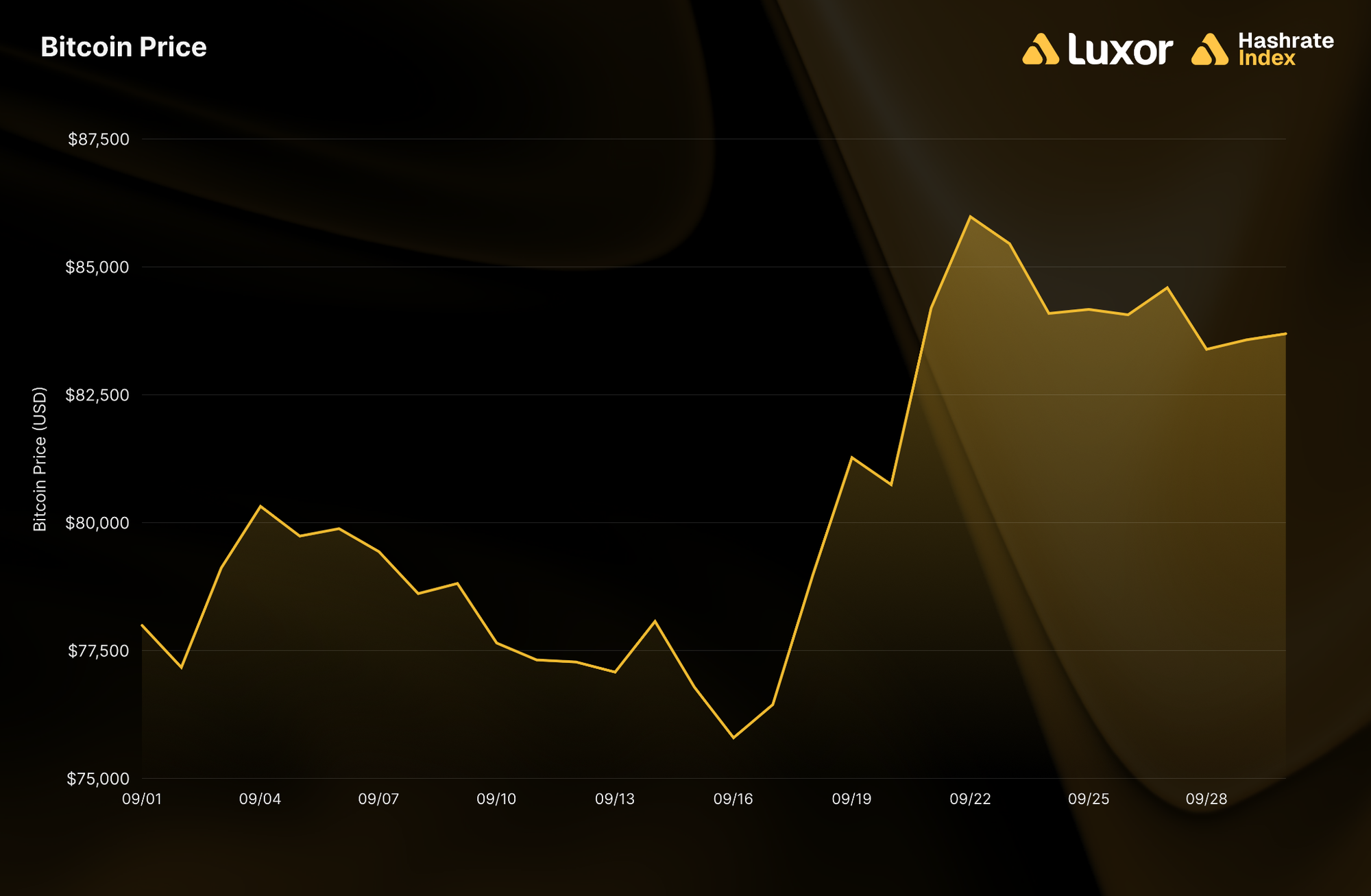
The month, however, was not without sharp volatility. Mid-month brought two major scheduled risks within a 24-hour window, both of which exerted downward pressure on the market. On September 15, the United States Senate failed to invoke cloture on the Clarity Act with 41 opposing votes, effectively shelving the legislative measure for the remainder of 2026. The following day, the Federal Open Market Committee (FOMC) unanimously voted to raise interest rates by 25 basis points to a target range of 3.75% to 4.00%, marking the central bank’s first rate hike since July 2023. Bitcoin’s monthly low of $75,791 coincided directly with this rate decision.
Despite these headwinds, the market mounted a swift recovery. Between September 16 and September 22, Bitcoin surged 13.4% to $85,973, marking its largest six-day gain since the August breakout. This rally was fueled by institutional inflows, notably when spot exchange-traded funds (ETFs) absorbed $999 million on September 21—the largest single-day intake of the year and the most since October 2025. Total monthly ETF inflows reached $2.65 billion, pushing net flows for 2026 back into positive territory. According to Bloomberg Intelligence estimates, the average U.S. spot ETF holder returned to profitability for the first time since January.
Even with these gains, Bitcoin finished September roughly 32.8% below its October 2025 all-time high of $124,485, an improvement from the 37.1% deficit recorded at the end of August. On a quarterly basis, Bitcoin rallied 41.8%, marking its strongest quarterly performance since the final quarter of 2024.
Network Difficulty and Hashrate Growth
Network difficulty averaged 129.24T for a 2.0% increase, closing the month at 132.76T. Two upward difficulty adjustments took place during the period: a 1.31% increase on September 5 and a 4.16% increase on September 19, the latter representing the largest single retarget since late June. With a cumulative net gain of 5.52% across both adjustments, September recorded the steepest monthly difficulty growth since October 2025.
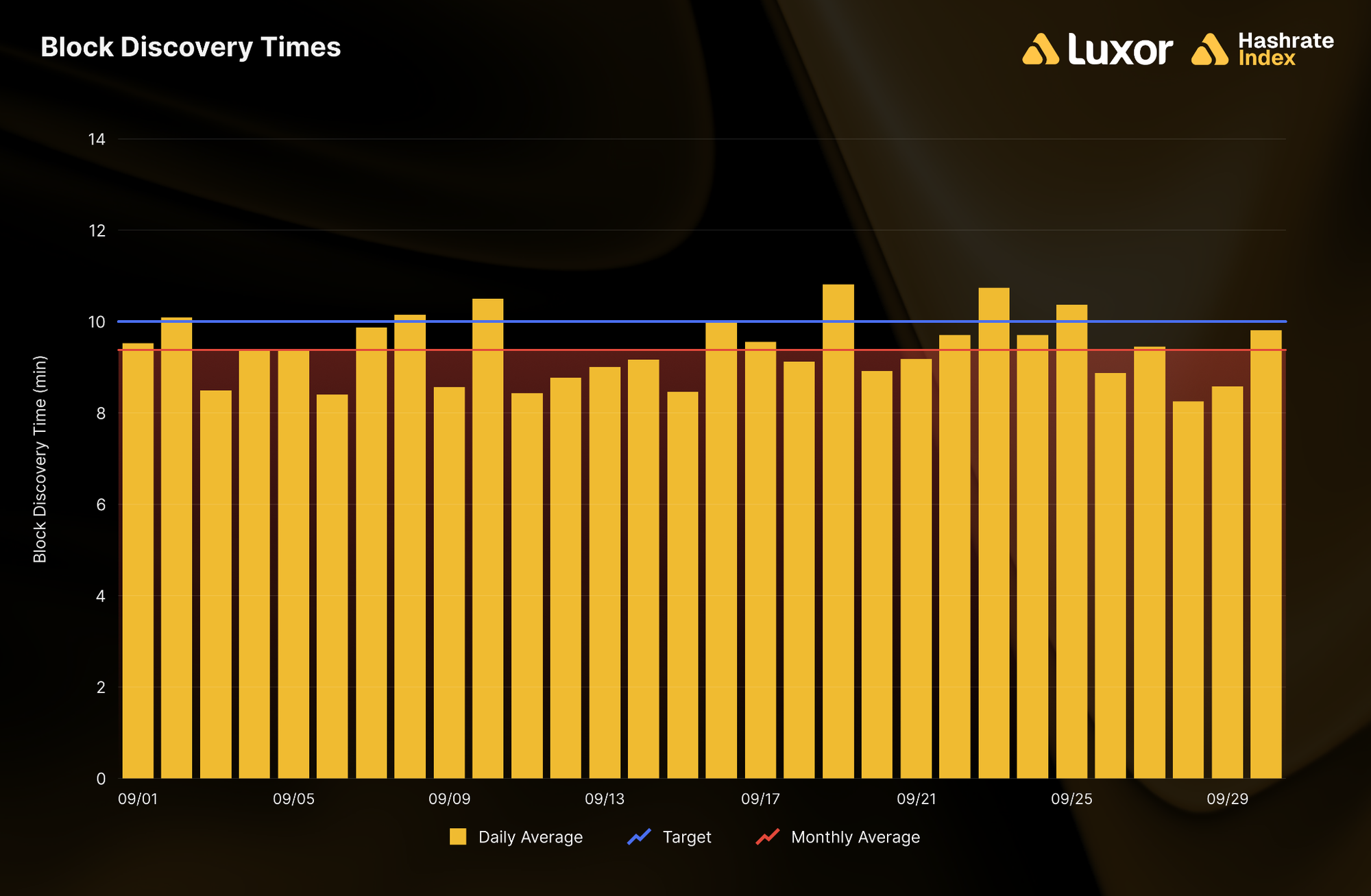
Block times averaged nine minutes and 23 seconds, making it the fastest month for block production since February, with 23 out of 30 days falling below the 10-minute target. As the Texas summer came to a close, mining operations that had previously curtailed their activity during peak heat returned online. The 7-day network hashrate average steadily climbed from 926 EH/s to 975 EH/s over the course of the month.
Historical data shows that ERCOT’s four coincident peaks for the summer season landed on June 18, July 22, August 24, and September 12. While July set the seasonal high for grid load at 90.96 GW, September’s peak of 86.49 GW, recorded at 4:30 PM Central Time, marked the final interval of the season. Flexible-load clients utilizing Luxor Energy successfully managed their curtailment schedules across these intervals, avoiding transmission charges that significantly outweighed the mining margins relinquished during downtime.
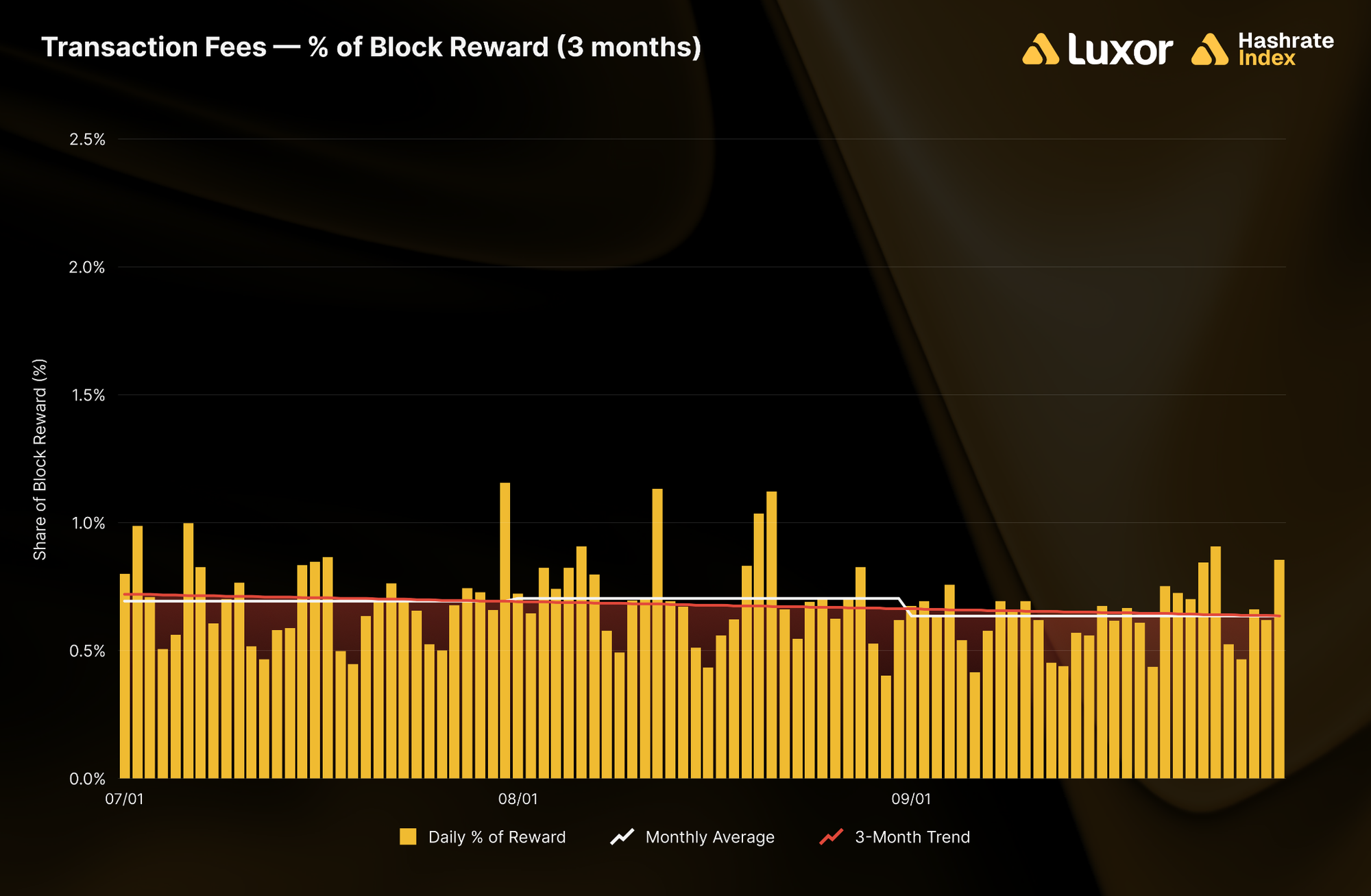
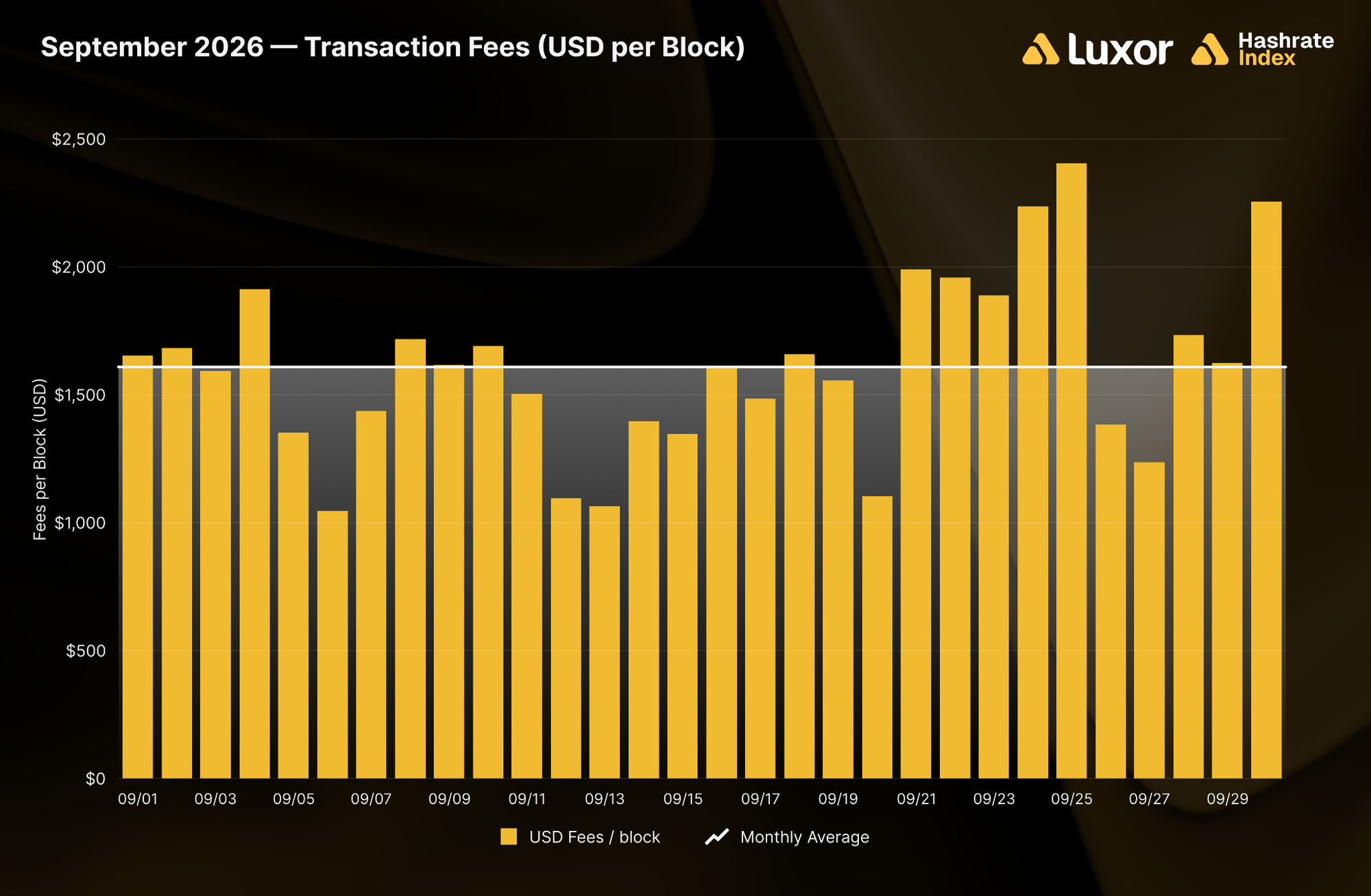
Transaction fee collections averaged 0.0199 BTC per block, representing a 10.1% decline and the lowest average since May. Fees accounted for just 0.63% of total block rewards, marking the fifteenth consecutive month that transaction fees contributed less than 1% to overall miner revenues. Daily fee collections ranged between 0.013 and 0.029 BTC per block with no significant outlier blocks. In U.S. dollar terms, the average block earned roughly $1,607 in fees, supported entirely by Bitcoin’s higher fiat valuation.
Energy Hashprice and Fleet Tiers
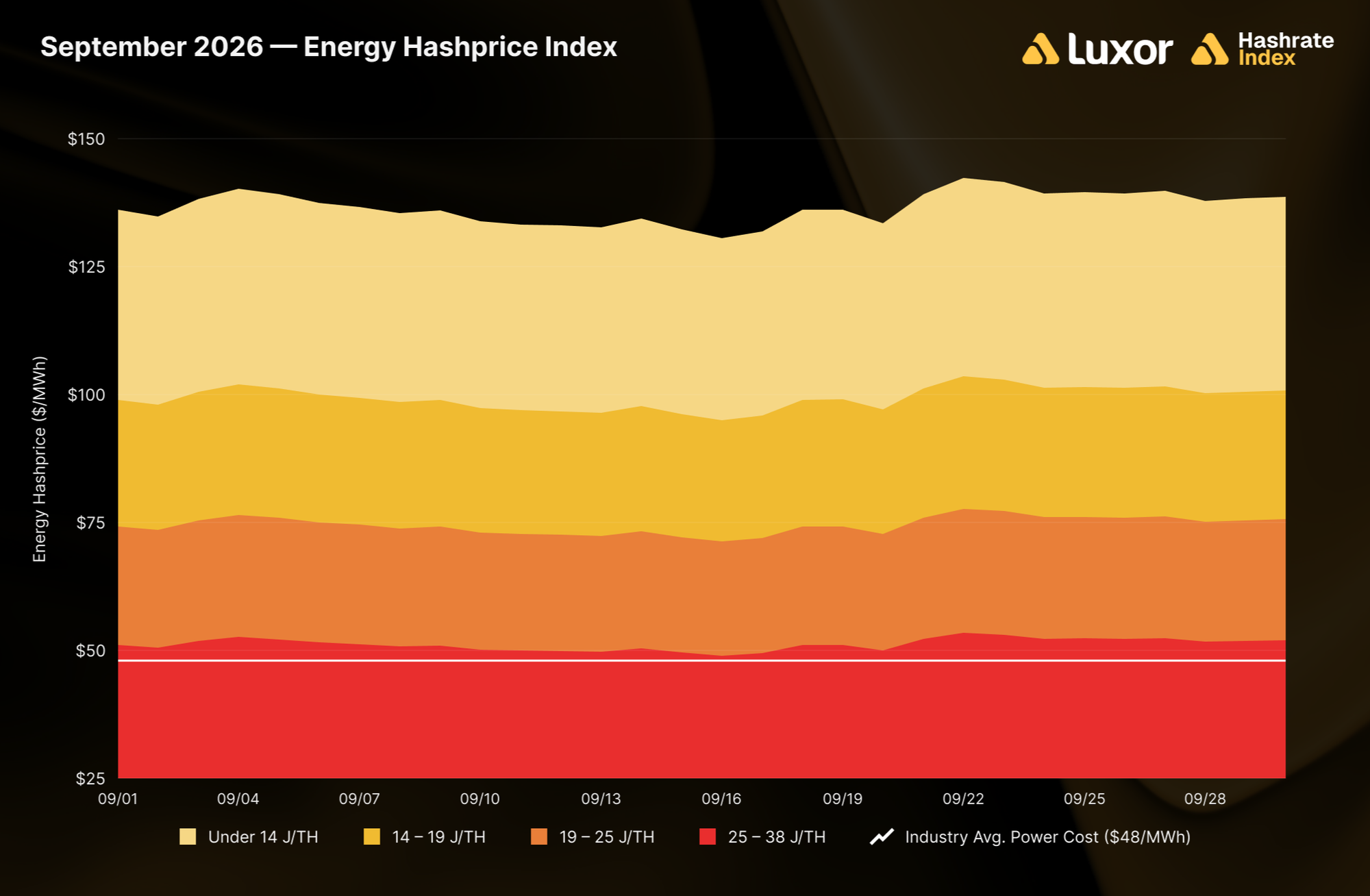
Energy hashprice rose in tandem with standard hashprice metrics across all fleet efficiency tiers. Monthly averages for energy hashprice increased by roughly 13.6%. When compared against an average industrial Bitcoin mining power cost of $48 per megawatt-hour, the marginal fleet efficiency bucket covering units operating between 25 and 38 Joules per Terahash finished September above $51 per megawatt-hour during every day of the final week.
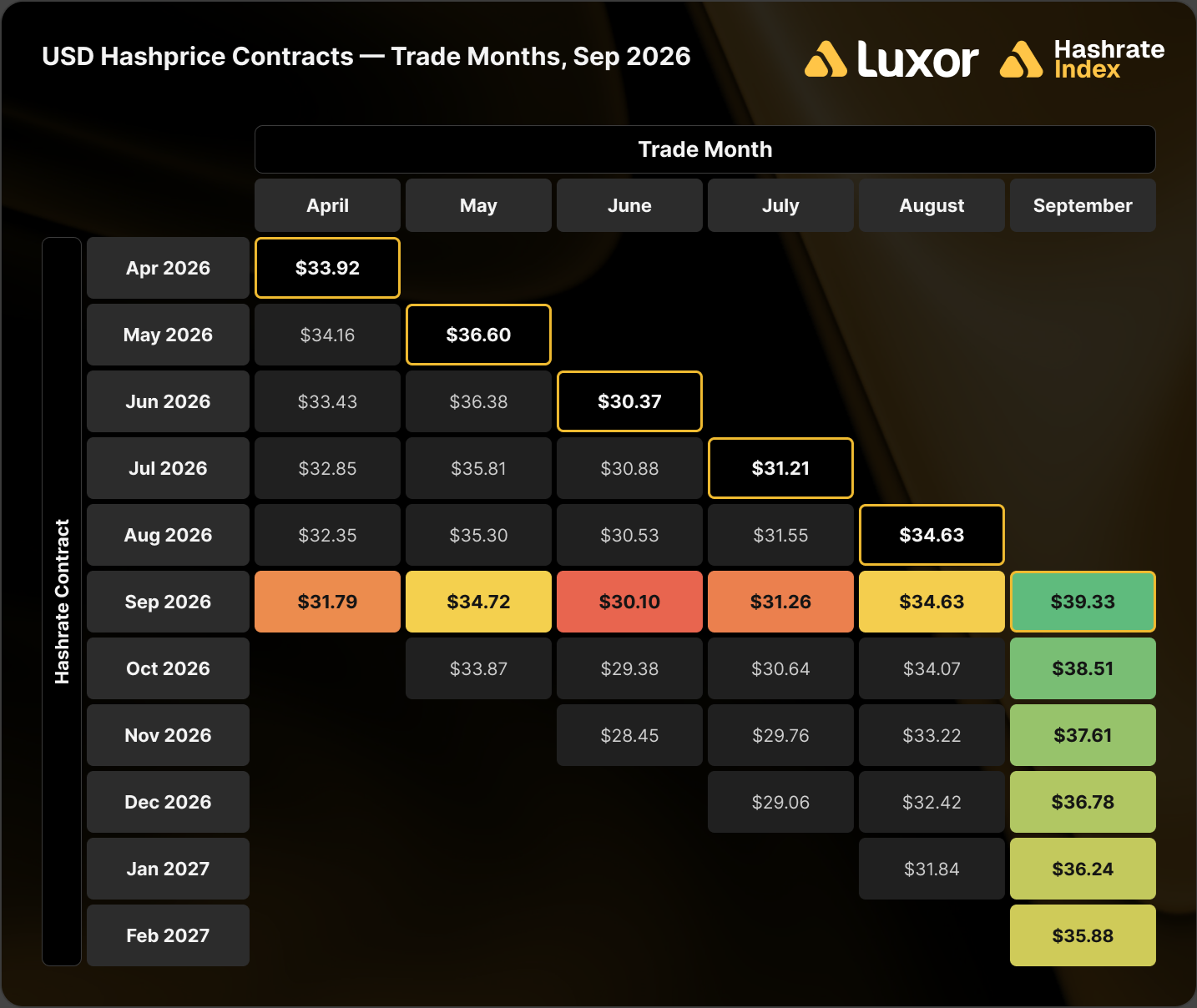
Market activity on Luxor’s derivative platforms reflected distinct strategies among institutional participants. Lenders were active on the buy side of deliverable forward contracts, while public and private mining enterprises utilized forward sales to secure financing, manage cash flows, and fund fleet expansions. Because deliverable forwards are prepaid, they traditionally trade at a discount to non-deliverable forwards to compensate buyers for credit risk and capital costs. Pairing these instruments allowed market participants to lock in annualized yields or financing costs ranging between 6% and 13%.
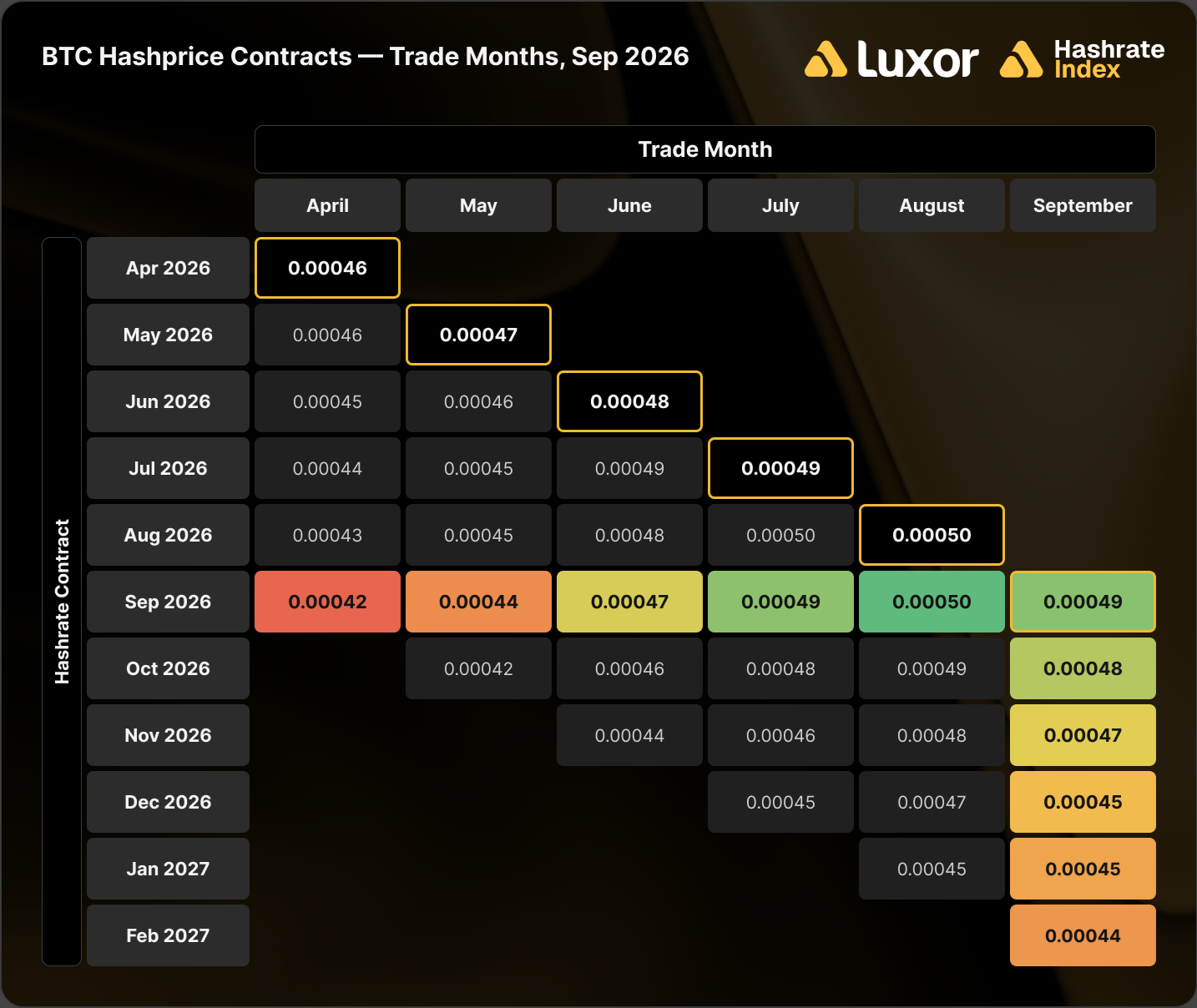
As the market looks ahead, October has traditionally ushered in stronger difficulty growth based on historical seasonal trends. With network hashrate continuing to expand and the broader macroeconomic environment shifting, miners and institutional investors alike continue to rely on derivatives and forward contracts to navigate the intricate economics of Bitcoin security and compute markets.
 Cryptocurrency Mining
 Cryptocurrency Mining
 Cryptocurrency Mining