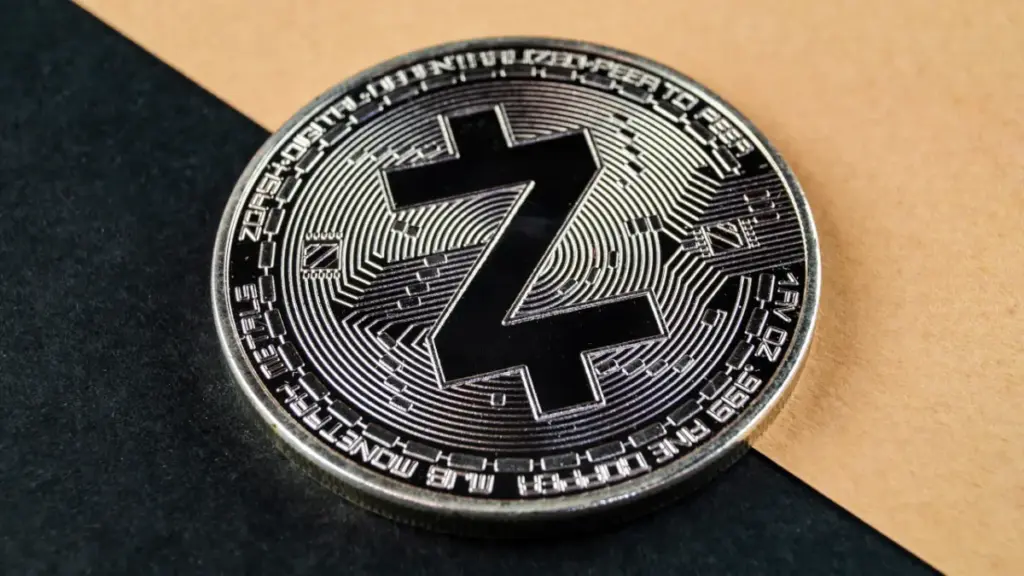
While much of the wider cryptocurrency ecosystem remains locked in anxious debates and what industry participants have dubbed "bunker mode" over looming cryptographic threats, one dedicated team of Zcash developers says it already has a comprehensive operational plan in place.
Zakura, a prominent development team building a Zcash full node, announced that it expects post-quantum signature opcodes to officially land in Zcash this coming January. Within the architecture of blockchain networks, opcodes function as low-level instructions that would enable the underlying network to securely verify an entirely new class of digital signatures. According to an in-depth engineering post authored by Roman Akhtariev, the ultimate strategic goal of this upcoming integration is to establish "full post-quantum safe transparent pools with hash based signatures" for the privacy-centric cryptocurrency network.
To fully understand the significance of this development, it helps to examine how Zcash handles transactions. The protocol natively supports two distinct types of payments: shielded transactions, which cleverly obscure the sender, the recipient, and the exact transaction amount from public view, and transparent transactions. Transparent addresses function similarly to those found on the Bitcoin network, remaining publicly visible on the ledger. A standard transparent address contains a cryptographic hash of a public key. This underlying public key remains securely hidden until the rightful owner initiates a transaction to spend funds, at which point the key is revealed directly on the blockchain.
Zakura’s newly proposed architecture ingeniously combines two robust defense mechanisms to protect these transparent components against future technological threats. Under their scheme, user wallets would automatically rotate to a fresh, unused address after every single transaction. This constant rotation effectively keeps public keys out of the view of potential eavesdroppers. Simultaneously, the system incorporates a hash-based backup signature known as WOTS (Winternitz One-Time Signature). Traditional cryptographic schemes rely heavily on complex elliptic-curve mathematics, which modern researchers increasingly fear could eventually be cracked by advanced artificial intelligence or quantum computing systems. Hash-based schemes, by contrast, bypass elliptic-curve math entirely, offering a sturdier shield against these emerging computational vectors.
However, implementing address rotation introduces a complex privacy paradox. When a standard wallet queries a centralized or decentralized server to check balances across a large array of different addresses, the server can easily analyze the metadata and determine that all those varied addresses belong to a single, identical user. To solve this dilemma, Zakura utilizes private information retrieval, commonly referred to as PIR. PIR is an advanced cryptographic technique that allows a wallet to fetch specific records from a database without ever revealing to the server which specific records it is actually requesting. This privacy-preserving feature is already rolling out in the Vizor wallet, where proactive users can test the capability firsthand by simply toggling "private queries" within their application settings.
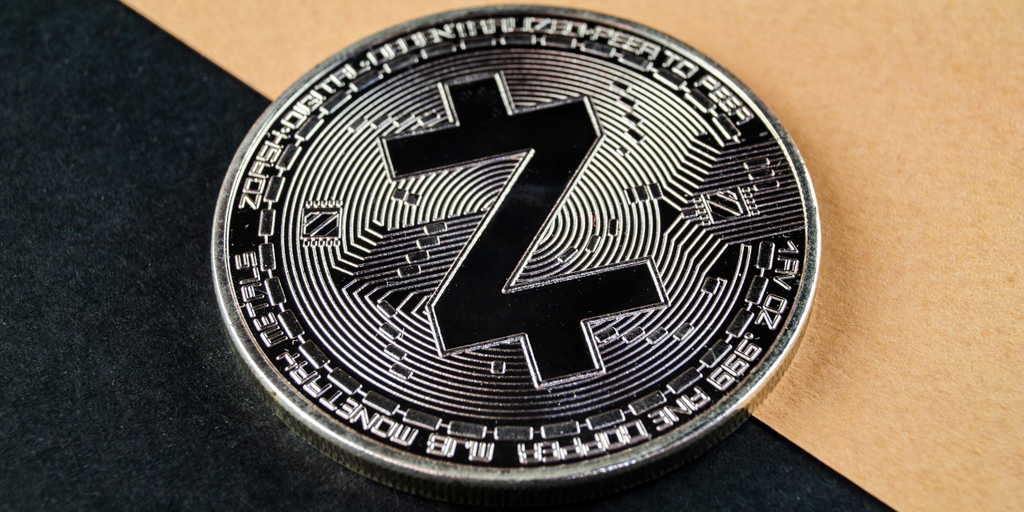
Emphasizing their proactive stance against cryptographic vulnerabilities, Zakura took to social media to highlight their progress. "Here’s our plan for quantum-safe, unlinkable, rotating taddrs. Possible with Zcash, today. While others are worrying about the viability of rotating transparent addresses, we’re already solving linkability," the team shared in a post on X.
This bold proclamation serves as a clear nod to recent warnings issued by Ethereum Foundation researcher Justin Drake. Earlier in the week, Drake publicly urged digital asset holders to calmly and methodically move their funds to fresh addresses. However, the broader public reaction to Drake’s urgent call to action was anything but calm, sparking widespread industry conversations about the immediate resilience of legacy blockchain infrastructure.
Drake warned the crypto community that rapid advancements in AI-driven mathematical analysis could potentially break the ECDSA signatures currently securing major networks like Bitcoin and Ethereum long before physical quantum computers are fully realized, suggesting that in a worst-case scenario, such vulnerabilities could emerge in a matter of months rather than years. Ethereum co-founder Vitalik Buterin subsequently weighed in on the intensifying debate. Buterin noted that he believes it is "plausible" that AI-driven breakthroughs in mathematics could successfully break traditional encryption within the next two years, validating the urgency behind the industry’s sudden focus on post-quantum readiness.
Despite the ambitious scope of Zakura’s proposal, technical observers note that the current plan specifically covers only Zcash’s transparent side. Furthermore, the initial engineering disclosure did not explicitly detail how or exactly when these crucial opcodes would be formally activated across the wider decentralized Zcash network.
This technological push arrives as Zcash experiences a notable resurgence in institutional interest and market momentum. The privacy coin has recently been the focus of another proposed U.S. exchange-traded fund tied to the Winklevoss twins, alongside the debut of Europe’s very first Zcash exchange-traded product. This institutional accumulation also follows closely on the heels of a major network upgrade designed to make Zcash private payments up to three times faster, positioning the protocol uniquely as it navigates both performance enhancements and long-term cryptographic security.
 Web3 & Decentralized Web
 Web3 & Decentralized Web
 Web3 & Decentralized Web