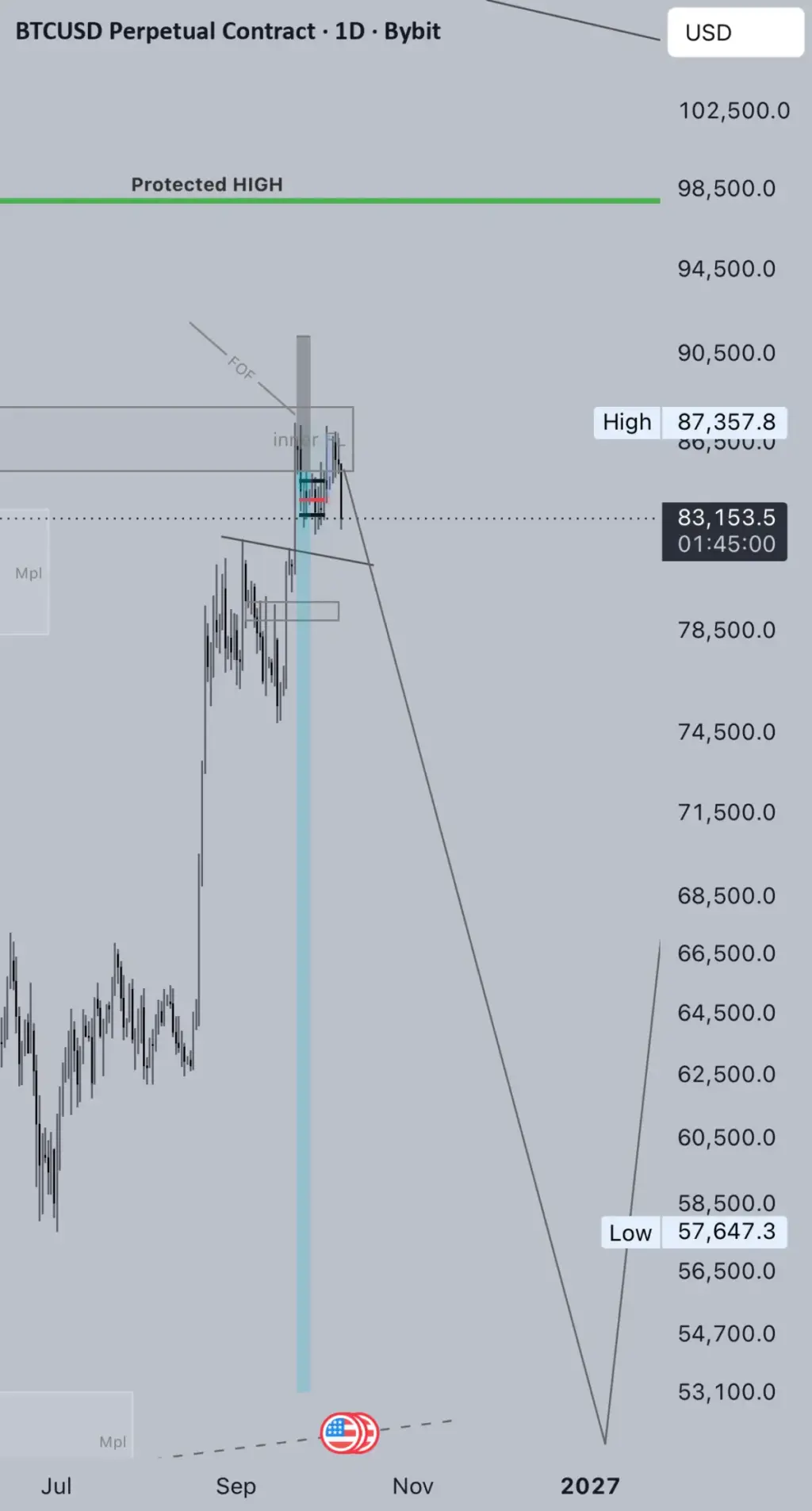
Cryptocurrency market participants are closely monitoring the price action of Bitcoin as technical analysts point toward a potential downward correction beneath the psychological $60,000 threshold. Recent market commentary shared across charting and analytics platforms highlights a growing bearish sentiment surrounding the leading digital asset, with specific focus directed at perpetual swap contracts traded on major derivatives exchanges.
According to market observations published on trading intelligence platforms by analyst wisdomcandel69, Bitcoin’s short-term market structure suggests that the asset requires one final downward push to decisively breach support levels below the $60,000 mark. The technical assessment relies heavily on advanced price action methodologies, notably Read The Market (RTM) principles, which map out liquidity zones, supply-demand imbalances, and structural turning points directly onto the asset’s charts. For market participants well-versed in these advanced charting techniques, the visual cues provided on the BTCUSD perpetual contract chart outline a clear path toward further downside continuation in the immediate term.
The analysis specifically focuses on the BTCUSD perpetual contract hosted on derivatives exchange Bybit, a vital instrument for leveraged traders and institutional participants hedging or speculating on Bitcoin price movements. Perpetual contracts, which do not have a fixed expiration date, often reflect the prevailing speculative sentiment of the broader market through funding rates and aggressive positioning. In this context, the short bias highlighted by technical commentators underscores a growing expectation among certain market participants that recent price rallies may be running out of momentum, paving the way for a deeper retracement before any sustainable bullish reversal can materialize.

Advanced charting frameworks like RTM emphasize understanding the historical footprints left by institutional orders rather than relying solely on conventional lagging indicators such as moving averages or relative strength indices. Analysts utilizing this methodology argue that market charts inherently display all necessary information regarding pending liquidity sweeps and structural breakdowns. In the case of the current Bitcoin setup, the identification of a short bias implies that sellers are currently looking to target liquidity pools resting beneath established local lows, with the monumental $60,000 handle serving as both a technical pivot and a psychological milestone for market participants.
The significance of the $60,000 price level cannot be overstated within the broader context of Bitcoin’s market valuation. Historically, major round numbers often act as psychological magnets for trading activity, attracting substantial volume, stop-loss orders, and liquidation cascades when tested. A decisive break below this threshold could trigger accelerated selling pressure as leveraged long positions are forced to unwind, potentially accelerating the downward trajectory anticipated by short-term bearish analysts. Conversely, holding this vital support zone could invalidate the immediate short thesis and invite renewed buying interest from market participants seeking value at lower levels.
As trading activity continues around the clock across global cryptocurrency derivatives venues, market observers are maintaining a close watch on volume profiles, order book depth, and price reactions near critical technical boundaries. While short-term forecasts point toward a test of lower levels, the dynamic and volatile nature of the cryptocurrency market means that sentiment can shift rapidly in response to macroeconomic data releases, regulatory developments, or sudden shifts in exchange liquidity. For now, traders aligned with the current technical outlook remain focused on whether Bitcoin can muster the necessary momentum to complete its projected move beneath the closely watched $60,000 threshold.
 Crypto Investing & Trading
 Crypto Investing & Trading
 Crypto Investing & Trading