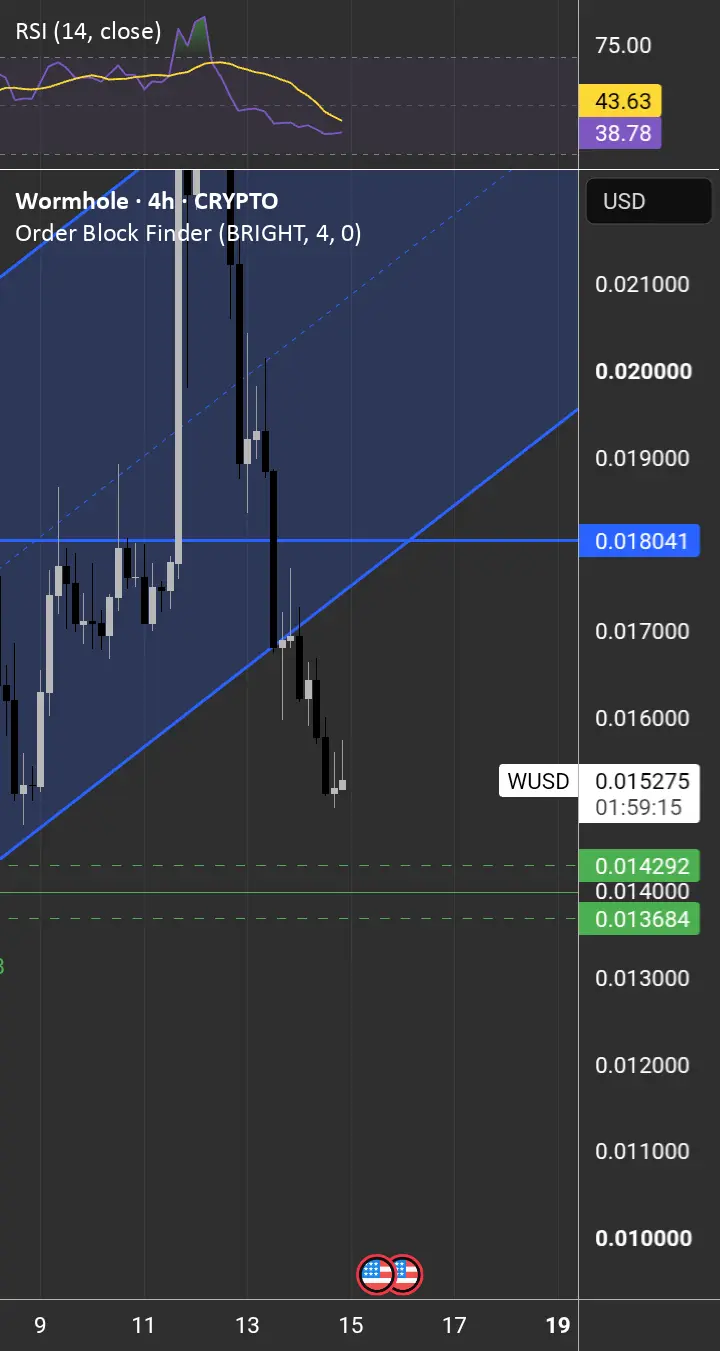
As cryptocurrency markets continue to navigate periods of heightened volatility and shifting macro conditions, attention among technical analysts and digital asset traders has increasingly turned toward Wormhole (WUSD). Recent market commentary published on major charting and analysis platforms highlights a pivotal moment for the asset, with community analysts pointing to specific technical formations and institutional behaviors that could dictate the cryptocurrency’s trajectory in the near term.
The discussion, spearheaded by market observers such as analyst miladi1997, centers on the intersection of advanced technical indicators—specifically harmonic patterns and comprehensive trend analysis—alongside the critical role being played by institutional or experienced market participants, commonly referred to as "smart money." Within analytical circles, the current price action surrounding Wormhole is being described by some market participants as potentially representing the last major window for sustainable growth before broader structural trend determinations are made.
To understand the weight of these observations, it is necessary to examine the methodologies being applied to Wormhole’s recent chart data. Harmonic patterns, which are geometric price structures that rely on Fibonacci numbers to define precise turning points, have long been utilized by technical analysts to identify potential trend reversals or continuations. Unlike simple moving averages or momentum oscillators, harmonic trading attempts to predict both the direction and the exact extent of future price movements by recognizing recurring market geometries. In the context of Wormhole’s recent market behavior, analysts employing these techniques are scrutinizing historical price structures to locate key reversal zones, support levels, and resistance barriers that may dictate whether the asset can mount a meaningful recovery.
Complementing this geometric approach is broader trend analysis, which evaluates the prevailing direction of the asset over various timeframes. Cryptocurrencies like Wormhole often experience sharp, sentiment-driven fluctuations that can obscure underlying structural trends. By stripping away short-term noise through systematic trend analysis, market participants attempt to gauge whether the asset is currently engaged in a healthy accumulation phase, a temporary relief rally within a larger downtrend, or the early stages of a sustained bullish expansion. The recent designation of the current market phase as potentially "the last chance for growth" underscores the delicate balance Wormhole currently maintains on its technical charts, where failure to hold critical support levels could invalidate bullish harmonic setups and invite further downside pressure.
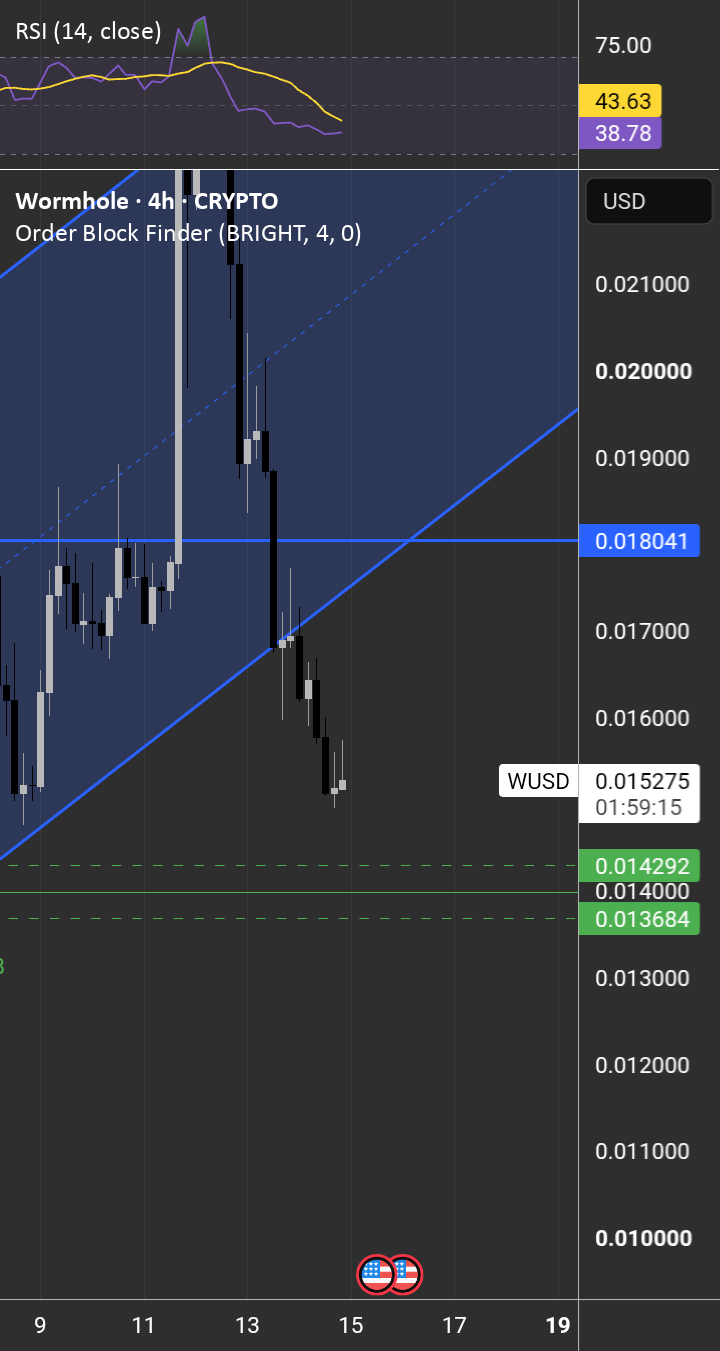
However, technical patterns alone do not dictate market outcomes, which is why heightened focus is also being directed toward the behavior of smart money. In cryptocurrency and traditional financial markets alike, smart money refers to capital managed by institutional investors, market makers, sophisticated funds, and high-net-worth individuals who typically possess deeper insights, greater resources, and a more calculated approach to asset accumulation. The actions of these entities are often monitored closely through on-chain analytics, volume profiles, and order book dynamics to identify accumulation or distribution phases before they become apparent to retail participants.
According to the recent market insights shared on analytical platforms, tracking the footprint of smart money around Wormhole’s current price levels is essential for validating any technical thesis derived from harmonic patterns. If experienced capital is actively accumulating the asset near established support zones, it lends credibility to the narrative that a growth phase may be imminent. Conversely, a lack of institutional participation or ongoing distribution by smart money could signal that current technical formations are vulnerable to failure, reinforcing caution among market participants who view the present juncture as a critical test for the cryptocurrency.
As is standard practice across major financial and cryptographic information networks, market commentaries and technical analyses of this nature are accompanied by strict regulatory disclaimers. Platforms hosting these insights explicitly clarify that the information and publications provided by individual analysts do not constitute financial, investment, trading, or other types of advice or recommendations supplied or endorsed by the platform operators. Traders and investors are routinely reminded to conduct their own independent research, evaluate their risk tolerance, and consider the inherent volatility associated with digital assets before making any financial commitments.
The ongoing discourse surrounding Wormhole reflects a broader trend within the cryptocurrency ecosystem, where market participants increasingly rely on sophisticated technical frameworks to navigate uncertainty. Whether the current setup will materialize into a sustained growth phase or serve as a cautionary tale of misread market geometry remains to be seen. As price action evolves and smart money continues to position itself within the digital asset landscape, the coming sessions will likely provide definitive answers regarding the validity of Wormhole’s current technical trajectory.
 Crypto Investing & Trading
 Crypto Investing & Trading
 Crypto Investing & Trading