The U.S. Commodity Futures Trading Commission is escalating its pursuit of exclusive regulatory authority over prediction markets, establishing a formal new definition and advancing a pair of regulatory changes that aim to secure the legal footing of event contracts as federally supervised "swaps."
The policy shift, announced on Friday, is designed to place these financial instruments firmly under the jurisdiction of the federal derivatives regulator while explicitly drawing a line to keep them outside the reach of state gambling authorities.
Under the agency’s newly issued framework, the CFTC is attempting to clarify the distinction between certain types of wagers and federally regulated swaps—which are contractual exchanges between parties that fall squarely into the agency’s federal domain. According to an interim final rule issued by the agency, traditional casino-style gambling will be held outside that swap definition. At the same time, a related rule proposal put forward by the commission seeks to establish that event contracts belong well within the swaps definition, cementing the agency’s oversight authority.
The "interim final" status of the first rule means it takes effect immediately as official policy while remaining open for public input during implementation. Meanwhile, the broader rule proposal explicitly folds event contracts—including those based on sports, politics, cultural phenomena, and weather-related events routinely traded on platforms such as Kalshi and Polymarket—into the existing U.S. regulatory framework governing swaps. That secondary effort is currently in the proposal stage, accompanied by a relatively brief 30-day public comment period.
The aggressive regulatory maneuvering comes as the legal status of prediction markets faces intense scrutiny across multiple fronts. So far, numerous states and former federal government officials who helped draft the underlying financial laws have strongly objected to the CFTC’s interpretation of its statutory authority. These opponents have already submitted their legal views this week to the U.S. Supreme Court, which has been asked to definitively resolve the jurisdictional tug-of-war.
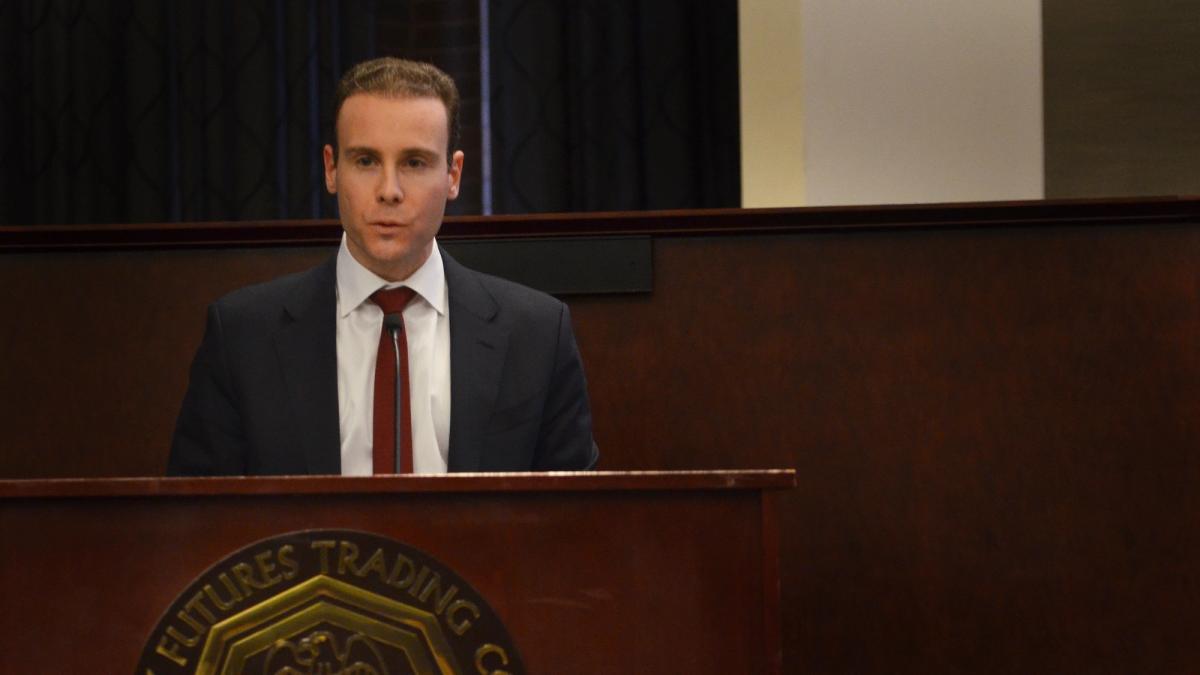
If the CFTC is called upon to make its case before the nation’s highest court, the agency will now be able to demonstrate that it has already begun formally implementing the regulatory vision championed by Chairman Mike Selig.
Several state governments are currently embroiled in active lawsuits with the federal regulator. These states insist they maintain legitimate authority over the type of sports betting and event-based wagering occurring on prediction platforms, frequently accusing the companies of operating illegal gambling enterprises within their borders. In recent months, judicial rulings on the matter have yielded mixed results, including one federal appellate decision that opposed the states alongside two federal appellate rulings that supported their claims of local regulatory jurisdiction.
"We view this interim final rule as designed to improve the agency’s position in court as the states are arguing that the CFTC’s definition of a swap would make federally illegal any wager made at a state or tribal casino or sportsbook," wrote Jaret Seiberg, a policy analyst at TD Cowen, in a note to clients on Friday. "Whether this actually works is a different question."
The rapid advancement of these regulatory actions—which were submitted for White House review less than two weeks prior—highlights a compressed timeline driven by the agency’s urgency. The CFTC has ample motivation to preemptively address legal critics who challenge its assertion that prediction markets belong exclusively in its regulatory domain. By explicitly clarifying that traditional casino-style gambling falls outside its purview, the agency is attempting to neutralize arguments that its broad swap definitions threaten state-regulated gaming establishments.
For their part, prediction market operators like Kalshi have aligned closely with the federal regulator, actively seeking to establish the CFTC as their sole oversight body and shielding themselves from a patchwork of state-level restrictions and enforcement actions.
Chairman Selig, currently the lone commissioner leading what is traditionally a five-member regulatory body, possesses the unilateral authority to enact these policy decisions on his own. President Donald Trump has thus far declined to nominate additional commissioners to fill the vacant seats at the CFTC. A parallel dynamic has unfolded at the Securities and Exchange Commission, where its five-member panel currently operates with only two commissioners. The Trump administration has pursued a concerted strategy to remove or limit the presence of opposition party members at key independent federal regulatory agencies.
As the 30-day comment period for the proposed rule begins and the legal battles continue to wind their way through the federal court system, the CFTC’s latest actions mark a decisive step in the ongoing struggle to define the future of prediction markets in the United States.
 Cryptocurrency News
 Cryptocurrency News
 Cryptocurrency News