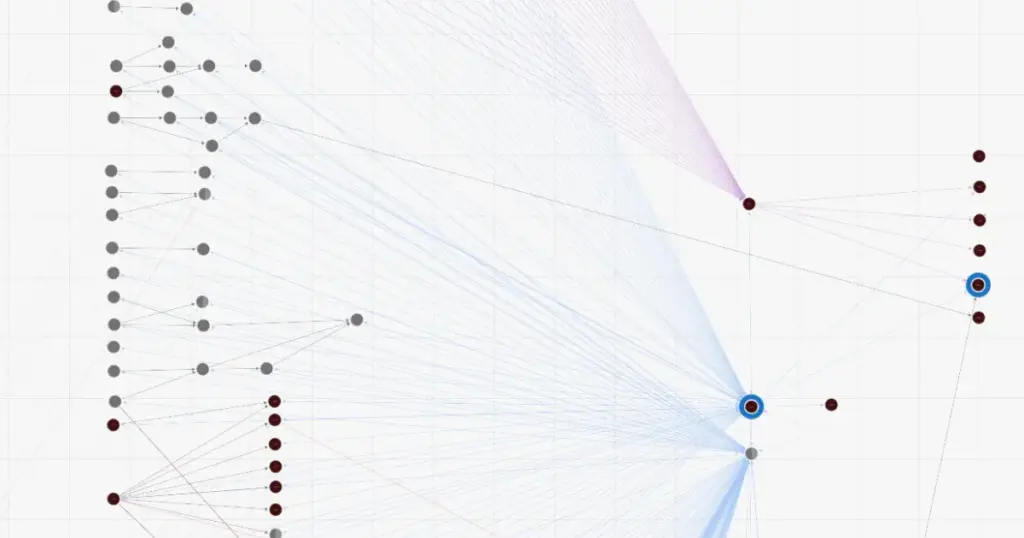
Chainalysis Reactor has cleared a major judicial hurdle after a U.S. appellate court upheld its admissibility as expert trial evidence, reinforcing the platform’s methodological reliability in federal proceedings. The decision marks the conclusion of a closely watched legal challenge stemming from the high-profile prosecution of Roman Sterlingov, the operator of the notorious darknet cryptocurrency mixer "Bitcoin Fog."
The ruling by the U.S. Court of Appeals for the D.C. Circuit affirms an earlier 2024 district court decision finding that Reactor met the strict legal thresholds required for expert testimony under the Daubert standard. Legal experts and digital forensics professionals note that the appellate court’s endorsement establishes a significant precedent for the use of blockchain analytics in criminal prosecutions and regulatory compliance actions, cementing Chainalysis’s position as the only blockchain analytics platform to successfully clear the rigorous Daubert judicial evaluation.
The Legal Journey: From United States v. Sterlingov to the Appellate Review
The underlying legal battle centered on United States v. Sterlingov, a federal case involving dual Russian-Swedish national Roman Sterlingov. Sterlingov was convicted of operating Bitcoin Fog, a cryptocurrency mixing service that processed hundreds of millions of dollars in illicit transactions, and was subsequently sentenced to more than 12 years in federal prison.
During the trial, prosecutors relied heavily on Chainalysis Reactor to trace complex financial flows between Bitcoin Fog and various darknet marketplaces. Through this analysis, investigators attributed more than 900,000 Bitcoin addresses directly to the mixing service. The government’s evidentiary presentation relied on expert testimony from FBI Special Agent Luke Scholl and Chainalysis expert Elizabeth Bisbee, both of whom detailed Reactor’s operational methodologies, data validation processes, and practical application within complex financial investigations.
Seeking to dismantle the government’s case, Sterlingov’s defense team moved to block the admission of Reactor-based evidence and the accompanying expert testimony. They argued that the platform’s proprietary analytics did not meet the established legal criteria for scientific and technical reliability. However, the trial court rejected these challenges, ruling that Reactor satisfied the Daubert standard—the legal framework federal judges use to determine whether expert testimony is sufficiently reliable and relevant to be presented to a jury.
Following his conviction, Sterlingov appealed to the D.C. Circuit, once again targeting the admissibility of the Reactor-derived evidence. In its ruling, the appellate court rejected the challenge, finding no legal error in the lower court’s decision to permit the testimony. The appellate panel’s decision validates not only the specific investigative work conducted in the Sterlingov prosecution, but also the fundamental integrity of the platform’s underlying analytical methodology.
How Chainalysis Withstood a Second Round of Judicial Scrutiny
In challenging the conviction on appeal, Sterlingov’s legal team argued that Reactor’s analytics were unreliable, pointing to claims that the software lacked formal peer review and operated without a definitively quantified error rate. The D.C. Circuit was unpersuaded by these arguments, noting that formal peer review is not a mandatory prerequisite for technology functioning within rapidly evolving, specialized fields such as blockchain forensics.
The appellate court based its decision on a comprehensive body of evidence demonstrating Reactor’s operational reliability. Key factors cited by the court included the platform’s sophisticated clustering attribution methodology. This approach merges change address analysis with advanced digital fingerprinting techniques to identify cryptocurrency addresses exhibiting matching transaction patterns and behavioral traits.
Furthermore, the court weighed the widespread, institutional adoption of Reactor across both public-sector law enforcement agencies and private-sector financial institutions. Testimony provided by Scholl and Bisbee further bolstered the platform’s credibility, as both experts stated they could not recall a single instance where a finalized Reactor attribution had subsequently been proven inaccurate.
The court also evaluated Reactor’s inherently conservative approach to attribution, framing this cautious design philosophy as a primary strength. By prioritizing defensible, verifiable connections over speculative links, the software ensures that investigators avoid false positives, reinforcing the overall reliability of its analytical output.
This judicial finding aligns with broader independent evaluations of blockchain analytics data. Academic researchers published a granular evaluation confirming that Chainalysis maintains the highest accuracy, lowest false-positive rate, and broadest coverage among available blockchain data platforms.
The Growing Importance of Methodological Rigor as Blockchain Analytics and AI Scale
As digital asset tracking becomes increasingly sophisticated, the consequences of investigative errors carry severe implications. An inaccurate attribution can misdirect law enforcement resources, trigger wrongful compliance penalties, and undermine public confidence in digital asset forensics.
These stakes are amplified as blockchain analytics platforms scale to handle larger volumes of data, moving deeper into institutional compliance, risk management, and regulatory enforcement. The pressure on underlying data methodologies will only intensify with the rapid integration of artificial intelligence into investigative workflows.
Industry experts emphasize that artificial intelligence can accelerate sound analytical methodologies, but it cannot fix a fundamentally flawed foundation. When underlying data lacks reliability, the integration of automated scale merely magnifies errors. While AI tools provide immense value when properly grounded—such as in recent complex cross-border cryptocurrency theft investigations—the foundational intelligence must remain unimpeachable.
The D.C. Circuit’s decision provides independent validation that the core analytical framework powering Chainalysis tools can withstand rigorous judicial cross-examination. For the broader digital forensics community, the ruling establishes a crucial benchmark for how technical evidence is evaluated as the intersection of law, finance, and advanced technology continues to evolve.
 Crypto Wallets & Security
 Crypto Wallets & Security
 Crypto Wallets & Security