In what legal and cryptocurrency compliance experts are calling a landmark validation for digital asset forensics, a U.S. appellate court has officially upheld the admissibility of Chainalysis Reactor as trial evidence. The ruling stems from the high-profile criminal case United States v. Sterlingov, cementing a major legal precedent regarding how blockchain analytics can be scrutinized, defended, and ultimately accepted within federal courtrooms.
The U.S. Court of Appeals for the D.C. Circuit issued a decision rejecting challenges brought by Roman Sterlingov, a dual Swedish-Russian national who was previously found guilty of operating "Bitcoin Fog," a notorious darknet cryptocurrency mixer service. Sterlingov is currently serving a prison sentence of more than 12 years following his conviction for laundering tens of millions of dollars through the illicit mixing platform.
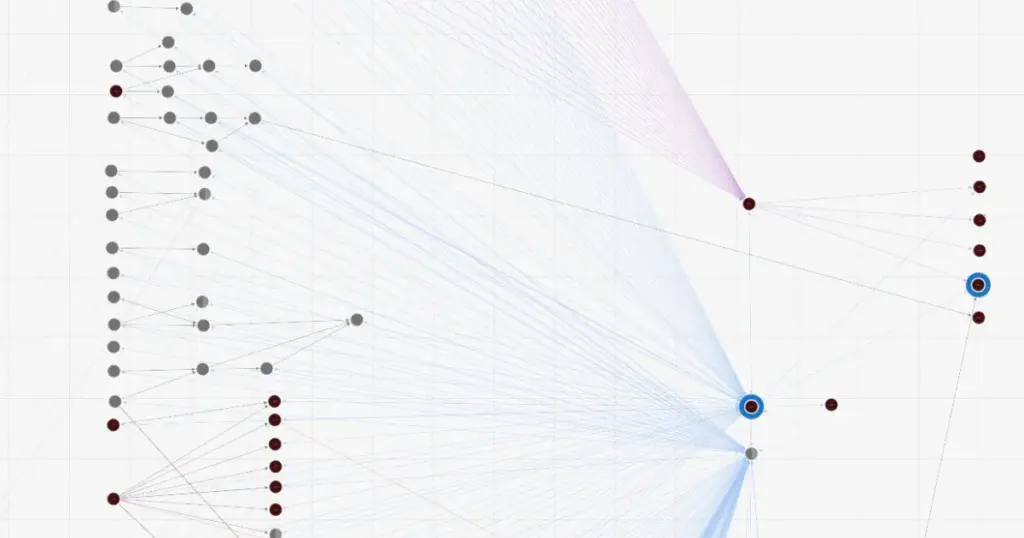
Throughout both his original trial and subsequent appeal, Sterlingov’s defense team aggressively targeted the foundational reliability of Chainalysis Reactor, the specialized blockchain analytics software utilized by federal investigators to map and trace transactions tied to the darknet service. Reactor was instrumental in connecting Bitcoin Fog to a vast network of darknet markets, ultimately helping investigators attribute more than 900,000 distinct Bitcoin addresses to the illegal operation.
The latest appellate ruling marks a critical juncture for the digital forensics industry. Chainalysis remains the sole blockchain analytics platform to have been formally tested and approved under the stringent Daubert standard in a U.S. federal court, setting a powerful benchmark for the entire cryptocurrency compliance and investigation sector.
How Chainalysis Withstood a Second Round of Legal Scrutiny
The journey of Chainalysis Reactor through the federal court system began in earnest during the 2024 Sterlingov trial, when the software faced its first major evidentiary challenge. During the proceedings, Sterlingov sought to block the introduction of Reactor-based evidence and related expert testimonies, arguing that the proprietary software failed to meet the legal thresholds required for scientific and technical evidence.
To evaluate these claims, the trial court applied the Daubert standard, a foundational legal framework used by federal judges to assess whether expert testimony and the underlying technical methods are sufficiently reliable to be presented to a jury. The court ultimately dismissed Sterlingov’s objections, ruling that Reactor met the Daubert criteria. This decision was heavily supported by expert testimony from Federal Bureau of Investigation Special Agent Luke Scholl and Chainalysis Director of Investigations Elizabeth Bisbee, both of whom detailed Reactor’s sophisticated methodologies, rigorous internal validation processes, and practical application in complex financial investigations.
Undeterred by the trial court’s rejection, Sterlingov challenged the verdict on appeal, once again centering a significant portion of his argument on the alleged unreliability of Reactor-based evidence. In September, the U.S. Court of Appeals for the D.C. Circuit squarely rejected the challenge, finding no legal error in the lower court’s decision to admit the software-derived data.
In its written opinion, the appellate court pointed to a comprehensive body of evidence demonstrating the platform’s reliability. Central to this evaluation was Reactor’s clustering attribution methodology. This analytical approach combines change address analysis with digital fingerprinting techniques to identify blockchain addresses that exhibit matching transaction patterns and behavioral characteristics. The court also took note of the platform’s widespread adoption among law enforcement agencies globally and private-sector compliance specialists, alongside testimony from Scholl and Bisbee, who affirmed that they could not recall a single instance where a Reactor attribution had subsequently been proven incorrect.
Sterlingov’s defense had further argued that Reactor was inherently unreliable because its proprietary algorithms lacked formal peer review and possessed no officially published error rate. The appellate court, however, remained unconvinced. The judges noted that traditional academic peer review is not a strict prerequisite for technology operating within a nascent and highly specialized field like blockchain analysis.
The court also highlighted Reactor’s deliberately conservative approach to attribution as a key indicator of its methodological rigor. Rather than drawing speculative conclusions, the platform prioritizes defensible, high-confidence connections between cryptocurrency addresses. Judges recognized that this underinclusive methodology actually enhances reliability by ensuring investigators avoid false positives driven by mere possibility.
Why Methodological Rigor Matters as Blockchain Analytics and AI Scale
As the digital asset ecosystem matures and cryptocurrency adoption accelerates globally, the stakes for accurate blockchain attribution have never been higher. An incorrect connection or flawed data point can send a criminal investigation down the wrong path, compromise compliance decisions at major financial institutions, or inflict severe reputational and legal damage on innocent parties. Beyond individual cases, systemic errors in analytical tools threaten to undermine confidence in the broader investigative process used by regulators and law enforcement worldwide.
These pressures are intensifying as blockchain analytics platforms become more powerful and deeply integrated into daily compliance routines. Organizations increasingly rely on automated attribution data to make high-stakes, real-time decisions, leaving very little room for error and placing immense scrutiny on the underlying code and methodology.
The rapid emergence of artificial intelligence in financial investigations introduces another layer of complexity. While AI tools have enormous potential to accelerate investigative workflows—as demonstrated by recent complex cryptocurrency recovery operations—artificial intelligence can only accelerate a sound methodology; it cannot fix a fundamentally flawed one. When the underlying data foundation is compromised, scaling operations with AI only magnifies the scale of the problem.
Industry analysts note that this is precisely why the recent appellate court decision carries profound industry-wide implications. By confirming that Reactor’s methodology can withstand rigorous judicial scrutiny across multiple levels of the federal court system, the ruling provides independent validation of the core principles guiding modern blockchain forensics.
For developers and compliance professionals alike, the decision represents far more than a routine legal milestone. It establishes a trusted evidentiary baseline as the industry moves toward developing the next generation of automated investigation tools, ensuring that technological advancements in areas like artificial intelligence are built upon an unshakeable foundation of data accuracy, legal resilience, and methodological transparency.
 Crypto Wallets & Security
 Crypto Wallets & Security
 Crypto Wallets & Security