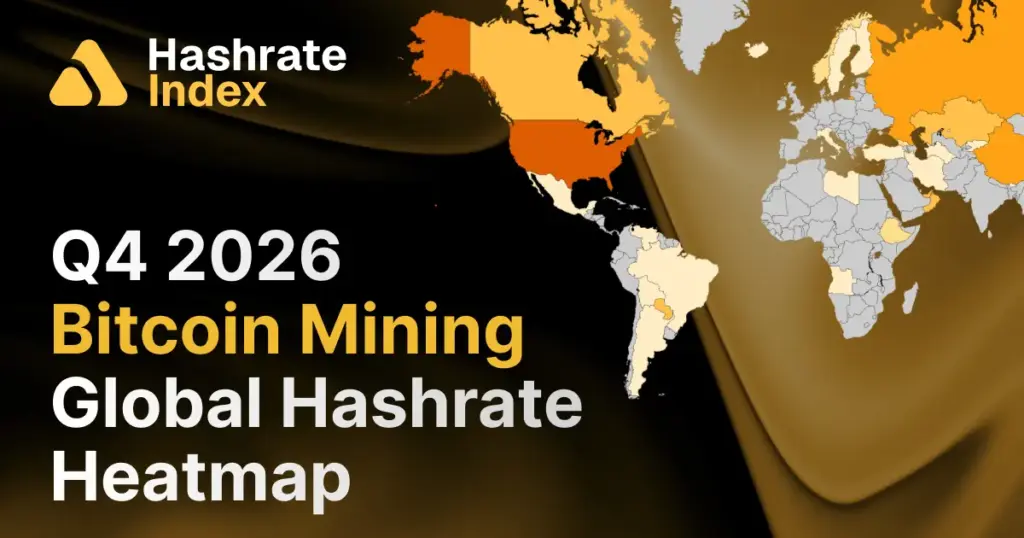
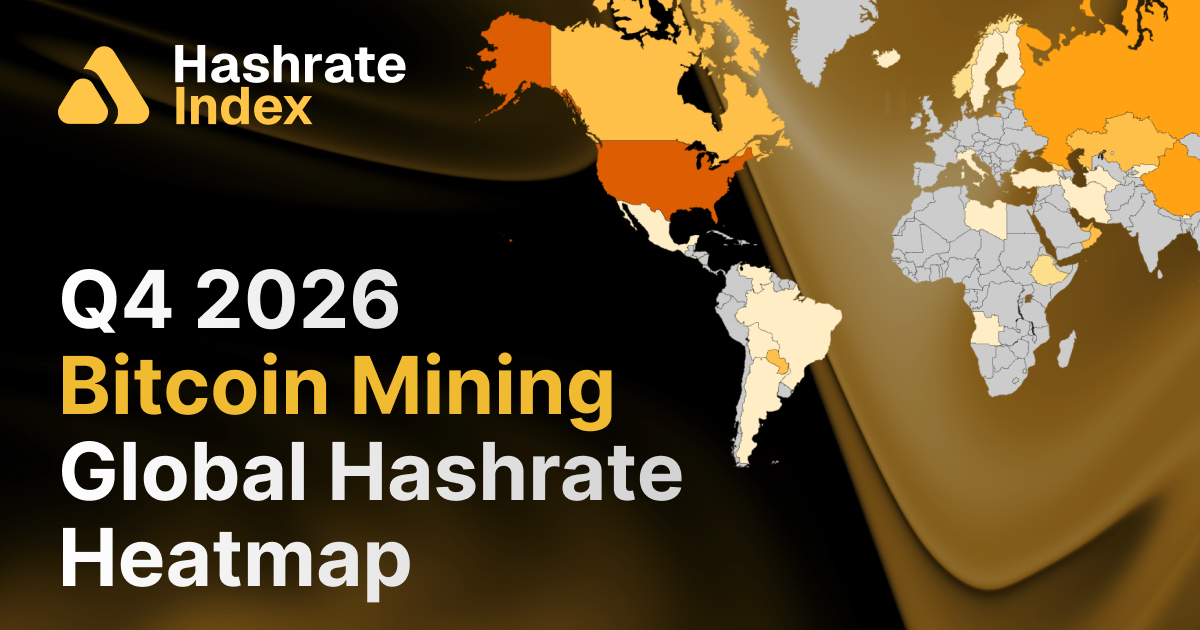
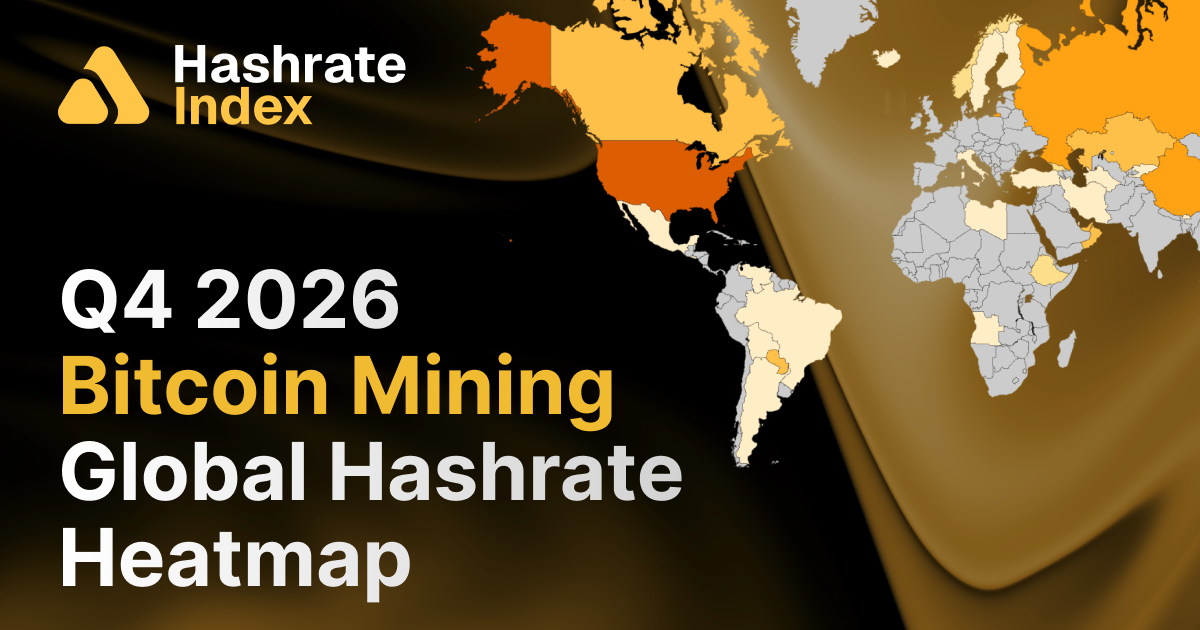
After two consecutive quarters of contraction, the Bitcoin network’s global hashrate has finally stopped falling, registering a flat performance to close out the third quarter of 2026. According to the latest data from Hashrate Index’s Global Hashrate Heatmap, total network compute capacity finished Q3 at approximately 941 exahashes per second (EH/s), effectively unchanged from the roughly 940 EH/s recorded in Q2.
While the headline figure suggests stability, a closer examination of the underlying metrics reveals an unusually dynamic period marked by aggressive geographic redistribution. Across the globe, compute power continued to migrate in response to fluctuating energy costs, environmental challenges, and the surging demand for high-performance computing (HPC) and artificial intelligence infrastructure. Marginal mining machines that were destined to switch off under prevailing hashprice conditions have largely been decommissioned, and network difficulty has adjusted downward sufficiently to keep surviving operators profitable.
Despite this stabilization, the network remains approximately 8.7 percent smaller than it was a year prior, when total compute power stood at roughly 1,031 EH/s in Q4 2025, and sits about 15 percent below its all-time peak recorded in November 2025. Yet, the rapid bleeding has halted, leaving industry observers to focus on substantial country-level shifts where individual nations gained or lost significant portions of the global market share.
Concentration Slips as Core Markets Contract and Frontiers Expand
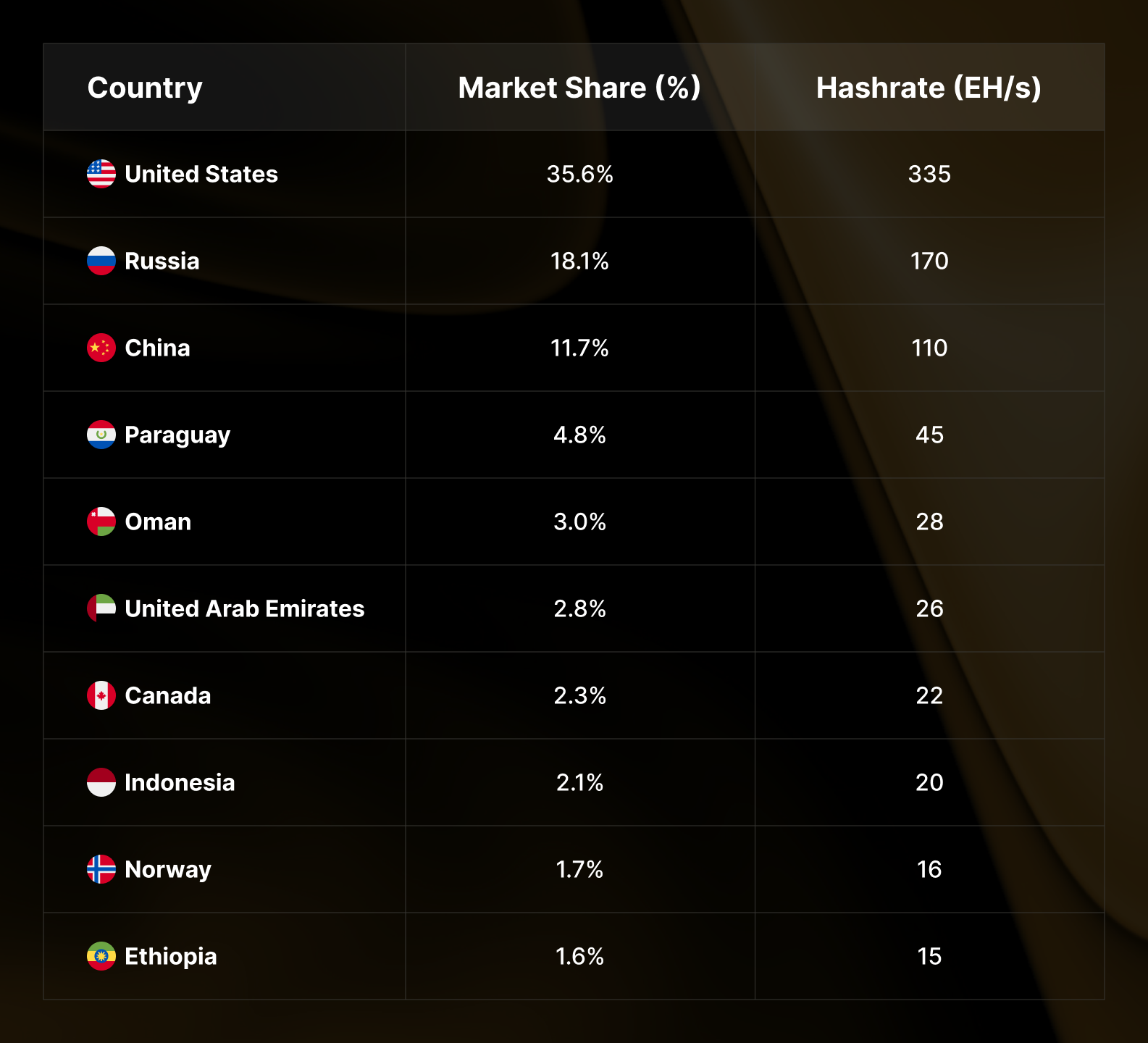
Bitcoin mining continues to exhibit a high degree of geographic concentration, with the top three mining nations accounting for roughly two-thirds of the total global hashrate. However, concentration among the top tier slipped slightly from 66.2 percent to 65.4 percent during the quarter, marking the second consecutive quarterly decline. This downward trend was primarily driven by the United States shedding compute capacity at a faster rate than major competitors like Russia could absorb.
The composition of the top ten mining nations remained relatively stable in terms of overall membership, but five individual rankings shifted hands during the period. Oman climbed past the United Arab Emirates to secure the fifth position globally, while Indonesia advanced from ninth to eighth place on the back of a genuine 3 EH/s gain. Conversely, Ethiopia experienced a sharp contraction, falling from eighth down to tenth place. Kazakhstan held steady at the eleventh spot with approximately 15 EH/s for the second consecutive quarter, placing it in a virtual dead heat with Ethiopia for the final tier of the top ten as the industry heads toward the end of the year.
A broader quarterly comparison highlights a clear divergence between a shrinking developed core and a rapidly expanding global frontier. Major developed markets continued to shed significant hashrate, while emerging jurisdictions welcomed a massive influx of new compute power. Notably, these quarterly movements were no longer mere statistical rounding errors; countries like Pakistan and Venezuela recorded substantial absolute gains that materially altered the global distribution map.
The Long-Term Impact of the AI and HPC Pivot
An analysis of year-over-year trends helps strip away short-term noise to reveal durable structural shifts in where and how Bitcoin is mined. Every market that experienced sustained growth over the past twelve months represents a story of low-cost or stranded energy resources.
However, the declining markets do not form a neat mirror image of this trend. Traditional mining hubs like Canada and the United Arab Emirates are not plagued by prohibitively expensive electricity; Canadian operations rely heavily on stable hydro power in provinces like Quebec, Manitoba, and British Columbia, while Abu Dhabi benefits from a diverse energy mix encompassing natural gas, solar, and nuclear power. These jurisdictions did not lose hashrate because power became too costly, but rather because the energy found significantly more lucrative applications.
Both Canada and the UAE are home to sophisticated mining operators that have made substantial progress in pivoting their infrastructure toward artificial intelligence and high-performance computing. The economic disparity between the two industries is stark: AI compute workloads routinely generate anywhere from $1,500 to $3,500 per megawatt-hour, whereas traditional Bitcoin mining yields a range of just $50 to $150 per megawatt-hour.
This distinction carries profound implications for the future of the network. While a marginal ASIC machine that goes offline due to a temporary dip in hashprice can easily be brought back online should market conditions improve, electrical capacity that is locked into multi-tenant, multi-year AI contracts cannot be easily reclaimed, even in the event of a strong Bitcoin rally and downward difficulty adjustments. Consequently, the contraction in developed markets stems from a combination of capacity conversion toward AI and HPC infrastructure, ongoing regulatory pressures in jurisdictions like Kazakhstan, China, and Iran, and macroeconomic instability in countries like Argentina.
Hydrological Shocks Hit Ethiopia’s Mining Sector
While most emerging markets capitalized on low-cost energy, Ethiopia emerged as a major exception to the rule, suffering a dramatic reversal that upended its status as one of the continent’s flagship mining hubs. Ethiopia’s national hashrate plummeted from approximately 23 EH/s down to 15 EH/s, representing a steep 35 percent quarterly decline that pushed the country back to mid-2025 levels and relegated it to the tenth global spot. Measured from its peak of roughly 27.5 EH/s in the first quarter of 2026, the country’s mining sector has contracted by 45 percent over the span of three quarters.
This sharp downturn was not the result of a sudden policy reversal or regulatory crackdown, but rather a severe environmental constraint. On September 15, Ethiopian Electric Power enacted sweeping supply cuts, reducing electricity deliveries to Bitcoin miners to roughly 23 percent of contracted volumes—a staggering reduction of about 75 percent. The emergency measures were implemented after reservoir inflows dropped by approximately 20 percent due to dry conditions driven by El Niño weather patterns.
Ethiopia’s rapid expansion left its mining infrastructure uniquely vulnerable to such hydrological shocks, given the network’s heavy reliance on a single power source. Unless reservoir inflows experience a meaningful recovery, industry analysts expect Ethiopia’s hashrate to continue declining, particularly as state utility officials weigh further restrictions on domestic industrial allocations and power exports to neighboring nations.
The Resurgence of Frontier Mining Markets
Offsetting the steep declines in North America and East Africa, the global frontier reaccelerated sharply during the quarter. Pakistan and Venezuela collectively added approximately 9.5 EH/s, nearly single-handedly neutralizing the net losses recorded in the United States.
Pakistan witnessed an extraordinary expansion, surging from roughly 2.5 EH/s to 8 EH/s. This performance vastly outpaced the country’s previous peak of 4 EH/s recorded earlier in the year, elevating Pakistan above Finland and Malaysia and positioning it just behind Laos, which held steady at approximately 9 EH/s.
Similarly, Venezuela crossed into double-digit territory, scaling to roughly 10 EH/s to register a 122 percent year-over-year increase. This growth is particularly notable as it occurred entirely beneath a formal government prohibition on cryptocurrency mining that has remained in effect since mid-2024. Industry tracking of geolocated network traffic indicates that the surviving operations operate primarily in the informal sector rather than under direct state control. Meanwhile, Iran recorded a modest uptick, rising from 2 EH/s to 3 EH/s despite lingering geopolitical tensions with the United States.
Regional dynamics across the broader network reflected these competing pressures. North America remains the dominant global region with the United States commanding a 35.6 percent market share, though U.S. hashrate slipped to approximately 335 EH/s—down 14 percent year-over-year from its early 2026 peak of 400 EH/s. Canada continued its downward trajectory, dropping to 22 EH/s to record the sharpest annual decline among developed economies.
In Europe and Central Asia, Russia emerged as the quarter’s largest absolute gainer, expanding by 8 EH/s to reach 170 EH/s and capturing 18.1 percent of the global market share. Kazakhstan successfully stabilized its output at roughly 15 EH/s following a prolonged period of erosion, while Norway and Georgia held firm at 16 EH/s and 11 EH/s, respectively.
Across the Asia-Pacific region, China’s domestic hashrate continued a steady, multi-quarter bleed, falling to approximately 110 EH/s and representing a 24 percent year-over-year decline. Regional diversification efforts continued to benefit Southeast Asian neighbors, with Indonesia maintaining robust operations at 20 EH/s and Malaysia advancing to 7 EH/s.
In the Middle East, Oman added 2 EH/s to reach 28 EH/s, successfully overtaking the United Arab Emirates, which declined to 26 EH/s amid ongoing infrastructure pivots toward artificial intelligence. Latin America continued to be anchored by Paraguay, which expanded its capacity to roughly 45 EH/s through reliable hydroelectric generation from the Itaipú Dam, while Bolivia notched gains to reach 4 EH/s.
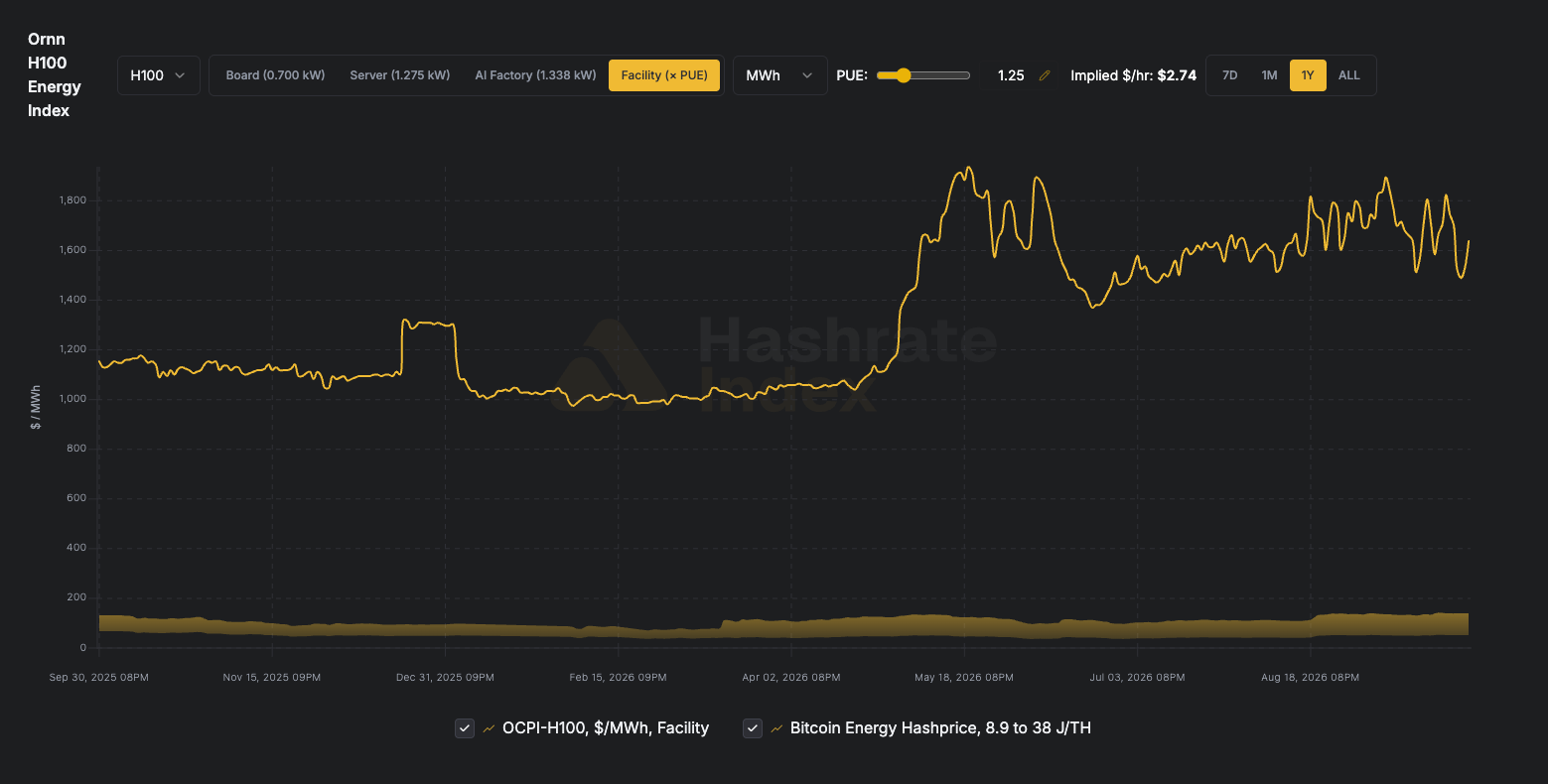
Ultimately, the stabilization of the global hashrate at 941 EH/s masks a period of profound structural transformation. As traditional mining capitals increasingly redirect valuable electrical power toward high-yield artificial intelligence workloads, emerging frontier markets continue to absorb displaced compute capacity, ensuring that Bitcoin’s global mining footprint remains as fluid and resilient as ever.
 Cryptocurrency Mining
 Cryptocurrency Mining
 Cryptocurrency Mining