
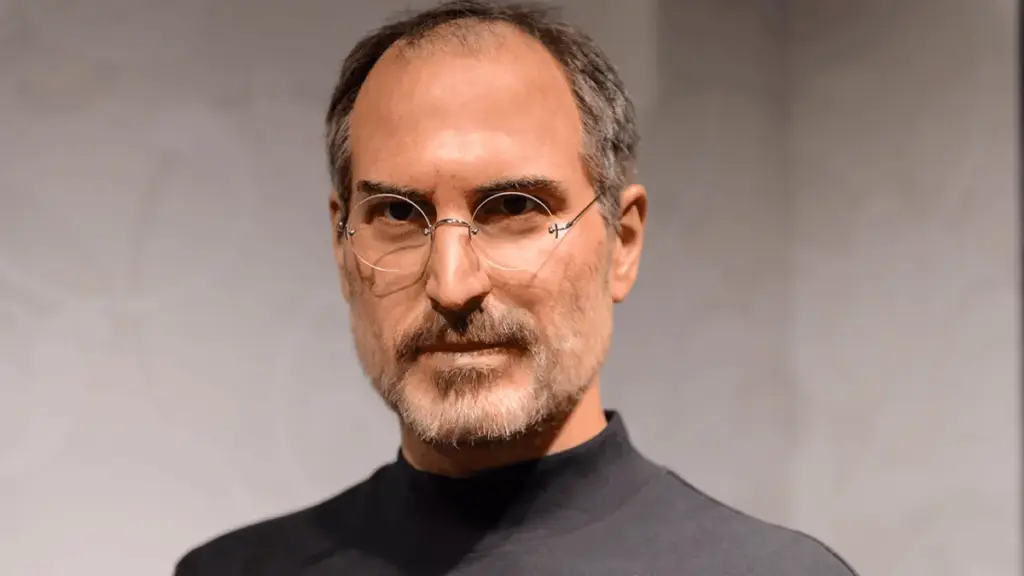
When people think of Steve Jobs and his monumental impact on the global technology and business landscapes, their minds almost invariably drift to Cupertino, California. They picture sleek Macintosh computers, the revolutionary iPod, or the ubiquitous iPhone that forever transformed modern communication. Yet, one of the most revealing, high-stakes, and ultimately lucrative chapters of Jobs’s legendary career happened completely away from Apple, tucked inside a nascent computer-graphics spin-off that most industry insiders at the time struggled to value or even understand.
The foundation of this historic business coup was laid on February 3, 1986. Following his turbulent and high-profile ouster from Apple Computer just a year prior, Jobs found himself at a crossroads. Seeking a new creative and technological outlet, he seized an opportunity to acquire the computer graphics division of Lucasfilm from legendary filmmaker George Lucas. Jobs paid $5 million in cash for the division’s pioneering technology and intellectual property, and immediately injected an additional $5 million in direct startup capital to keep the operations running.
This total initial investment of $10 million gave birth to a newly independent corporate entity christened Pixar. Under the terms of the transaction with Lucasfilm, Jobs secured roughly a 70 percent equity stake in the fledgling company, while the remaining shares were distributed among the brilliant computer scientists, engineers, and animators who transitioned from Lucasfilm to form the core of the new enterprise.
A Shrewd Bet on Computer Graphics and a Long, Costly Runway
It is remarkably easy, viewing the modern entertainment and technology landscape from the vantage point of decades later, to compress Steve Jobs’s narrative into a single corporate destiny. However, the early years of Pixar were defined less by immediate triumph and more by a grinding, financially draining war of attrition. The technology behind computer-generated imagery was in its absolute infancy, and the commercial market for fully digital animation simply did not exist yet.
For nearly a decade following the 1986 buyout, Pixar operated as a money-losing enterprise. The company’s hardware division struggled to find traction, and its software efforts, while technologically groundbreaking, failed to generate the revenues necessary to sustain the studio. To keep the lights on and the brilliant creative minds together, Jobs ultimately poured approximately $50 million of his own personal fortune into Pixar. It was a staggering financial commitment, driven by an unshakeable, almost stubborn belief that digital storytelling would eventually revolutionize cinema and visual culture.
The long, expensive runway finally reached its end with the release of Toy Story on November 22, 1995. Distributed by Walt Disney Pictures and directed by John Lasseter, Toy Story arrived in theaters as a watershed moment in motion picture history: the world’s first fully computer-animated feature film. The critical acclaim was universal, and the public response was nothing short of ecstatic. The film proved that digital animation could convey deep emotional resonance, complex character development, and narrative sophistication just as effectively as traditional hand-drawn cel animation.
The 1995 IPO and the Path to Billionaire Status
The massive cultural and commercial success of Toy Story instantly transformed Pixar from a speculative technology experiment into a powerhouse entertainment brand. Seizing the momentum of the film’s theatrical debut, Pixar moved swiftly toward the public markets. Just one week after Toy Story hit the silver screen, the company went public on November 29, 1995, in an initial public offering that was widely celebrated as the biggest IPO of that calendar year.
Pixar’s shares were priced at $22 each. Because Jobs had aggressively increased his equity position over the years through his continuous financial rescues of the studio, he owned upwards of 80 percent of the company at the time of the public offering. The soaring share price instantly crossed him into billionaire territory for the very first time in his life.
The chronology of these events holds profound historical importance. Steve Jobs did not make his triumphant return to a struggling Apple until 1997. Therefore, it was his audacious, self-funded gamble on Pixar—and not his initial tenure at Apple—that first minted him as a billionaire. Pixar provided the financial muscle and the executive vindication that preceded his second, legendary act at the helm of the Cupertino tech giant.
How Disney Converted Equity into a Lasting Legacy
A decade after its historic public offering, Pixar’s corporate journey reached another major milestone. In 2006, The Walt Disney Company officially acquired Pixar in a massive all-stock transaction valued at $7.4 billion, spearheaded by then-CEO Bob Iger. By the time of the acquisition, dilution and other corporate adjustments had brought Jobs’s personal stake in Pixar to roughly 49.65 percent.
The multi-billion-dollar deal converted Jobs’s substantial Pixar holdings into approximately 138 million shares of Disney stock. At the time of the merger, those shares were worth roughly $4.6 billion. This monumental exchange instantly made Steve Jobs the single largest individual shareholder in The Walt Disney Company, granting him a roughly 7 percent stake in the storied entertainment conglomerate and a seat on its board of directors.
Over the ensuing decades, Disney systematically expanded and monetized the cinematic universes birthed by Pixar, operating the intellectual property with a structural efficiency that resembled platform economics far more than traditional box-office strategy. Since its initial theatrical release in 1995, the Toy Story franchise alone has driven an astounding $16 billion in cumulative revenue for Disney, encompassing not just ticket sales, but a vast, highly lucrative ecosystem of consumer products, interactive video games, and publishing ventures.
The enduring financial power of this intellectual property was highlighted when Toy Story 5 debuted with a massive $312 million opening weekend. That modern cinematic milestone traced a straight, unbroken line back to Steve Jobs’s decisive 1986 choice to acquire a struggling computer graphics division from George Lucas, invest his own capital, and wait nearly a decade for the future of digital animation to catch up to his vision.
 Bitcoin & Major Altcoins
 Bitcoin & Major Altcoins
 Bitcoin & Major Altcoins







