
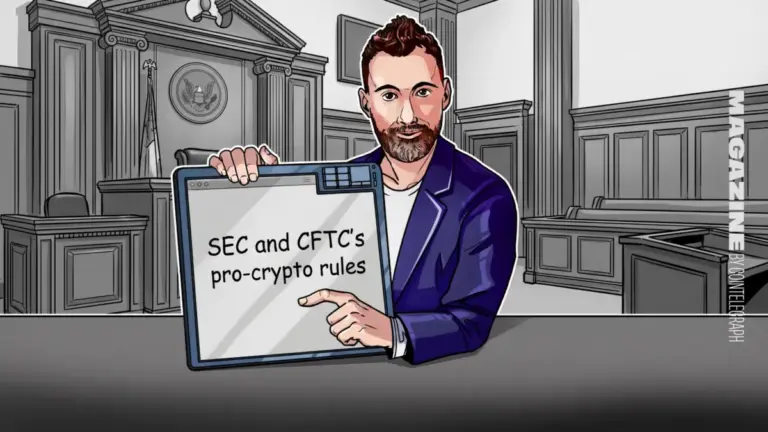
Following the failure of US lawmakers to pass comprehensive digital asset market structure legislation, federal financial regulators have aggressively stepped up their efforts to reshape the rules governing cryptocurrency companies, offerings, and exchanges. However, this regulatory push is taking place under unusual and controversial circumstances. The two primary financial watchdogs—the Securities and Exchange Commission (SEC) and the Commodity Futures Trading Commission (CFTC)—are severely understaffed at their highest leadership levels. As a result, critical decisions regarding the oversight of the burgeoning $3 trillion cryptocurrency market have been left largely in the hands of just three individuals, a majority of whom were nominated by US President Donald Trump.
The depth of the leadership vacuum at both agencies has raised alarms among legal experts, market participants, and financial commentators. Normally structured to operate under the guidance of five commissioners apiece to ensure a broad spectrum of views and robust debate, both the SEC and the CFTC are currently functioning with skeleton crews. This unprecedented concentration of power has effectively transformed executive agency rulemaking into a substitute for stalled congressional action, sparking intense public debate over the boundaries of regulatory authority, administrative law, and the future governance of digital assets in the United States.
A Dearth of Leadership at the SEC and CFTC
The staffing shortages at America’s top financial regulatory bodies have reached historic lows. At the Securities and Exchange Commission, the departure of Commissioner Hester Peirce earlier this month left the agency with only two sitting commissioners: Chair Paul Atkins and former Acting Chair Mark Uyeda. Both remain on the job, but their reduced number has dramatically altered the internal dynamics of the agency.
The situation at the Commodity Futures Trading Commission is even more stark. Since December 2025, Michael Selig has served as the sole Senate-confirmed chair and commissioner, leaving the agency functioning essentially as a single-person operation for official decision-making purposes. With each agency statutorily designed to accommodate five commissioners to deliberate and vote on complex market rules, the current reality means that routine oversight, enforcement priorities, and sweeping regulatory frameworks are being forged by a tiny fraction of the intended leadership.
With Congress failing to pass overarching market structure bills, both the SEC and the CFTC have increasingly relied on proposed rules and administrative interpretations to fill the legislative void. The SEC moved first on this front in August, proposing new rules designed to offer companies a safe harbor from having certain digital tokens classified and regulated as "investment contracts." Not to be outdone, the CFTC followed suit in October. CFTC head Michael Selig announced that his agency would actively utilize its "existing statutory authorities" to address cryptocurrency regulation, focusing primarily on proposed rules governing crypto exchanges. Shortly thereafter, SEC Chair Paul Atkins added fuel to the fire on October 2 by publicly stating that "more regulatory proposals [were] on the horizon" for the digital asset sector.
Could One SEC Commissioner Have the Final Say on Crypto Rules?
The regulatory landscape shifted even further on September 30, when the SEC capitalized on its diminished roster to alter its internal operational procedures. The agency released a final rule—which officially went into effect on October 2—amending its quorum requirements. According to the SEC, the adjustment was enacted to "promote flexibility and finality of agency rulemaking." However, the practical effect of the change is profound: the rule dramatically reduces the number of commissioners required to establish a quorum down to just one person under specific circumstances where only two commissioners are present.
This procedural overhaul immediately drew sharp criticism from financial analysts and market observers. Writing in an October 5 op-ed for the Financial Times, financial journalist Robin Wigglesworth highlighted the staggering implications of the shift. He pointed out that with only two commissioners currently serving, and given the distinct possibility that one of them might need to recuse themselves from a specific issue or be otherwise unavailable, just a single individual now possesses the legal authority to pass formal, binding rules that apply directly to America’s vast, multitrillion-dollar securities markets.
The changes ignited a fierce public debate over administrative overreach and the integrity of regulatory bodies operating well below full capacity. Mark Uyeda, responding directly to the mounting criticism, pushed back against the narrative in his own Financial Times op-ed. Uyeda insisted that the SEC’s "commitment to its mission remains unchanged" despite operating with only two commissioners and in the absence of any formal announcements from the White House regarding additional nominations to fill the lingering vacancies.
The policymaker defended the procedural adjustment, explaining that the rule change merely "clarifies that the Commission can establish a quorum if all but one commissioner is disqualified from a matter." Dismissing critical characterizations of the agency’s actions, Uyeda argued that suggesting the SEC was hastily revamping its quorum rules simply so remaining officials could have their way was an inaccurate framing. He noted that such comparisons to fictional dystopian regimes made for colorful prose but ultimately misled readers regarding the actual legal rationale behind the Commission’s decision to revise its quorum rule for the betterment of administrative efficiency.
As the calendar turned deeper into the autumn, the White House had yet to announce any formal nominations for open seats at either the SEC or the CFTC. This administrative stalemate leaves open the distinct possibility that the rulemaking process for America’s digital asset sector will remain firmly in the hands of just one person at each respective agency for months, if not longer.
Meanwhile, time is rapidly running out for legislative intervention. While Congress retains the theoretical opportunity to take up and vote on the primary piece of market structure legislation at the center of the controversy—known as the Digital Asset Market Clarity, or CLARITY, Act—industry experts remain deeply skeptical. Many analysts do not see lawmakers advancing the contentious legislation during the turbulent lame-duck session falling between the 2026 midterm elections and the swearing-in of the next congressional session in January, leaving the fate of crypto oversight squarely in the hands of the executive branch regulators.
 Crypto Regulation & Policy
 Crypto Regulation & Policy
 Crypto Regulation & Policy