The legal standing of blockchain analytics received a historic fortification when a U.S. federal appellate court officially upheld the admissibility of evidence generated by Chainalysis Reactor. The decision marks a major milestone for digital asset forensics, cementing the software’s reliability across multiple tiers of the American judicial system and distinguishing it as the only blockchain analytics platform of its kind to successfully pass the rigorous legal scrutiny of the Daubert standard at both the district and appellate levels.
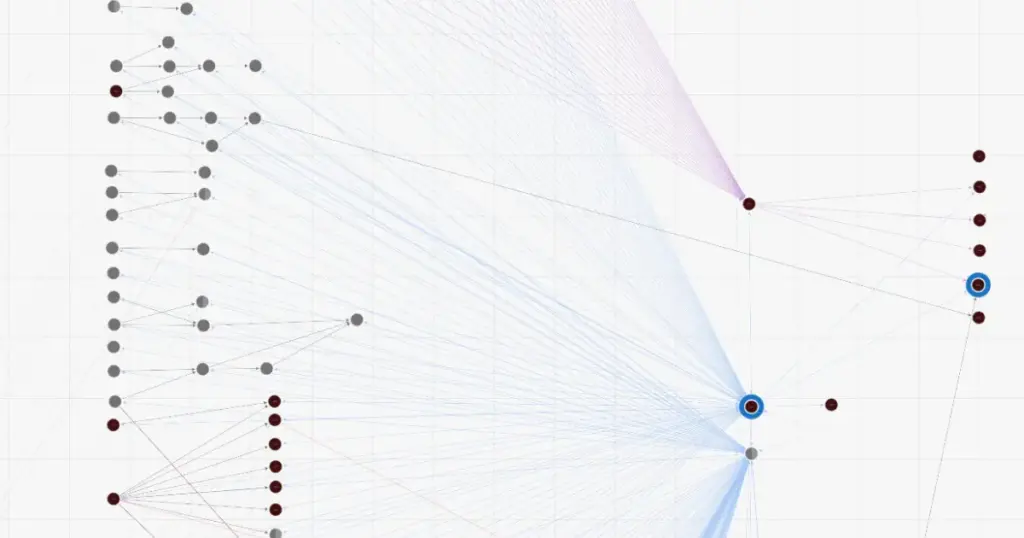
The appellate ruling stems from the high-profile case United States v. Sterlingov, which involved dual Swedish-Russian national Roman Sterlingov. Earlier, Sterlingov was convicted and sentenced to more than twelve years in prison after a federal court found him guilty of operating "Bitcoin Fog," a notorious darknet cryptocurrency mixer service that processed hundreds of millions of dollars in illicit transactions over a decade. During the initial trial, prosecutors utilized Chainalysis Reactor to meticulously trace the flow of funds between Bitcoin Fog and various darknet marketplaces. Through this advanced software, investigators were able to attribute more than 900,000 distinct Bitcoin addresses directly to the illicit mixing operation.
To support the software-generated findings during the trial, the government presented expert testimony from FBI Special Agent Luke Scholl alongside Chainalysis expert Elizabeth Bisbee. Both professionals detailed Reactor’s underlying methodologies, validation processes, and practical applications within the scope of complex federal investigations.
Faced with mounting digital evidence, Sterlingov’s defense team sought to block the Reactor-derived data and the associated expert testimony, arguing that the analytics tool failed to meet the stringent legal thresholds required for scientific and technical evidence in federal court. However, the trial court rejected these challenges, ruling that Chainalysis Reactor fully satisfied the Daubert standard—the well-established legal framework federal judges use to evaluate the reliability and validity of expert testimony before it reaches a jury.
Undeterred by the initial verdict, Sterlingov sought to overturn his conviction on appeal, once again challenging the admissibility of the Reactor evidence and arguing that the platform’s methodology should not pass the Daubert standard. The U.S. Court of Appeals for the D.C. Circuit firmly rejected that challenge, finding no legal error in the District Court’s original decision to admit the platform’s analytical insights. This appellate affirmation carries broad implications that extend far beyond the specifics of the Sterlingov case, providing a definitive legal validation that the core mechanics of blockchain attribution can successfully withstand aggressive judicial scrutiny time and time again.
How Chainalysis Withstood a Second Round of Scrutiny
During the appeal, the D.C. Circuit Court evaluated multiple facets of the digital forensics platform to determine whether its underlying principles and operational performance justified its admission in a federal trial. Rather than relying on a single isolated factor under the Daubert framework, the appellate judges reviewed a comprehensive body of evidence concerning how Reactor operates and how its metrics perform in real-world investigations.
The appellate court highlighted several key elements supporting the platform’s reliability, most notably its clustering attribution methodology. This sophisticated approach merges change-address analysis with digital fingerprinting techniques to identify groups of blockchain addresses that exhibit matching transaction patterns and behavioral traits. Furthermore, the court took note of the platform’s widespread adoption and trusted standing among federal law enforcement agencies, regulatory bodies, and private-sector financial crime specialists. Crucially, the court also weighed the testimony of Scholl and Bisbee, both of whom stated under oath that they could not recall a single instance where a Reactor attribution had subsequently been proven incorrect.
Among the central arguments raised in Sterlingov’s appeal was the claim that Reactor was inherently unreliable because its software and attribution models had not undergone traditional academic peer review and lacked a mathematically formalized, known error rate. The appellate court was ultimately unpersuaded by this line of reasoning. The judges observed that formal peer review is not a mandatory prerequisite or a realistic expectation for technologies operating within a nascent, highly specialized, and rapidly evolving technical field such as blockchain forensics.
Despite the court’s acknowledgment that traditional peer review is not always applicable to emerging software, independent academic researchers published a granular, comprehensive evaluation of blockchain analytics data that further reinforced the industry consensus. The independent study confirmed that Chainalysis data maintains the highest level of accuracy and reliability, boasting the lowest false-positive rate and the broadest transactional coverage across the market.
Additionally, the appellate court viewed Reactor’s deliberately conservative approach to attribution as a distinct operational strength. The judges recognized that utilizing an underinclusive methodology actively supports reliability by prioritizing defensible, high-confidence connections over speculative links that might be technically possible but lack sufficient evidentiary backing. This cautious design ensures that investigators draw conclusions rooted in verifiable blockchain activity rather than circumstantial assumptions.
Why Methodological Rigor Matters as Blockchain Analytics and AI Scale
The stakes surrounding digital asset investigations have never been higher. In the realm of financial forensics, the consequences of an incorrect attribution can be profoundly damaging. An erroneous connection can misdirect a complex law enforcement investigation, wrongfully implicate innocent parties, or drive severe compliance and risk-management failures for financial institutions. Furthermore, a foundational analytical error can ripple outward, eroding trust in the broader methodologies used to police the digital economy.
As blockchain analytics tools grow increasingly powerful and achieve mainstream adoption across global financial systems, the pressure on the underlying data models intensifies. Organizations across the public and private sectors increasingly rely on attribution data to make high-stakes, time-sensitive decisions at scale, leaving virtually no margin for error.
The rapid emergence of artificial intelligence in financial crime investigation amplifies these demands. While artificial intelligence can dramatically accelerate a sound methodology, it cannot fix a fundamentally flawed one. When an analytical foundation is weak, scaling its output through automated systems only magnifies the underlying errors rather than resolving them. Artificial intelligence holds immense promise for modern investigations—as demonstrated by industry responses to major digital asset thefts, such as the $387 million Bitget hack—but these advanced capabilities remain entirely dependent on the uncompromised reliability of their underlying data feeds.
The recent appellate decision underscores why methodological rigor remains paramount. By successfully establishing Reactor’s reliability across two levels of the federal judiciary, the platform has achieved an independent validation that reinforces the technical foundation required for the next generation of financial investigation tools.
Frequently Asked Questions
What is the Daubert standard in U.S. federal courts?
The Daubert standard is a legal test utilized by U.S. federal judges to determine whether proposed expert scientific, technical, or specialized testimony is sufficiently reliable to be admitted as evidence during a trial. When applying this framework, judges evaluate criteria such as whether a method has been tested, whether it has been subjected to peer review, its known or potential error rate, and whether it enjoys general acceptance within the relevant professional community. This standard ensures that unreliable or speculative expert evidence is filtered out before it can be presented to a jury.
Did Chainalysis Reactor pass the Daubert standard on appeal?
Yes. The U.S. Court of Appeals for the D.C. Circuit upheld a lower court’s ruling to admit evidence derived from Chainalysis Reactor. The appellate decision affirmed the lower court’s findings, meaning the platform’s evidentiary admissibility successfully withstood judicial scrutiny at both the district and appellate levels of the federal court system.
When did Chainalysis originally pass the Daubert standard?
Chainalysis first faced and successfully met the Daubert standard during the 2024 federal trial in United States v. Sterlingov, where a district court evaluated challenges to expert testimony based on Chainalysis Reactor and ultimately affirmed the platform’s reliability.
Is Chainalysis the only blockchain analytics provider to successfully meet the Daubert standard?
Chainalysis is the first and only blockchain analytics provider to have its platform and attribution methodology successfully tested and validated against the Daubert standard in a U.S. federal court.
Why did the courts find Chainalysis Reactor reliable under the Daubert standard?
Federal courts evaluated several factors demonstrating Reactor’s reliability, including its advanced clustering methodology, its established track record in major investigations, and its widespread deployment across law enforcement agencies and private sector institutions. The courts also heavily weighed expert testimony confirming the platform’s accuracy and acknowledged its conservative, evidence-first approach to attribution, which favors defensible connections between cryptocurrency addresses over speculative assumptions.
Why does this judicial decision matter going forward?
The affirmation of Reactor’s admissibility at both trial and appellate levels provides independent judicial validation of the scientific and technical methodology underpinning modern blockchain investigations. This rigorous foundation serves as a critical baseline as analytical tools evolve and incorporate advanced technologies like artificial intelligence, ensuring that speed and scale do not compromise the accuracy and integrity of critical financial intelligence.
 Crypto Wallets & Security
 Crypto Wallets & Security
 Crypto Wallets & Security