
Crypto-linked stocks suffered a severe downturn on Friday, caught in the crosshairs of a multibillion-dollar security breach at major cryptocurrency exchange Binance and a broader technology sector selloff fueled by escalating concerns over artificial intelligence spending. Despite both Coinbase and Strategy reporting solid quarterly profits late Thursday night, their shares plummeted alongside a wider market rout that erased billions of dollars in leveraged positions across the digital asset ecosystem.
The twin shocks delivered a sharp blow to investor sentiment, reversing recent optimism and underscoring the vulnerability of crypto-related equities to sudden macroeconomic and sector-specific headwinds. As risk assets faced intense pressure globally, the convergence of security anxieties, sliding underlying token prices, and tech-driven valuation concerns created a volatile trading environment for digital asset companies.
Binance Hack Adds a Crypto-Specific Shock
Crypto stocks found themselves besieged from multiple directions as the final trading session of the week got underway. Coinbase shares tumbled 12.4% to $140.70, while bitcoin treasury giant Strategy experienced a drop of more than 6% to $132.20. The downward momentum quickly rippled across the entire digital asset landscape, dragging down other prominent industry names. Securitize shares fell 8.7%, American Bitcoin dropped 9.3%, Bullish declined by 9.2%, Circle lost 8.3%, and Galaxy Digital retreated 8.1%.
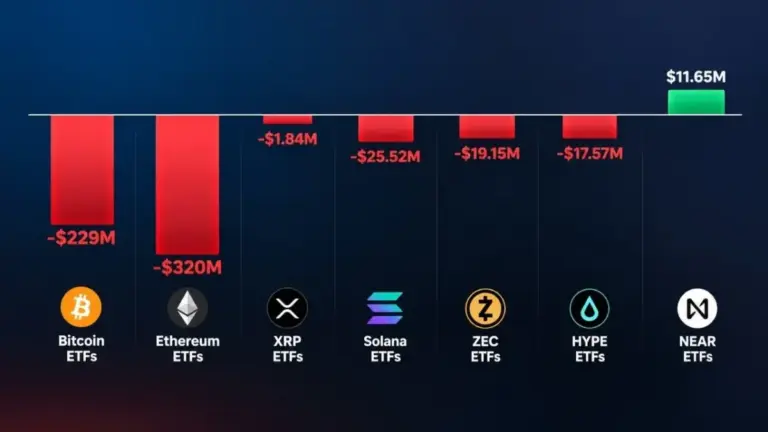
The sharp market rout coincided with a sudden retreat in the price of bitcoin, which briefly dipped toward the $76,000 threshold on Friday morning. The downward pressure on the world’s leading cryptocurrency was triggered by news of a major security breach at Binance reported on Thursday. The incident immediately rattled market participants, contributing to a massive liquidation event that saw more than $1.5 billion in leveraged crypto positions wiped out across a 24-hour window. Although bitcoin subsequently staged a modest recovery to trade just under $77,900, it still reflected a decline of nearly 5% over the preceding twenty-four hours.
According to preliminary estimates released by Binance, the security incident impacted approximately $6.3 billion worth of assets. The breach occurred when an unauthorized attacker apparently gained access to the platform through a compromised employee laptop, subsequently submitting unauthorized withdrawals.
In response to the breach, Binance stated that roughly $3 billion had been successfully frozen onchain to prevent the attacker from moving the funds. The exchange added that it intends to cover any remaining unrecovered losses using its Secure Asset Fund for Users, commonly known as SAFU, alongside its own corporate financial resources. Furthermore, preliminary forensic investigations conducted by the exchange indicated no evidence that private wallet keys were compromised during the attack.
This substantial security shock struck the digital asset market during an already fragile trading session for risk-on assets globally. The cryptocurrency rout was compounded by a severe selloff in traditional technology equities, which were reeling from renewed anxiety regarding the massive capital expenditures associated with the artificial-intelligence boom.
Market concerns over heavy AI infrastructure spending intensified dramatically after Alphabet suffered a 13% decline on Thursday. Those worries were further exacerbated by corporate earnings and financial outlooks from Amazon and Intel, which raised pressing questions among investors regarding how quickly technology firms can expect to generate meaningful returns on their astronomical AI investments. Intel shares bore the brunt of the negative sentiment, plunging more than 28% following an underwhelming quarterly earnings report that caught Wall Street off guard.
Coinbase Earnings Fail to Shield the Stock
The bleak market conditions completely overshadowed positive corporate disclosures from major crypto enterprises. After the closing bell on Thursday, Coinbase released its financial results for the third quarter, reporting a substantial net income of $719 million. However, a closer examination of the figures revealed that adjusted net income stood at a more modest $78 million once non-operating investment gains and fluctuations in crypto-asset valuations were stripped away. On an operational level, Coinbase reported an adjusted EBITDA of $333 million, representing a 60% increase on a sequential basis compared to the previous quarter.
Despite these profitability metrics, the underlying trading conditions reflected in the report remained notably softer than those recorded during the same period a year prior. Transaction revenue contracted to $590 million, down significantly from approximately $1 billion a year earlier. Consequently, total quarterly revenue declined to $1.22 billion, compared with $1.87 billion in the corresponding period last year.
The pronounced drop in Coinbase shares on Friday morning—which outpaced the declines seen in several other major crypto-linked equities—suggests that market participants are looking well past headline profit figures. Instead, investors are focusing intensely on broader crypto-market weakness, subdued trading volumes, and future activity levels across retail and institutional segments.
Strategy Falls Despite $19.5 Billion Profit
Similarly, Strategy posted eye-catching financial results for the quarter, reporting a staggering $19.53 billion in net income and $44.75 in diluted earnings per share. These extraordinary financial figures were largely driven by accounting gains recorded on the company’s massive corporate holdings of bitcoin.
As of October 25, Strategy held a staggering 848,517 bitcoins on its balance sheet. Even with its massive digital asset portfolio, the company’s core operational metrics showed slight contraction, with quarterly revenue slipping 3% to $125.4 million.
The sharp market correction observed on Friday illustrates the extent to which crypto equities can amplify price movements in the underlying digital asset markets. As bitcoin faced downward pressure, the core valuation anchor for these companies weakened. Simultaneously, the Binance hack revived persistent industry anxieties regarding cybersecurity and platform safety, while the AI-led technology selloff simultaneously punished the high-beta investor base that frequently moves between traditional tech stocks and cryptocurrency assets.
Ultimately, for industry heavyweights like Coinbase and Strategy, strong backward-looking earnings reports proved entirely insufficient to offset a rapidly deteriorating macroeconomic and sector-wide risk environment.
 Bitcoin & Major Altcoins
 Bitcoin & Major Altcoins
 Bitcoin & Major Altcoins