
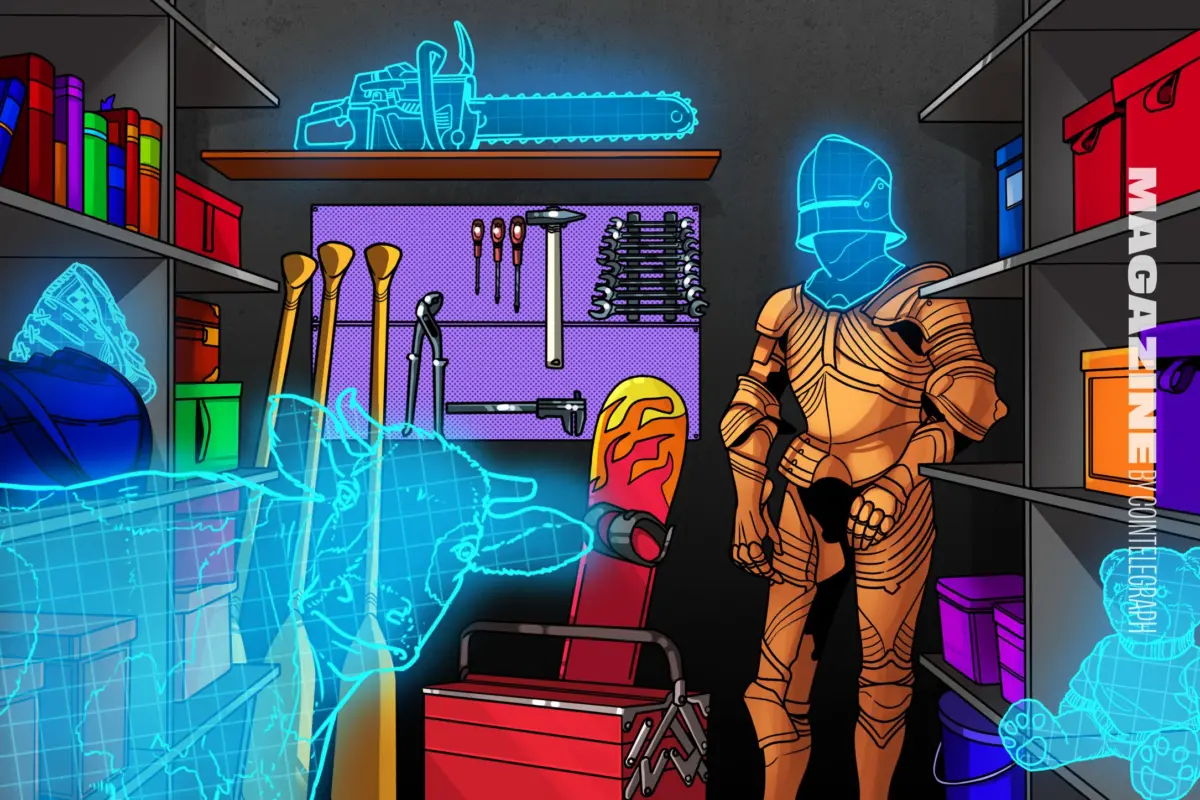
When Brazil’s B3 stock exchange made headlines recently with a remarkably unconventional financial transaction, it captured the imagination of the global financial technology sector. A farmer in southern Brazil successfully leveraged 10 dairy cows as collateral for a 100,000 Brazilian real—equivalent to roughly $19,600—loan. By virtually herding the livestock into a blockchain-based holding pen, the operation vividly demonstrated how agricultural producers can literally milk their physical assets to access much-needed credit.
Yet, this innovative use of real-world asset (RWA) tokenization raises an inescapable and whimsical question across digital asset markets: if cows can be tokenized, what on earth cannot?
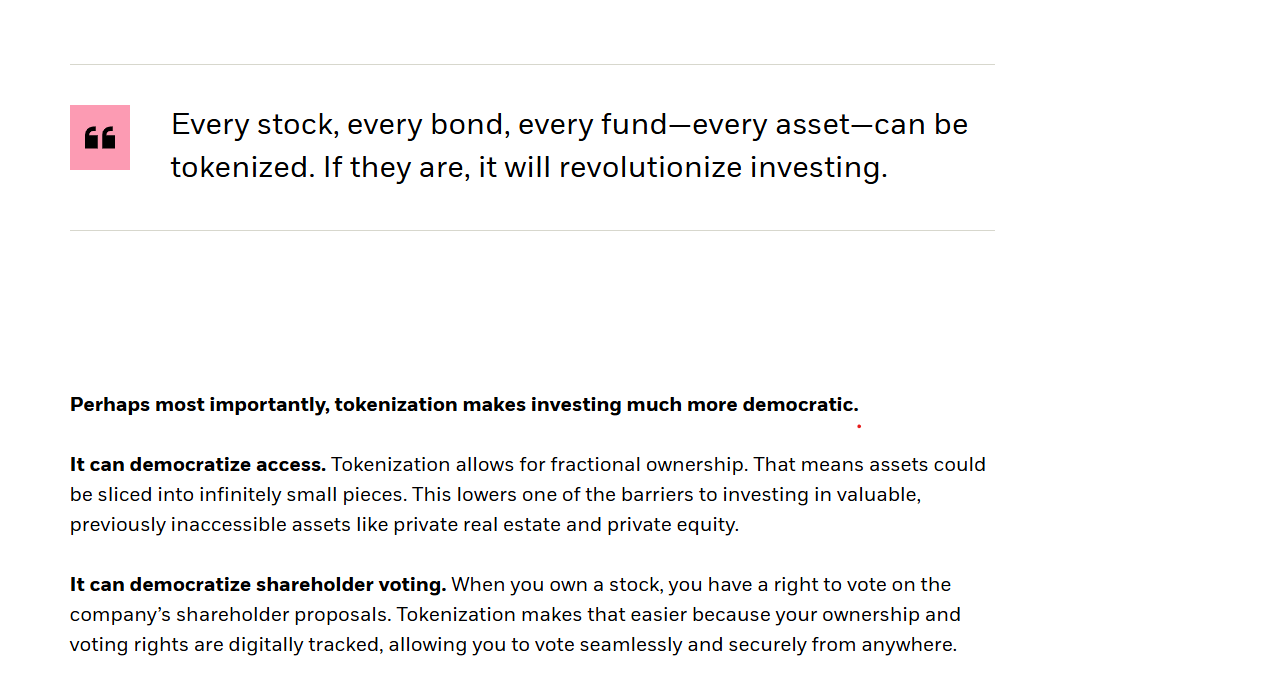
As institutional heavyweights like BlackRock chief executive Larry Fink publicly champion the inevitable tokenization of every asset class on the planet, the experimental edges of blockchain technology have yielded some truly astonishing use cases. From dairy cattle and high-grade whiskey barrels to a year’s worth of human flatulence, the decentralized ecosystem has proven remarkably hospitable to the bizarre.
1. A Year’s Worth of Farts
When Larry Fink declared that every asset would eventually find its way onto the blockchain, it is safe to assume he was not envisioning human flatulence. Yet, during the height of the COVID-19 pandemic, when much of the global population turned to baking artisanal bread or mastering foreign languages on mobile apps, filmmaker Alex Ramírez-Mallis decided on a profoundly different quarantine project.
Ramírez-Mallis recorded his own bodily flatulence over the course of a year and minted each discrete audio file as a non-fungible token. While the popular adage suggests that people only truly love their own children and bodily noises, the sheer novelty factor of the collection struck a chord within the speculative digital art market. The filmmaker managed to sell individual units for 0.05 Ether each, translating to roughly $85 at the time, offering an early and absurd proof of concept that literally everything, no matter how distasteful, possesses a market price in the wild west of decentralized finance.
2. Cows
Moving from the absurd back to the agricultural, the concept of turning living livestock into digital collateral represents a transformative frontier for traditional lending. Structured by the Brazilian investment fund Target FIDC, the B3 stock exchange transaction assigned each of the ten cows a unique digital token linked directly to an encrypted digital identity.
While the initial loan totaled a modest $19,600, industry participants view the transaction as a vital proof of concept. The underlying infrastructure possesses the potential to eventually unlock approximately $80 million in livestock-backed financing across participating farms. Given that the global agriculture industry generated an estimated $4ynth trillion in gross value added in 2023, market observers should not be surprised to see tokenized sheep, goats, and chickens serving as collateral in the near future.
3. Whiskey Barrels
For traditional connoisseurs, sharing a fine whiskey evokes images of amber liquid poured from crystal decanters. However, physical whiskey barrels represent a remarkably natural candidate for blockchain tokenization. Much like high-end fine art and luxury collectibles, premium Scotch whisky traditionally appreciates in value as it matures in bonded warehouses.
Several specialized blockchain projects are currently experimenting with placing whiskey casks onchain, allowing global investors to purchase whole units or fractional shares of aging spirits. While fractional ownership democratizes access to luxury commodities, investors must occasionally confront the sobering reality that if the digital asset market crashes, one cannot actually consume a digital JPEG of a whiskey barrel.
4. Racehorses
Thoroughbred racehorse ownership has historically remained the exclusive playground of the ultra-wealthy—those with fortunes deep enough to absorb hundreds of thousands of dollars in breeding, training, and stable upkeep, not to mention the obligatory haute couture required for trackside attendance.
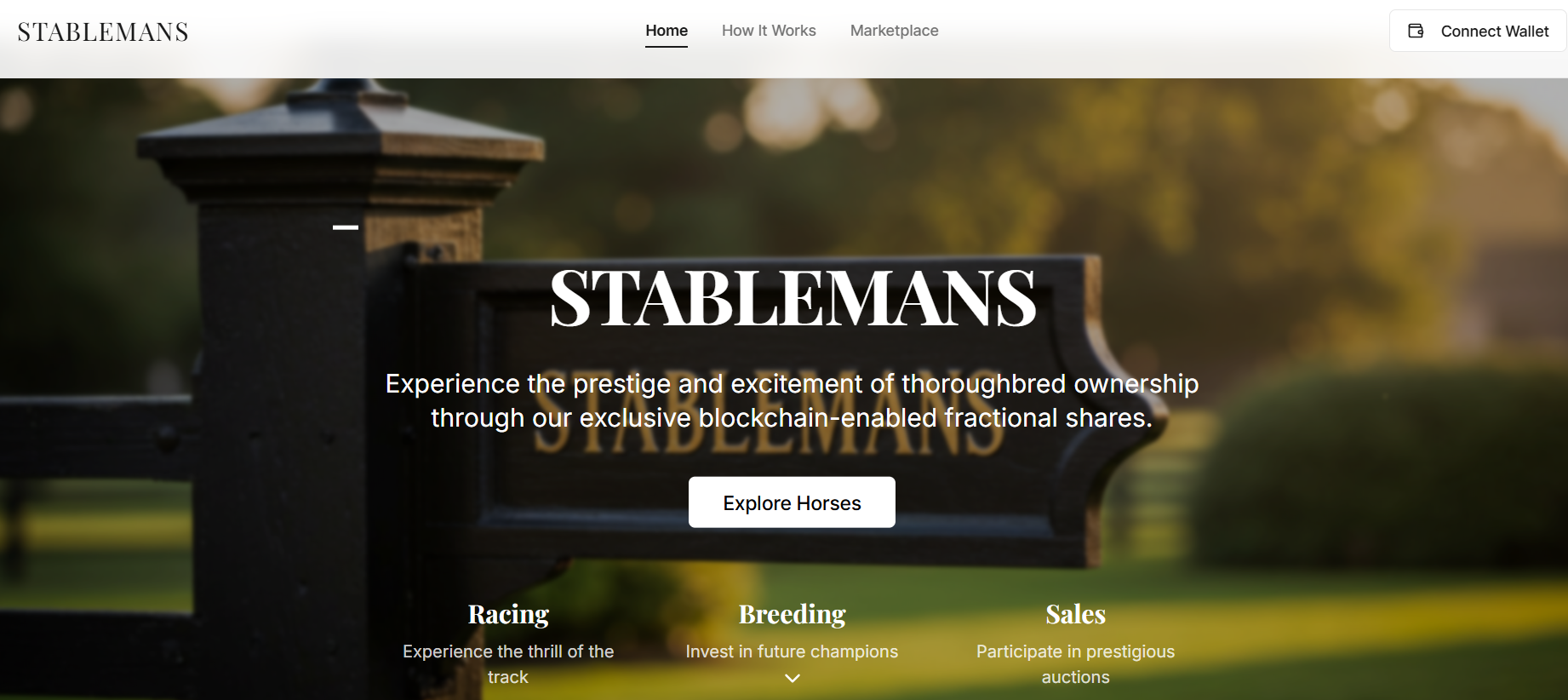
However, tokenization is steadily dismantling these elitist barriers by dividing the ownership of real thoroughbred racehorses into digestible digital shares. Platforms such as Stablemans have begun enabling everyday investors to purchase fractional stakes in live animals, granting them proportionate shares of any earned prize money, breeding revenues, or future sale proceeds.
Despite the democratization of luxury asset classes, industry veterans urge caution. Chris Turner, co-founder of the impact investment firm KULA, offers a pragmatic warning regarding these trendy digital offerings: "Putting a collectible or luxury item on a blockchain doesn’t automatically make it more liquid or valuable if the legal rights, transfer process, and market structure remain unchanged."
5. Uranium
When traditional financial analysts contemplate tokenized real-world assets, their minds typically drift toward government treasuries, corporate bonds, and private credit instruments. Few immediately consider uranium, the heavy radioactive metal universally recognized for fueling nuclear power plants.
Nevertheless, the Tezos-backed platform metals.io has ventured precisely into this radioactive territory. Arthur Breitman, co-founder of Tezos, argues that blockchain technology excels at establishing reliable, auditable, and cost-efficient financial rails for virtually any asset class, while showing a natural affinity for what he describes as "technology-flavored commodities" like uranium.
Data compiled by the platform indicates that trading volume between November 2024 and July 2026 reached $21.5 million across approximately 18,200 trades involving some 7,400 unique wallets. Breitman acknowledges that overall market growth remains modest, noting that institutional players have expressed theoretical interest but continue to exhibit hesitation regarding tokenized trading rails.
6. Fishy Revenue
Among the most unconventional proposals received by the tokenization platform Brickken was an inquiry from a Chilean fish-processing company. The firm sought to issue tokenized debt instruments with financial returns directly tied to the commercial value of its seafood sales.
Edwin Mata, chief executive of Brickken, explains the mechanics of the proposal: "The token represented the lender’s contractual claim, while the interest payable adjusted according to the company’s verified sales performance. In effect, it was a tokenized, revenue-linked debt instrument." Mata argues that the proposal underscores a fundamental principle of the industry: almost any predictable cash flow can support a tokenized financial instrument, provided the underlying rights and performance metrics can be independently verified.
Ultimately, the fish never made it onto the blockchain. The underlying seafood sales still relied heavily on traditional audits, commercial reporting, and legal contracts that could not yet be fully automated. The episode served as a reminder that the most formidable obstacle to widespread tokenization is often not the blockchain itself, but the messy reality of the physical world.
7. Music Royalty Streams
Music royalties have similarly carved out a persistent niche within the decentralized ecosystem. One of the earliest high-profile experiments occurred in 2021, when electronic music producer 3LAU offered fans 50% of the streaming rights to his single "Worst Case" via his blockchain platform, Royal. The trend gained further momentum in 2022 when legendary rapper Nas utilized the same platform to sell streaming royalty rights to his tracks "Ultra Black" and "Rare."
While tokenized music royalties generated significant enthusiasm during the broader NFT market boom, they have yet to evolve into a dominant mainstream asset class. Critics point out that modern digital streaming platforms pay negligible per-stream rates, meaning that owning a fractional slice of a song often translates to realizing that a track must be streamed millions of times just to purchase a single cup of coffee.
8. Human Skin
If tokenizing agricultural livestock and bodily flatulence stretched the boundaries of conventional finance, the decision by Croatian tennis player Oleksandra Oliynykova in 2021 pushed into deeply personal territory. Oliynykova successfully auctioned the advertising rights to a 15-by-18-centimeter patch of skin on her right arm as an NFT.
The winning bidder paid 3 Ether—valued at approximately $5,400 at the time—for the contractual right to choose the temporary tattoo the athlete would wear during professional tournaments for an entire year. While professional athletes have long commercialized space on athletic apparel, helmets, and sports cars, Oliynykova literalized the idiom by giving a whole new meaning to having skin in the financial game.
9. A Burned Banksy
While traditional art collectors dedicate immense resources to preserving fragile masterpieces, certain digital-native collectors have occasionally opted to set physical art ablaze to make philosophical statements about digital ownership. In 2021, a collective known as Burnt Banksy purchased an authentic Banksy print titled Morons (White) for roughly $95,000. The group live-streamed the complete destruction of the physical artwork by fire before minting its digital replacement as an NFT.
The logic behind the pyrotechnics was that while the physical print was permanently eradicated, its underlying ownership and cultural legacy would live on immutably through the blockchain. The resulting NFT subsequently sold for approximately $382,000, triggering fierce debates across the art world over whether the collective had destroyed a valuable cultural artifact or successfully transmuted it into a novel digital medium.
10. The First-Ever Tweet
During the dizzying heights of the 2021 digital asset frenzy, Twitter co-founder Jack Dorsey tokenized his historic first-ever social media post—the iconic text reading "just setting up my twttr"—and sold it as an NFT to cryptocurrency entrepreneur Sina Estavi for a staggering $2.9 million. The transaction instantly became a towering symbol of the era’s speculative excess.
Just one year later, Estavi attempted to flip the digital asset for a staggering $48 million. The market response was humbling; the highest reported bid during the attempted resale reached a meager $6,800.
While internet users can still view the historic post freely on the public internet, only a single entity holds the blockchain certificate tied to its provenance. Whether that cryptographic receipt possesses enduring value remains an open debate. As Edwin Mata aptly summarizes regarding the broader wave of eccentric onchain assets: "Tokenization can improve access, administration, settlement and transferability, but it cannot transform a poor investment into a good one."
 Non-Fungible Tokens (NFTs)
 Non-Fungible Tokens (NFTs)
 Non-Fungible Tokens (NFTs)







