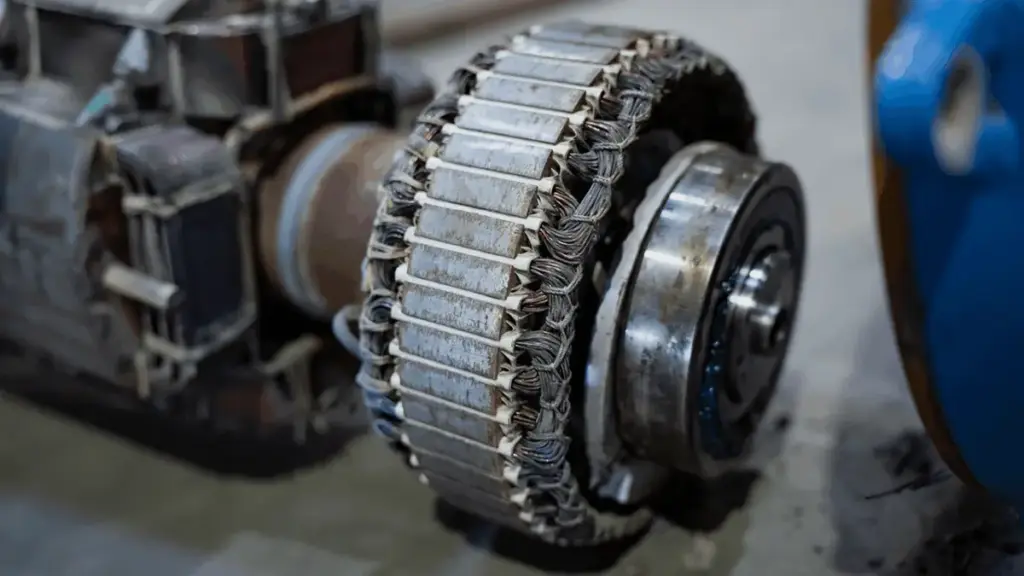
Behind almost every modern convenience and industrial process lies an electric motor quietly pulling watts. From factory conveyors and water pumps to HVAC fans and electric vehicle drivetrains, these ubiquitous mechanical workhorses form the hidden backbone of modern civilization. Yet, a staggering new synthesis from the International Energy Agency (IEA) reveals the true scale of their energy appetite: electric motor-driven systems consumed a massive 13,462 terawatt-hours (TWh) of electricity in 2023, accounting for 53 percent of global power consumption.
As energy grids around the world grapple with surging demand driven by the rapid expansion of data centers, electric vehicles, and modern heat pump installations, this monumental load often flies under the radar. According to the IEA’s comprehensive motor systems platform data, the global electricity required to run these motors is not only colossal, but it is also growing faster than overall energy demand. Between 2015 and 2023, motor-related power consumption rose by 26 percent, outpacing the 24 percent increase in total global electricity use over the same period.
The primary driver behind this persistent and growing energy footprint is a widespread operational inefficiency: millions of electric motors continue to run at a constant, maximum speed even when actual real-time demand fluctuates wildly. Engineers and researchers point out that upgrading these systems with demand-based speed control could transform these invisible losses into one of the fastest, most impactful efficiency wins across industry, commercial buildings, transport, and agriculture. Experts estimate that optimizing motor speeds could slash global motor electricity consumption by as much as 25 percent, trimming total worldwide power consumption by about 10 percent.
The Quiet Load on the Grid
For anyone tracking power grid capacity in the United States and other major economies, the sheer ubiquity of electric motors represents a critical missing piece of the energy puzzle. While public discourse frequently focuses on the massive energy draws of emerging technologies, the fundamental infrastructure of everyday life relies on motors that have operated largely unchanged for decades.
The IEA data highlights that electric motor-driven systems represent the single largest end-use category of electricity on Earth. Their relentless growth mirrors the broader electrification of the global economy. As industries transition away from fossil-fueled processes toward electric alternatives, and as societies deploy millions of new cooling systems to combat rising global temperatures, the cumulative mechanical load on the grid expands exponentially.
Crucially, the inefficiency is rarely found in the motor manufacturing quality itself. Modern electric motors are often engineered to high standards of efficiency. Instead, the loss of energy occurs at the system level. When a motor is paired with a mechanical load like a pump, fan, or compressor, it is frequently sized for peak operational requirements and left running at full throttle continuously, regardless of whether the actual workload requires it.
Where Motors Dominate, from Factories to Farms
The sheer dominance of electric motors becomes strikingly apparent when examining electricity consumption across individual economic sectors. According to the IEA breakdown, motors account for an astounding 72 percent of total industrial electricity use worldwide. Their footprint is even larger in agriculture, where motor-driven systems consume 87 percent of the sector’s power, primarily driven by intensive irrigation, grain handling, and livestock environmental control systems. In the transportation sector, motors claim 86 percent of electricity use, reflecting the rapid rise of rail transit and electric vehicles. Meanwhile, in commercial and residential buildings, motors account for 36 percent of power consumption, heavily tied to centralized heating, ventilation, and air conditioning (HVAC) systems as well as domestic water pressurization.
This heavy sectoral reliance stems from the fact that motors serve as the foundational muscle for essential mechanical functions. They drive the pumps moving municipal water supplies, the fans circulating air through high-rise office towers, the massive compressors powering industrial refrigeration, the conveyor belts moving goods through manufacturing plants, and the drivetrains propelling modern electric transport.
For observers in the United States, this dynamic maps directly onto ongoing domestic energy challenges. The rapid expansion of electrified industrial manufacturing, the mounting cooling loads driven by hotter summers, the widespread adoption of residential and commercial heat pumps, and the transition toward electrified transport all add layers of motor-driven load to the grid that do not always register as distinct line items in public energy forecasts.
Speed Control: The Efficiency Lever Hiding in Plain Sight
The opportunity to capture massive energy savings lies in addressing a surprisingly basic operational flaw: the prevalence of fixed-speed motor systems. In many industrial and commercial settings, pumps and fans regulate flow by using mechanical throttles, valves, or dampers to hold back output while the motor itself continues to spin at maximum velocity. It is the energetic equivalent of driving a car with one foot pressed firmly on the accelerator and the other riding the brake.
Engineers have long relied on fundamental engineering principles known as affinity laws, particularly for centrifugal pumps and fans. These physical laws dictate that power demand varies with the cube of the rotational speed. In practical terms, this means that even a modest reduction in a motor’s speed can yield a dramatic drop in power consumption. Cutting a fan or pump speed by just 20 percent can reduce its energy draw by nearly half.
This is where advanced power electronics, such as variable frequency drives (VFDs), become indispensable for real-world energy conservation. VFDs allow motor speeds to dynamically match real-time process demands rather than forcing systems to run flat-out continuously.
The potential impact of deploying these technologies at scale is immense. Researchers at the Fraunhofer Institute for Systems and Innovation Research (Fraunhofer ISI) and the Fraunhofer Institute for Chemical Technology (ICT) in Germany analyzed the operational profiles of pumps, fans, and compressors across Europe. They discovered a massive installed base of equipment still operating at fixed speeds. Their analysis concluded that implementing demand-based speed control could save an estimated 140 TWh of electricity per year in the European Union alone. That figure represents roughly 5 percent of the entire bloc’s total electricity consumption and would avoid approximately 38 million metric tons of carbon dioxide emissions annually—an environmental impact roughly equivalent to taking millions of internal combustion vehicles off the road or avoiding the burning of billions of gallons of diesel fuel.
What It Means for Industry, Buildings, and Policy
While the United States maintains various federal energy efficiency standards and utility rebate initiatives aimed at promoting premium-efficiency motors and drives, the broader economic takeaway points toward system-level optimization. The most compelling argument for upgrading motor control systems extends beyond mere sustainability metrics; it rests firmly on operational economics.
Upgrading to demand-driven speed control frequently delivers rapid financial payback through lowered electricity bills. Furthermore, advanced electronic controls can significantly enhance process stability and equipment longevity. In municipal water systems, building ventilation networks, and complex manufacturing lines, matching motor output to actual workflow reduces mechanical wear and tear, minimizes thermal stress, and protects overall system throughput.
As energy grids face mounting pressures from rising electrification and the integration of variable renewable energy sources, optimizing how the world’s largest electricity consumer operates becomes a matter of paramount importance. The core challenge facing engineers, industrial plant managers, and policymakers is no longer proving that electric motors matter to the global energy balance. Instead, the central question is how quickly the millions of constant-speed motors already installed across the globe can be retrofitted to slow down when demand allows, turning invisible energy waste into a historic efficiency dividend.
 Bitcoin & Major Altcoins
 Bitcoin & Major Altcoins
 Bitcoin & Major Altcoins