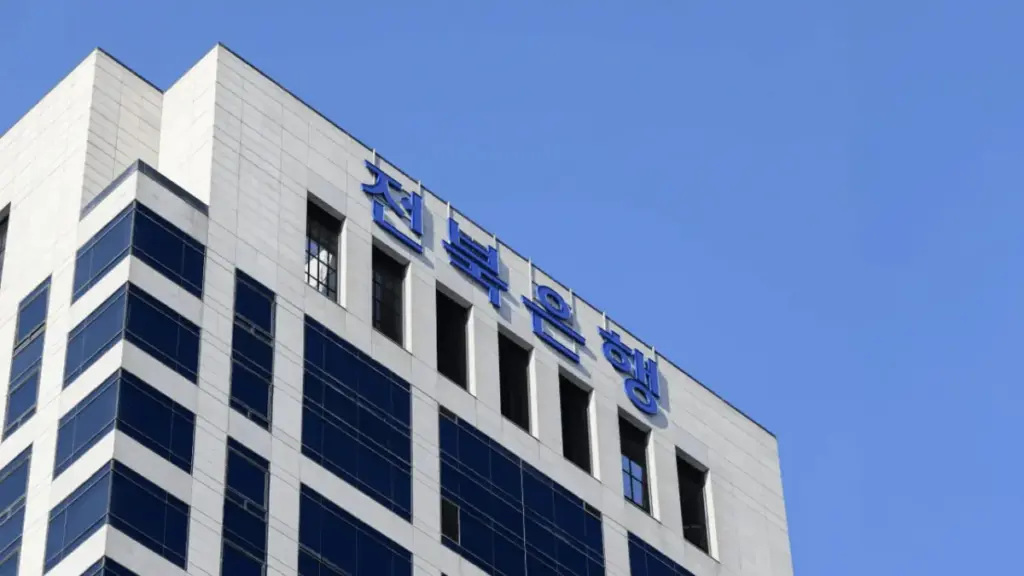
South Korea has officially cracked open the door to cryptocurrency-backed traditional banking, marking a watershed moment for the nation’s financial sector. In what local reports have identified as a historic first, Jeonbuk Bank has successfully executed the country’s premier traditional bank loan secured entirely by Bitcoin. This milestone development allows domestic businesses to unlock crucial liquidity in South Korean won without being forced to sell their digital assets or surrender absolute ownership of their cryptocurrency to the lending institution.
The transaction represents a major convergence between traditional finance, commonly known as TradFi, and the burgeoning digital asset economy in one of Asia’s most technologically advanced markets. By establishing a working framework where crypto assets can serve as viable collateral within the regulated banking system, South Korea is beginning to chart a pragmatic course for the integration of blockchain-based wealth into everyday commercial banking operations.
A Bitcoin Loan Without Touching Bitcoin
The groundbreaking transaction was spearheaded by Jeonbuk Bank, a subsidiary of the prominent JB Financial Group. The institution has introduced a strictly restricted corporate lending arrangement designed to accept Bitcoin as collateral while keeping the underlying cryptocurrency entirely outside the direct custody of the bank itself. The news first came to light through an exclusive report published by the regional news outlet Edaily, authored by reporter Lee Jeong Hun, detailing how traditional financial institutions are cautiously navigating the digital asset landscape.
Under this innovative structural model, licensed third-party custodians are tasked with safeguarding the pledged Bitcoin. Meanwhile, Jeonbuk Bank focuses strictly on its core competencies: handling traditional credit assessments, evaluating collateral values, and executing the actual loan issuance. To maintain tight risk management, the program is currently restricted exclusively to corporate working capital needs. This includes essential operational expenses such as payroll disbursement, supplier payments, and day-to-day business overhead. Individual retail borrowers are entirely excluded from the current rollout, and Bitcoin remains the sole digital asset accepted as collateral under the arrangement.
Local media outlets have offered slight variations in how they characterize the rollout phase. While Edaily describes the move as a limited service launch signaling a new commercial offering, the Maeil Business Newspaper characterizes the transaction as a targeted pilot program involving an existing corporate loan relationship. Despite these minor narrative nuances, both reports confirm that a major South Korean commercial bank has successfully bridged the gap between fiat lending and cryptocurrency collateral.
New Court Rules Open the Door
The real legal and operational breakthrough behind this financial milestone centers on the complex question of what happens in the event of a borrower default. Historically, traditional banks have been legally and operationally unequipped to handle the seizure, management, and liquidation of decentralized digital assets like Bitcoin. However, the legal landscape shifted dramatically with the implementation of revised Civil Enforcement Rules that took effect on October 1, 2026.
Under these updated legal frameworks, Jeonbuk Bank is empowered to pursue court-supervised recovery proceedings without ever needing to take direct physical or digital possession of the pledged Bitcoin. In a default scenario, a court-ordered sale would be initiated to liquidate the collateral through established channels, with the resulting fiat proceeds applied directly toward the outstanding debt.
This ingenious legal workaround allows the bank to operate strictly within existing national lending regulations while entirely avoiding the regulatory headaches, insurance complexities, and security risks associated with direct cryptocurrency custody. Furthermore, the third-party custodians utilized in these arrangements are required to satisfy South Korea’s rigorous regulatory requirements. These mandates include formal government registration, comprehensive security certifications, strict segregated asset protection protocols, and compliance with applicable cold-storage obligations designed to protect assets from online vulnerabilities.
Bitcoin Gets the Green Light
Jeonbuk Bank’s decision to select Bitcoin as the inaugural collateral asset was driven by several fundamental financial metrics, including its substantial market capitalization, deep trading liquidity, and established price discovery mechanisms. Before greenlighting the transaction, the lender reportedly conducted rigorous internal stress tests. These evaluations examined Bitcoin’s suitability as collateral during periods of steep market declines, ensuring that the bank could manage extreme volatility without jeopardizing its balance sheet.
In tandem with these stress tests, the bank developed a sophisticated digital-asset valuation framework. This proprietary system combines weighted price feeds sourced from multiple international exchanges alongside advanced volatility indicators to minimize pricing distortions and ensure accurate, real-time collateral valuation. Despite these disclosures, the South Korean bank has kept several critical commercial details under wraps. Specific interest rates, loan-to-value ratios, liquidation thresholds, exact loan amounts, and the identity of the corporate borrower have not been publicly disclosed.
A New Chapter for Korean Banking
The completion of this loan represents a tangible, real-world development in South Korea’s broader, ongoing efforts to thoughtfully incorporate digital assets into traditional financial services. Jeonbuk Bank has a documented history of exploring blockchain-related initiatives, having previously investigated blockchain payments, digital settlements, cross-border remittances, and stablecoin applications. The institution is also reportedly working on the development of an integrated digital wallet designed to seamlessly connect traditional bank accounts with digital asset holdings.
Moving forward, the lender plans to closely monitor the performance of this initial transaction and refine its internal monitoring and recovery procedures before considering whether to expand the program to include additional cryptocurrencies or broader lending purposes. For corporate Bitcoin holders in South Korea, the commercial proposition is remarkably straightforward: they now possess a viable mechanism to unlock essential Korean won liquidity to fuel their business operations without being forced to prematurely liquidate their long-term digital asset holdings.
Nonetheless, with commercial terms remaining closely guarded and access strictly limited to corporate entities, South Korea’s pioneering foray into Bitcoin-backed banking has successfully cleared its initial hurdle. As the financial sector watches closely, this cautious first step illustrates both the immense potential and the measured pace with which traditional lenders are preparing to embrace the future of digital finance.
 Bitcoin & Major Altcoins
 Bitcoin & Major Altcoins
 Bitcoin & Major Altcoins