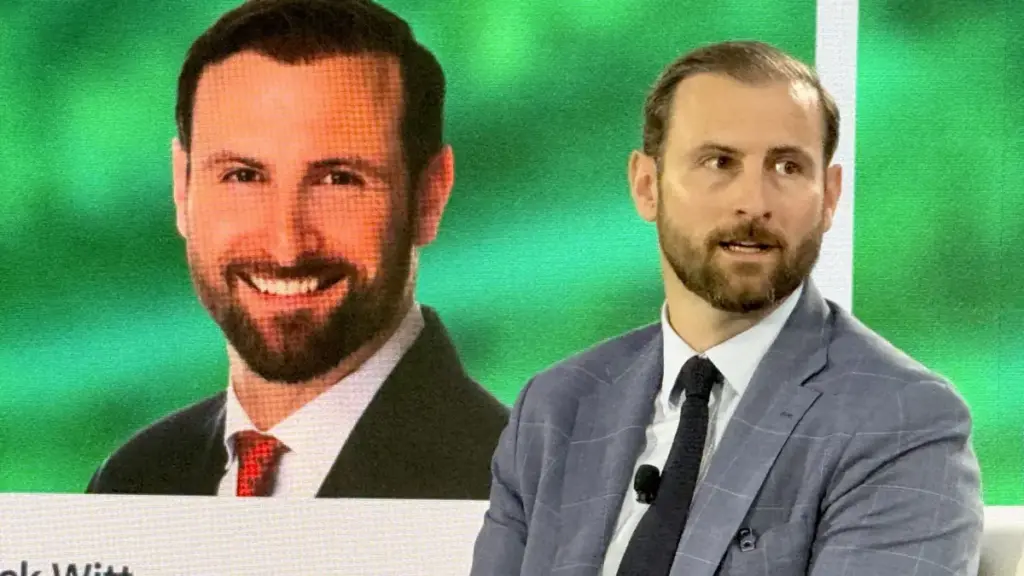
The departure of Patrick Witt, the final crypto adviser operating out of the White House, has left the administration’s digital assets office vacant and cast fresh uncertainty over the future trajectory of federal cryptocurrency policy. Witt’s exit marks a notable turning point for President Donald Trump’s second-term digital asset agenda, which began with high-profile ambitions and a newly established advisory apparatus, but now finds itself facing an unclear path forward.
When President Trump returned to the White House, he markedly shifted away from the skepticism toward digital assets that characterized his earlier years in office. Instead, he embraced the blockchain and cryptocurrency sector, signaling a friendly regulatory environment through the appointment of a prominent crypto czar and the creation of the President’s Council of Advisors for Digital Assets. Nearly two years later, that concerted policy push has temporarily quieted. The vacancy in the digital assets office comes on the heels of administrative restructuring, notably when the president recently appointed a new artificial intelligence chief to a role that had previously combined both AI and cryptocurrency oversight under a single portfolio.
The absence of a designated point person raises immediate questions regarding who will manage cryptocurrency policy within the executive branch. Nevertheless, several lawmakers on Capitol Hill suggest that the final weeks of the congressional legislative session—scheduled to take place after the November elections—could still yield legislative movement for the industry. While the White House retains a broad staff of policy advisers, and the administration continues to pursue digital asset regulations through independent agencies like the Securities and Exchange Commission, no new individual has been explicitly assigned to lead Trump’s in-house cryptocurrency initiatives.
A White House official acknowledged Witt’s departure, noting that his contributions were valued and offering best wishes for his future professional pursuits. The official declined to comment on who might step in to fill the vacancy, but reiterated that the administration remains committed to its core legislative priorities. "Crypto and Clarity Act will continue to be a priority for the president," the official stated.
The architecture for the White House’s digital assets policy was never structured as a massive bureaucracy, yet its advisers wielded significant influence, frequently lending an authoritative administrative voice to the industry’s ambitions. The initiative initially took shape several weeks prior to Trump’s return to the Oval Office in 2025, when the president-elect named David Sacks, a former PayPal executive, as his incoming artificial intelligence and cryptocurrency czar.
Simultaneously, Trump appointed Bo Hines, a former college football player with limited prior political exposure, to serve as the inaugural director of the digital assets advisory council. Although the council began as a lean, one-person operation before eventually onboarding a deputy, Hines quickly emerged as the public face of the White House’s crypto strategy. He maintained a rigorous schedule of meetings with industry insiders and made frequent appearances at high-profile sector events. His tenure, lasting roughly eight months, culminated in a major legislative victory for the digital asset industry: the successful passage of the Guiding and Establishing National Innovation for U.S. Stablecoins (GENIUS) Act into law.
The legislative win was followed by a formal White House signing ceremony and celebration, where many of the most influential figures in the cryptocurrency sector secured front-row seats. Less than two weeks after the bill’s enactment, the administration published a comprehensive crypto agenda detailing specific strategic objectives designed to foster the growth of the financial technology sector within the United States.
Following his success in helping establish federal statutory frameworks for stablecoin issuers, Hines transitioned out of government to lead the U.S. operations of Tether, a leading stablecoin issuer. Around the same time, a consulting firm that Hines established alongside his father and another partner, Nxum, received millions of dollars as the primary service provider for a newly formed political action committee. That super PAC was revealed through media reporting to be funded predominantly by Cantor Fitzgerald, Tether’s U.S. financial partner, and was led by a Tether executive. Subsequent reporting by The Wall Street Journal indicated that Hines’ firm had received financial compensation from Tether for consulting services while Hines was concurrently employed at the White House working on the GENIUS Act.
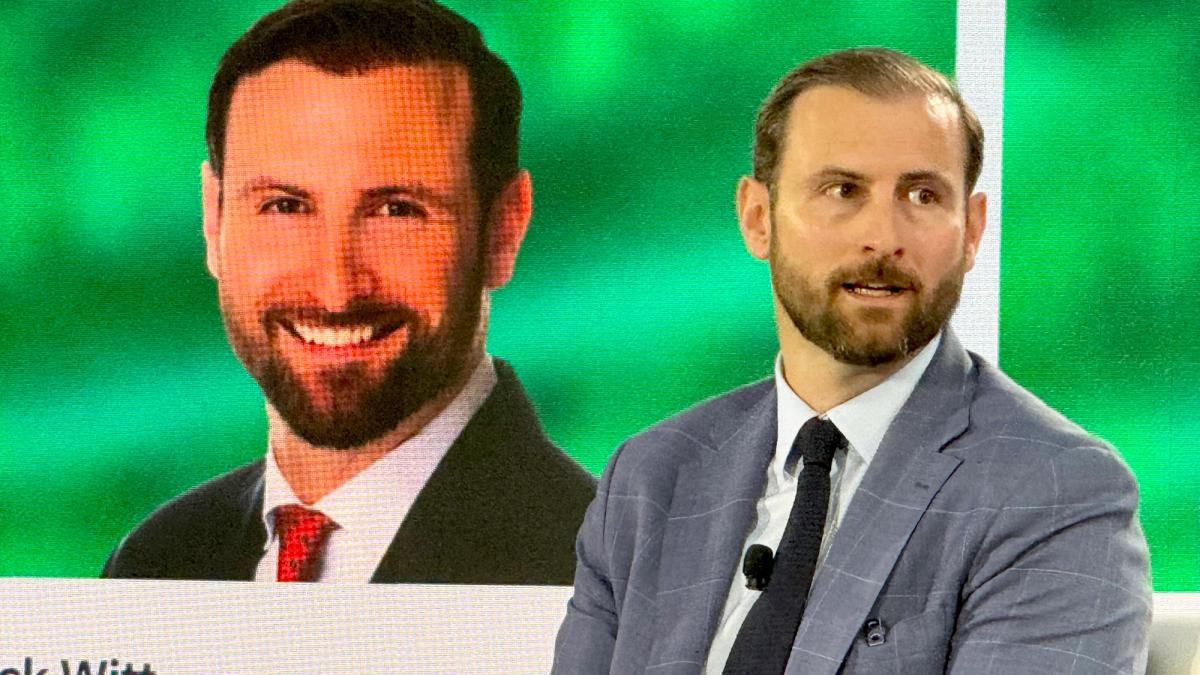
With Hines’ departure, his deputy on the advisory council, Patrick Witt, stepped into the role of executive director. Like his predecessor, Witt brought a background as a former college football player, but he also possessed a deeper familiarity with Washington politics and legislative mechanics. Witt quickly became the public face of the White House’s lobbying and negotiation efforts regarding the Digital Asset Market Clarity Act. Throughout months of intense negotiations, Witt expressed his frustrations publicly, frequently using the social media platform X to criticize political opponents and individuals he believed were obstructing the Senate bill designed to establish a comprehensive regulatory framework for U.S. crypto markets.
The legislative process grew increasingly complicated as the year progressed. Sacks stepped down from his position as the administration’s AI and crypto czar in March, leaving Witt and his remaining deputy, Harry Jung, to shoulder the responsibility of steering the administration’s crypto policy. These efforts were further complicated by ongoing controversies surrounding President Trump’s personal business interests in the digital asset sector, with congressional Democrats demanding strict ethical safeguards to block senior government officials from maintaining personal cryptocurrency ties.
As negotiations dragged deeper into the legislative calendar and closer to the mid-term elections, the White House proposed concessions that would have imposed unprecedented ethics constraints on the president’s digital asset involvements. Ultimately, Democratic lawmakers concluded that the proposed measures fell short of what was necessary.
Witt confirmed in July that he had impending military service commitments with the Georgia National Guard, yet he chose to remain in his post to see the Digital Asset Market Clarity Act through its final negotiation phases. This decision came even as his deputy departed the council to join Hines at Nxum. The legislation ultimately encountered a major political obstacle, failing to secure enough votes to advance during a Senate floor vote before the chamber adjourned for an extended recess leading up to the November elections.
Following circulating rumors regarding his status, Witt posted a statement online at midnight to formally confirm his departure. He expressed gratitude to agency leaders and lawmakers who collaborated on the Clarity Act, writing that with such regulators and elected officials in place, he felt confident that the future of digital asset innovation in the United States remains secure. He announced his intention to transition into the private sector.
Cryptocurrency industry insiders have expressed uncertainty regarding future points of contact within the administration now that their near-term market-structure aspirations have largely stalled.
The uncertainty was underscored when President Trump moved to re-establish an AI oversight position, appointing former SEC Chairman and current intelligence director Jay Clayton to lead a new initiative called the Super Intelligence Force. Notably, the newly defined role omits any mention of a cryptocurrency portfolio. While artificial intelligence and digital assets share overlapping technological domains, Clayton brings a contentious history with the crypto industry, having previously led the SEC during the initiation of regulatory enforcement actions that many sector participants dubbed "regulation by enforcement."
 Global Crypto Markets
 Global Crypto Markets
 Global Crypto Markets