The operational scope of XRP and its underlying infrastructure has expanded significantly, moving well beyond traditional cryptocurrency trading to anchor complex cross-currency settlements, institutional tokenized fund administration, and machine-driven micro-commerce. As global financial heavyweights increasingly integrate with the XRP Ledger (XRPL), the ecosystem is rapidly bridging the gap between legacy financial institutions and decentralized blockchain architecture.
This evolution was detailed extensively in a comprehensive ecosystem guide published on X by the official XRP account, which is jointly managed by Ripple and the XRP Ledger Foundation. Highlighting a period of unprecedented activity, the guide underscored how diverse market participants—ranging from individual software developers to multinational financial corporations—are utilizing XRP and the ledger for everything from basic value storage to sophisticated, automated financial applications.
XRP Connects Currency Transfers With Automated Payments
At the core of the XRPL’s operational appeal is its high-speed infrastructure, which settles transactions in a mere three to five seconds at a fraction of a cent per transfer. This transactional efficiency has opened the door for advanced financial use cases, particularly in the realm of machine-to-machine commerce and software-driven transactions.
According to the community overview, modern artificial intelligence agents can now autonomously purchase application programming interface (API) access, computing power, and various other digital services using either XRP or Ripple USD (RLUSD). This capability is supported by a growing suite of specialized tools, including the XRPL AI Starter Kit and x402, an innovative protocol designed to facilitate seamless online micro-payments. Furthermore, the ecosystem incorporates support for the Machine Payments Protocol, an initiative originally developed by Stripe and Tempo to streamline automated digital commerce.
Despite the introduction of stablecoins and other digital assets onto the network, the official guide emphasized that XRP retains a distinct and irreplaceable function. As the native asset of the XRP Ledger, XRP is fundamentally required for processing transaction fees and maintaining network reserves. Moreover, it continues to serve as a neutral liquidity and bridge asset, facilitating smooth conversions between diverse fiat currencies and digital tokens without requiring direct trading pairs for every transaction.
Tokenized Funds and Bank Custody Connect XRPL With Institutions
Beyond automated micro-payments, the XRP Ledger has firmly established itself as a viable venue for institutional-grade finance. Traditional financial assets—including government Treasuries, money market funds, and commodities—are increasingly being represented onchain through tokenization. Major financial entities such as Aviva Investors, Guggenheim Treasury Services, and Ondo Finance have integrated with or participated in the ecosystem to leverage these capabilities.
A prime illustration of this convergence is Aviva’s tokenized dollar liquidity fund share class, which successfully mirrors the strict investment objectives and regulatory protections of its conventional, off-chain counterpart. By bringing these instruments onto the XRPL, traditional asset managers can achieve greater settlement efficiency while maintaining compliance with established regulatory frameworks.
Simultaneously, leading global banks are stepping up to provide secure safekeeping infrastructure for digital assets operating within the ecosystem. Standard Chartered officially launched its RLUSD custody offering, establishing a vital institutional bridge for stablecoin management. Additionally, centralized securities depository (CSD) operations in Brazil, such as CSD BR, have begun mirroring fund ownership records directly on the XRP Ledger, paving the way for more integrated lending markets and capital deployment strategies.
Institutional utility is further underscored by planned developments such as a collateral integration involving Ripple and LMAX Group, an established institutional trading infrastructure operator. This proposed framework would allow RLUSD to be recognized as viable security for trading obligations while the actual tokens remain securely held in custody at Standard Chartered. Implementation of such advanced structures naturally relies on rigorous testing, thorough documentation, compliance with regulatory standards, and final approvals from governing bodies.
RLUSD and other stablecoins integrated into the ecosystem are explicitly designed to maintain a reliable reference value while enabling round-the-clock, instantaneous transfers. This stability complements the high-speed settlement capabilities of the underlying blockchain, making the network increasingly attractive for institutional cash management and treasury operations.
ETFs and Onchain Markets Broaden Financial Participation
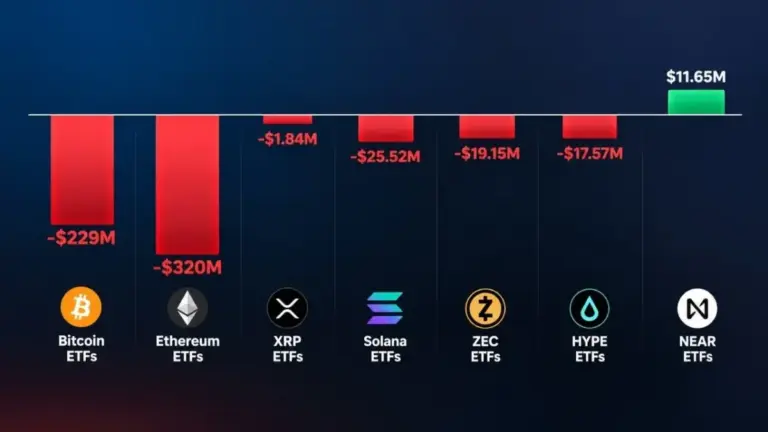
To accommodate the growing demand for market exposure from traditional investors, a wide array of brokerage products has emerged, allowing market participants to gain exposure to XRP without the technical complexities of holding digital tokens directly. The regulatory landscape has shifted to welcome spot XRP ETFs in major North American jurisdictions, including the United States and Canada. Notable financial products include Grayscale’s XRP ETF—which features in-kind transactions and institutional-grade custody—alongside offerings from firms such as Bitwise, Canary Capital, Franklin Templeton, and 21Shares. Similar exchange-traded financial products are also active within Brazilian and European markets, broadening global investment channels.
For market participants seeking direct engagement, the XRP Ledger features a built-in decentralized exchange (DEX) where various digital assets can be traded directly against XRP and other issued tokens. The network accommodates both open public markets and permissioned markets designed to restrict access strictly to approved, verified participants. Additionally, liquidity pools allow users to deposit matching pairs of assets to facilitate seamless market activity, earning a proportional share of trading fees in return for their role as liquidity providers.
While liquidity provision exposes participants to standard market risks—and while XRP itself does not offer native staking rewards—the broader network connectivity is enhanced through cross-chain bridges and wrapped versions of XRP. These mechanisms allow asset holders to interact with decentralized applications deployed on alternative networks, such as Solana. Developers looking to build upon this expanding financial infrastructure continue to utilize documentation, code examples, and test environments provided through official developer portals to design new payment, trading, and tokenization solutions.
 Bitcoin & Major Altcoins
 Bitcoin & Major Altcoins
 Bitcoin & Major Altcoins